


Unlock the role of fabrics in clothing for comfort
Most fashion enthusiasts focus on cuts, colours, and trends while overlooking the foundation of every garment: fabric. The textile you wear against your skin determines how a dress drapes, how trousers stretch, and whether you feel comfortable after eight hours. Fabric mechanics govern everything from thermal regulation to tactile sensation, yet many shoppers select garments based solely on visual appeal. Understanding how different fibres, weaves, and knits interact with your body transforms clothing choices from guesswork into informed decisions that enhance both style and daily comfort.
Table of Contents
- How Fabric Mechanics Shape Comfort And Movement
- How Fabric Properties Affect Breathability And Insulation
- The Interplay Of Fabric Friction And Skin Comfort
- Balancing Style And Sustainability Through Fabric Choices
- Explore Quality Fabrics With 16th Avenue
Key takeaways
| Point | Details |
|---|---|
| Fabric mechanics dictate fit | Knit structure and elastic recovery determine how garments move with your body and maintain shape |
| Thermal properties vary widely | Air permeability and fibre blends control breathability and insulation across seasons |
| Friction affects skin comfort | Fabric type and moisture levels influence tactile sensation and potential irritation |
| Sustainability matters | Durable, eco-friendly materials reduce environmental impact when balanced with mindful consumption |
| Material knowledge empowers choices | Understanding fabric science helps you select garments that align with comfort and style goals |
How fabric mechanics shape comfort and movement
Every time you reach, bend, or sit, your clothing stretches and recovers. Dynamic elastic recovery measures how well fabric returns to its original shape after being pulled, directly affecting how garments feel during wear. Rib 2x2 knits provide highest elastic recovery and lowest skin pressure at common stretch levels, making them ideal for garments requiring both flexibility and structure. This knit pattern creates a ribbed texture that expands and contracts efficiently, reducing the constant pressure against your skin that causes discomfort.
Knit stitch length and yarn composition fundamentally alter fabric behaviour. Longer stitches create looser, more flexible textiles, while tighter stitches increase density and stiffness. The yarn itself, whether natural cotton or synthetic polyester, determines directional stretch properties. A fabric might stretch easily horizontally but resist vertical pull, or vice versa, depending on how the knit structure aligns fibres. These characteristics explain why some tops feel restrictive across the shoulders whilst others move seamlessly with your arms.
Pro Tip: When shopping for activewear or fitted garments, gently stretch the fabric in multiple directions to assess recovery speed and resistance patterns before purchasing.
This mechanical understanding supports creating garments offering tailored fit and uniform compression, like compression sleeves knit design that applies consistent pressure without binding. Fashion designers leverage these principles to engineer clothing that flatters whilst allowing natural movement. A well-constructed blazer uses strategic fabric placement to maintain crisp lines at the shoulders whilst permitting arm mobility, combining aesthetic appeal with functional comfort.
Key fabric mechanics to consider:
- Elastic recovery percentage determines how quickly garments bounce back after stretching
- Knit density affects breathability, weight, and drape characteristics
- Directional stretch properties influence fit and movement restriction
- Yarn twist and ply impact surface texture and durability
Understanding these mechanics helps you select clothes balancing style and comfort. A dress with poor elastic recovery will bag at the knees and lose shape after one wear, whilst a top with excessive stiffness restricts movement despite fitting properly when stationary. Evaluating fabric behaviour before purchase prevents wardrobe disappointments and supports building a collection of garments that perform as beautifully as they look.
How fabric properties affect breathability and insulation
Air permeability governs how fabrics trap or release heat, fundamentally affecting thermal comfort throughout the day. Fabric air permeability significantly impacts insulation when air gaps and wind speed increase, linked to forced convection heat transfer. When air layers exceed 5mm thickness between fabric and skin, and wind speeds reach 1.3m/s or higher, heat escapes rapidly through permeable textiles. This explains why loosely woven summer blouses feel cooler than tightly knit jumpers, even when both use similar fibre content.

Fibre blends dramatically alter thermal and moisture management properties. 100% polyester blends excel in breathability for sportswear, whilst acrylic-cotton blends offer better cold weather thermal resistance. Polyester’s synthetic structure wicks moisture away from skin and dries quickly, making it perfect for active situations where perspiration management matters. Cotton-acrylic combinations trap warm air effectively whilst providing enough breathability to prevent overheating indoors, striking a balance ideal for transitional seasons.
Pro Tip: Layer fabrics strategically by placing moisture-wicking synthetics closest to skin, insulating blends in the middle, and wind-resistant outer layers for optimal thermal regulation.
| Fabric Type | Air Permeability | Best Season | Moisture Management |
|---|---|---|---|
| 100% Polyester | High | Spring/Summer | Excellent wicking |
| Cotton-Acrylic Blend | Medium | Autumn/Winter | Moderate absorption |
| Pure Cotton | Medium-High | All seasons | High absorption, slow drying |
| Wool Blends | Low-Medium | Winter | Good insulation, moderate wicking |
Choosing fabrics mindfully supports both comfort and sustainability goals. Natural fibres like organic cotton and linen biodegrade easily but require significant water and land resources during production. Synthetic alternatives use petroleum-based materials yet often last longer and need less maintenance. Understanding these trade-offs helps you make sustainable choices aligned with your values and climate needs.
Factors affecting fabric breathability:
- Weave tightness controls air flow and heat retention
- Fibre thickness and surface area influence moisture absorption rates
- Fabric weight measured in grams per square metre impacts insulation
- Chemical treatments like water repellency alter natural breathability
Seasonal wardrobe planning becomes simpler when you recognise how fabric properties interact with temperature and activity levels. A lightweight polyester blouse works beautifully for summer office wear, providing cooling airflow without appearing casual. That same fabric would leave you cold during winter commutes, where a wool-blend knit traps body heat effectively. Matching fabric characteristics to your daily routine and local climate ensures comfort without sacrificing style.
The interplay of fabric friction and skin comfort
Fabric friction determines how textiles feel against your skin during movement, influencing everything from subtle irritation to outright discomfort. Friction between fabric and skin increases 1.5 to 2 times on wet or cream-treated skin, higher in mixed fabrics than 100% cotton, influenced by fabric mass, weave density, and tension. This explains why certain garments feel perfectly comfortable when you first dress but become irritating after applying moisturiser or during physical activity that produces perspiration.
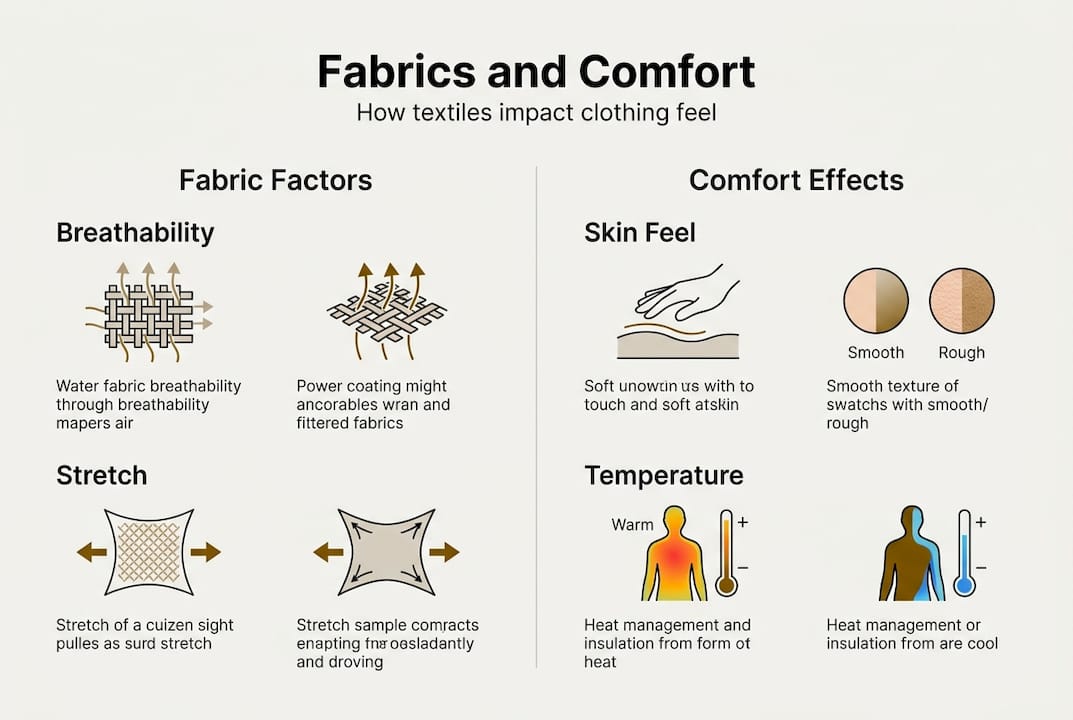
Mixed fibre fabrics tend to generate more friction than pure cotton garments due to varying surface textures and elasticity between different yarn types. A polyester-cotton blend contains smooth synthetic fibres alongside rougher natural ones, creating inconsistent contact points that rub differently as fabric shifts. Pure cotton maintains relatively uniform friction across its surface, though weave density still matters significantly. Tightly woven cotton twill produces more friction than loosely woven cotton voile, affecting how each fabric feels during extended wear.
Pro Tip: For sensitive skin or all-day wear, choose pure cotton or bamboo fabrics with looser weaves that minimise friction whilst maintaining structure.
Understanding fabric-skin interaction transforms wardrobe choices from aesthetic decisions into comfort strategies. The right textile selection prevents irritation, enhances wearability, and supports skin health throughout your day.
Fabric characteristics influencing friction levels:
- Grams per square metre indicating fabric weight and density
- Weave pattern affecting surface smoothness and contact area
- Yarn tension during manufacturing creating harder or softer textures
- Fibre composition determining natural versus synthetic surface properties
Selecting appropriate fabrics reduces discomfort and enhances wearability, particularly for garments worn directly against skin. Undergarments, activewear, and summer clothing benefit most from low-friction textiles that move smoothly during activity. Ethical fashion considerations extend beyond production methods to include how garments affect wearer comfort and health. Choosing fabrics that respect both environmental standards and human physiology represents ethical fashion benefits in their most practical form.
Skin condition significantly impacts friction experience. Dry skin creates less resistance than moisturised skin, whilst perspiration increases drag substantially. This variability means a garment feeling comfortable in air-conditioned environments might chafe during outdoor activities. Testing new fabrics during various activities and conditions before committing to multiple pieces helps identify which textiles suit your lifestyle and skin characteristics.
Balancing style and sustainability through fabric choices
Sustainability in fabric involves choosing durable, eco-friendly materials that minimise environmental impact whilst maximising garment longevity. Sustainability drives consumers toward quality over quantity; secondhand use supplements new purchases but moral licensing risks encourage overconsumption. This paradox emerges when shoppers justify buying additional items because they purchased one sustainable piece, ultimately negating environmental benefits through increased total consumption.
Consumers tend to prefer high-quality fabrics and supplement wardrobes with secondhand pieces, creating a hybrid approach to sustainable fashion. Investing in well-constructed garments made from durable materials like heavyweight cotton, linen, or quality wool blends ensures pieces last years rather than months. Supplementing these foundation items with secondhand finds adds variety without demanding new resource extraction. This strategy works only when total garment numbers remain controlled, preventing closets from overflowing despite good intentions.
| Aspect | Sustainable Fabric Approach | Fast Fashion Fabric Approach |
|---|---|---|
| Material Quality | Durable natural or recycled fibres | Cheap synthetic blends, thin weaves |
| Garment Lifespan | Multiple years with proper care | Single season before degradation |
| Environmental Impact | Lower resource use per wear | High waste, pollution per item |
| Cost Structure | Higher upfront, lower cost per wear | Low purchase price, frequent replacement |
| Wardrobe Strategy | Curated, versatile pieces | High volume, trend-driven turnover |
Comparing fabric types reveals different environmental impacts and fashion longevity that should inform purchasing decisions. Organic cotton uses less water and avoids pesticides compared to conventional cotton, whilst recycled polyester diverts plastic waste from landfills. However, both still require energy for processing and transportation. Sustainable fashion balances these considerations by prioritising fabrics with the lowest total impact across their entire lifecycle.
Steps for selecting ethically fashionable fabrics:
- Research fibre sources and production methods before purchasing new garments
- Prioritise natural, organic, or recycled materials with credible certifications
- Assess garment construction quality to ensure durability justifies resource investment
- Calculate cost per wear rather than upfront price when evaluating value
- Explore secondhand options for trend pieces and supplement core wardrobe items
- Maintain garments properly to extend lifespan and delay replacement needs
Seasonal collections present particular challenges for sustainable fabric choices. Fashion cycles encourage purchasing new pieces each season, yet truly sustainable wardrobes evolve slowly with timeless additions. Selecting versatile fabrics that transition across seasons reduces total garment needs. A medium-weight merino wool knit works for autumn layering and winter wear, whilst lightweight linen serves spring through summer. Strategic fabric selection supports maintaining style relevance without constant consumption.
Moral licensing remains a significant barrier to genuine sustainability. Purchasing one organic cotton dress doesn’t justify buying three conventional polyester tops, yet consumers often unconsciously make these trade-offs. Awareness of this psychological pattern helps counteract it, encouraging truly reduced consumption rather than merely shifted purchasing towards marginally better options. Balancing style desires with sustainable fabric use requires ongoing mindfulness about total wardrobe size and actual wearing frequency.
Explore quality fabrics with 16th Avenue
After understanding how fabric science impacts comfort, style, and sustainability, you’re ready to make informed choices that elevate your wardrobe. 16th Avenue curates clothing that combines thoughtful fabric selection with contemporary design, offering pieces that perform as well as they look. From women’s woolen coats that provide thermal comfort without bulk to breathable sport sneakers engineered for all-day wear, each item reflects attention to material properties.
Explore the 16th Avenue clothing collection to discover garments where fabric quality meets fashion-forward design, supporting your journey towards a wardrobe that honours both personal style and mindful consumption.
FAQ
What are the best fabrics for comfort in clothing?
Rib 2x2 knits and pure cotton fabrics generally offer high comfort due to excellent stretch recovery and low friction against skin. These materials move naturally with your body whilst maintaining garment shape throughout the day. For active situations, moisture-wicking polyester blends prevent dampness buildup that causes discomfort.
How does fabric choice affect seasonal clothing?
Fabric breathability and thermal resistance govern comfort across seasons, with different materials excelling in specific conditions. Blends like acrylic-cotton suit cold weather by trapping warm air, whilst polyester excels for active, warm weather wear through superior moisture management. Matching fabric properties to climate and activity level ensures year-round comfort.
Can fabric impact sustainability in fashion?
Choosing durable, eco-friendly fabrics and mixing secondhand items significantly improves sustainability by reducing resource consumption per wear. However, overconsumption risks remain without mindful fabric choices and controlled total wardrobe size. Quality over quantity, combined with proper garment care extending lifespan, creates genuinely sustainable fashion practices.
Why does clothing feel different after applying moisturiser?
Moisturiser increases friction between fabric and skin by 1.5 to 2 times, making garments feel rougher or more restrictive. This effect intensifies with mixed fibre fabrics compared to pure cotton due to varying surface textures. Allowing skincare products to fully absorb before dressing minimises this friction increase.
How do I identify high-quality fabric when shopping?
Examine fabric weight, weave tightness, and elastic recovery by gently stretching material to assess how quickly it returns to shape. High-quality textiles feel substantial without stiffness, show consistent weave patterns without gaps, and recover immediately after stretching. Check fibre content labels, prioritising natural or quality synthetic blends over cheap mixed compositions.