


What is sustainable beauty? A guide to eco-friendly style
TL;DR:
- True sustainable beauty considers the entire product lifecycle from sourcing to disposal.
- Verifiable certifications and transparency are key to avoiding greenwashing in beauty products.
- Small daily swaps like refillable packaging and multi-use products significantly reduce environmental impact.
Most people assume that slapping a leaf on a label makes a product sustainable. It doesn’t. The beauty industry has a complicated relationship with the word “natural,” and understanding the difference between feel-good marketing and genuine eco-responsibility is one of the most powerful things you can do as a conscious consumer. Sustainable beauty refers to products and practices that minimise environmental and social impacts across the entire product lifecycle, from ingredient sourcing right through to disposal. This guide breaks down what that actually means, how to spot the real thing, and how to build a routine that’s as stylish as it is responsible.
Table of Contents
- Defining sustainable beauty: What it really means
- How sustainable beauty is changing the industry
- Spotting true sustainability: Avoiding greenwashing and empty claims
- Everyday sustainable beauty: Practical tips for your routine
- Perspective: Why true sustainable beauty means making stylish, informed choices
- Explore sustainable beauty and style with 16th Avenue
- Frequently asked questions
Key Takeaways
| Point | Details |
|---|---|
| Full lifecycle thinking | Sustainable beauty considers sourcing, manufacturing, packaging, and disposal for true impact. |
| Beware greenwashing | Look for verified certifications and specifics, not just popular buzzwords or labels. |
| Market and brand leaders | Top beauty brands and a growing $190B market are driving eco-friendly innovation. |
| Fashion meets function | You don’t have to sacrifice style for sustainability thanks to modern options. |
| Practical daily action | Smart swaps and mindful routines make everyday beauty more eco-conscious. |
Defining sustainable beauty: What it really means
With the common misconceptions out of the way, let’s clarify exactly what makes a beauty product sustainable.
The word “sustainable” gets thrown around so freely in beauty marketing that it has nearly lost its meaning. True sustainable beauty considers every stage of a product’s life: where the ingredients come from, how they’re manufactured, how the product is packaged, how far it travels, how you use it, and what happens when it’s gone. That’s a long chain, and a weakness at any link undermines the whole thing.
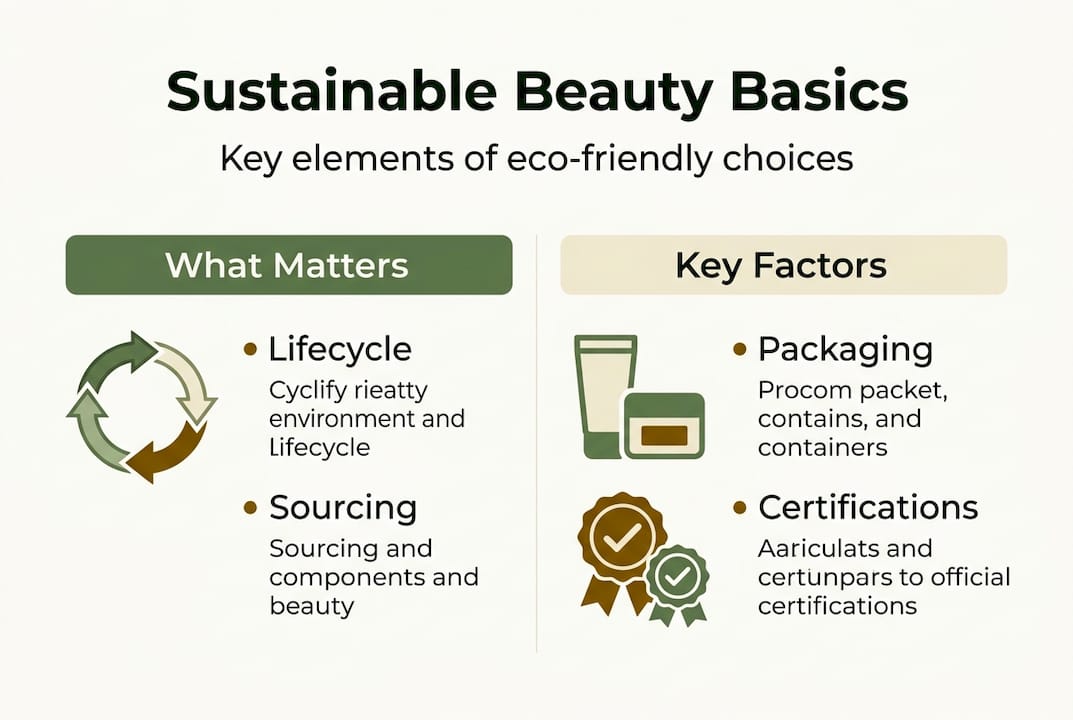
Here’s where many shoppers get tripped up. “Natural,” “clean,” and “sustainable” are three distinct concepts that the industry often blurs together:
| Term | Focus | Covers full lifecycle? |
|---|---|---|
| Natural | Ingredient origin (plant or mineral) | No |
| Clean | Ingredient safety for humans | No |
| Sustainable | Environmental and social impact, cradle to grave | Yes |
As the research makes clear, “natural” claims are not always sustainable, and clean beauty focuses on ingredient safety, not the full lifecycle. A shampoo bar made from rainforest-harvested botanicals might feel virtuous, but if sourcing those plants destroys habitat, the product’s environmental footprint is significant.
This is where the synthetics vs. naturals debate gets genuinely interesting. Lab-created ingredients can sometimes require far less land, water, and energy than their natural counterparts. Synthetic squalane, for example, is derived from sugarcane rather than shark liver oil, making it both cruelty-free and lower-impact. The chemistry is doing the heavy lifting that nature used to.
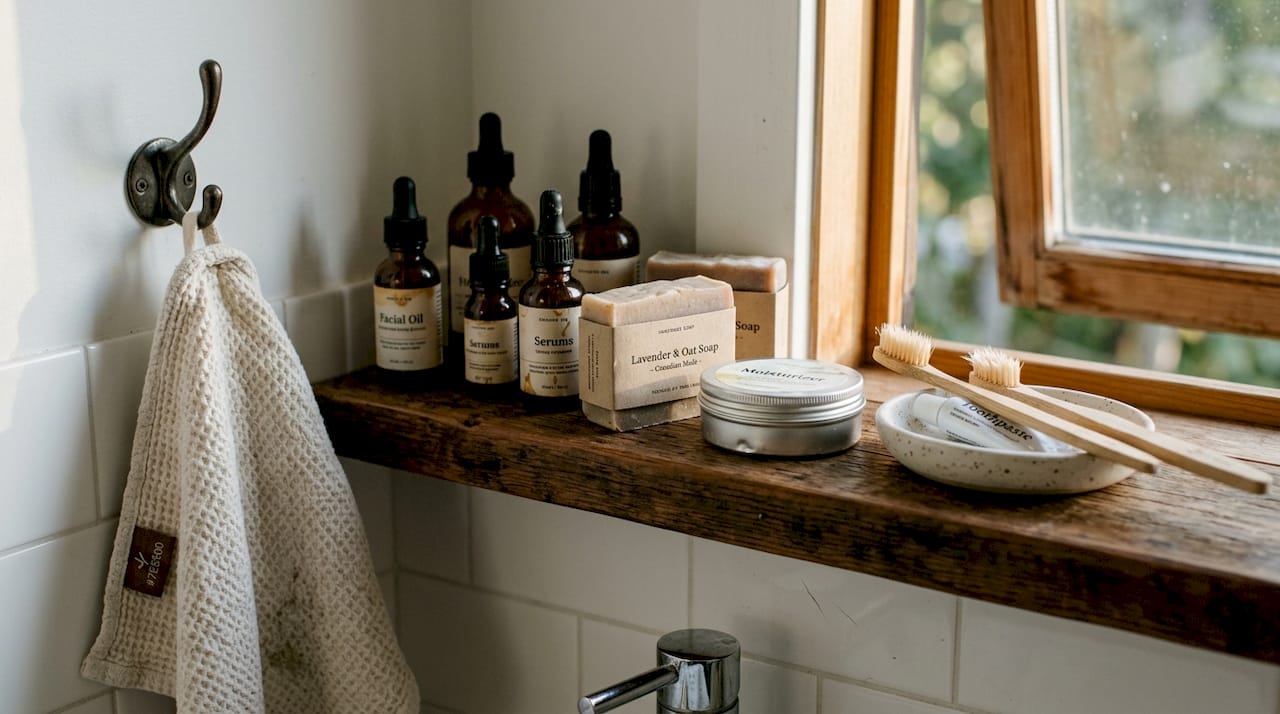
Sustainability also shows up in the details you might overlook. Packaging accounts for a massive share of beauty’s waste problem. A luxurious glass jar might feel premium, but if it can’t be recycled in your municipality, it ends up in landfill. Refillable aluminium, post-consumer recycled plastic, and compostable cardboard are all more meaningful choices.
Making eco-friendly fashion choices and sustainable beauty choices share the same logic: look past the surface and ask harder questions about the full story behind the product. If you’re curious about how this philosophy extends to your wardrobe, understanding what is sustainable fashion gives you a strong foundation.
“Sustainability in beauty is not a single attribute. It is a commitment to doing less harm at every stage of a product’s journey.”
How sustainable beauty is changing the industry
Now that you know what sustainable beauty means, here’s how it’s reshaping the beauty and fashion industries.
The numbers are hard to ignore. The sustainable beauty market was valued at $190.7 billion in 2024, representing a 12% segment share with fast and accelerating growth. This isn’t a niche trend. It’s a structural shift in how consumers and companies think about beauty.
The environmental stakes are equally striking. The cosmetics industry emitted 45 million tonnes of CO2 equivalent in 2022. That figure puts beauty in the same conversation as aviation and shipping when it comes to climate impact. The good news is that major players are responding. L’Oréal cut its emissions by 50% since 2010, a benchmark that shows large-scale change is possible.
Other brands are setting equally ambitious targets:
- Natura has committed to net-zero emissions and sources ingredients through fair-trade agreements with Amazonian communities
- Beiersdorf (the company behind Nivea) has adopted strict palm oil standards and is working toward climate-positive manufacturing
- L’Oréal has invested heavily in waterless formulations and recyclable packaging across its brand portfolio
| Benchmark | Figure |
|---|---|
| Global sustainable beauty market (2024) | $190.7 billion |
| Industry CO2e emissions (2022) | 45 million tonnes |
| L’Oréal emission reduction since 2010 | 50% |
| Sustainable beauty segment share | 12% |
Consumer demand is the engine behind all of this. When enough shoppers ask better questions and vote with their wallets, brands respond. The same dynamic is playing out in fashion, where emission reduction in fashion has become a measurable industry goal. Understanding ethical fashion impact helps you see how beauty and clothing choices are deeply connected in their environmental footprint.
The market growth also signals something encouraging: sustainability and style are no longer in tension. Brands are proving that responsible formulations, thoughtful packaging, and ethical sourcing can produce products that perform beautifully and look stunning on your vanity shelf.
Spotting true sustainability: Avoiding greenwashing and empty claims
With industry leaders and market trends in focus, how can you cut through the hype and choose truly sustainable beauty products?
Greenwashing is the practice of making a product appear more eco-friendly than it actually is. It’s rampant in beauty, and it’s getting more sophisticated. Vague claims enable greenwashing; what matters are specifics, third-party certifications, and full lifecycle assessments. Knowing what to look for puts you in control.
Common greenwashing red flags:
- Words like “natural,” “green,” “eco,” or “pure” with no supporting evidence
- Packaging that uses earthy tones and leaf imagery without any certification
- Claims about one ingredient being sustainable while ignoring the rest of the formula
- No information about supply chain, manufacturing, or packaging end-of-life
Certifications are your most reliable tool. Here are the ones worth knowing:
- COSMOS (Cosmetic Organic and Natural Standard): Verifies organic and natural ingredients and sustainable production
- EcoVadis: A supply chain sustainability rating used by major brands to assess social and environmental performance
- EU ESPR (Ecodesign for Sustainable Products Regulation): A regulatory framework pushing for durability, repairability, and recyclability in product design
Here’s a practical process for sustainability verification before you buy:
- Search the brand’s website for a sustainability report or impact page
- Check for named certifications (COSMOS, EcoVadis, Leaping Bunny, B Corp)
- Look for specific claims: percentage of recycled packaging, sourcing regions, carbon offset programmes
- Search for independent reviews or media coverage of the brand’s practices
- If a brand makes bold claims but offers no evidence, treat it as a red flag
Pro Tip: A brand that’s genuinely committed to sustainability will make it easy to find the details. If you have to dig through five pages to find any environmental information, that tells you something.
If you want to update your style sustainably, applying this same verification process to your beauty purchases is one of the most impactful habits you can build.
Everyday sustainable beauty: Practical tips for your routine
Armed with the know-how to spot the real thing, here’s how you can bring sustainable beauty into your everyday style.
Sustainability doesn’t require a complete overhaul of your routine overnight. Small, consistent swaps add up to meaningful change. Sustainable beauty involves considering ingredient sourcing, manufacturing, packaging, and after-use as interconnected parts of your daily choices, not just a one-time purchase decision.
Start with packaging. Refillable compacts, aluminium lipstick cases, and shampoo bars in cardboard packaging are all widely available now and genuinely stylish. Many premium brands have introduced refill programmes that let you keep the beautiful outer case and simply replace the product inside.
Practical swaps to try:
- Replace single-use cotton rounds with washable, reusable fabric pads
- Choose a multi-use tinted moisturiser with SPF instead of three separate products
- Invest in a high-quality makeup brush set that lasts years rather than cheap brushes that shed and end up in landfill
- Opt for concentrated formulas (like solid cleansers) that use less water and less packaging
- Select nail polishes that are free from the most harmful solvents and come in recyclable bottles
The fashion-forward approach to sustainability is about quality over quantity. One exceptional product that performs well and lasts is always more sustainable than five mediocre ones you’ll replace in three months.
Pro Tip: Prioritise products with refillable packaging or those sold in post-consumer recycled materials. You’ll spend slightly more upfront and significantly less over the course of a year.
Your beauty tools matter just as much as your products. To enhance your sustainable style with the right accessories, think about longevity and material. And when it comes to seasonal shopping, understanding seasonal style and sustainability helps you buy with intention rather than impulse.
Perspective: Why true sustainable beauty means making stylish, informed choices
The conventional wisdom in sustainable beauty has long been “natural is best.” That framing is outdated, and it’s actually holding the movement back. As the evidence around synthetics vs. naturals shows, new regulations are driving ecodesign forward, and the most stylish choice is often the most informed one, not the most “natural” one.
What we’ve come to believe is that sustainability and personal style are not competing values. They reinforce each other. When you choose products with verified sourcing, thoughtful packaging, and transparent supply chains, you’re not making a sacrifice. You’re making a statement. And that statement has real power because consumer behaviour shapes industry standards faster than regulation alone.
The future of beauty belongs to shoppers who understand ethical fashion insights and apply the same critical thinking to their cosmetics. Your routine is a form of self-expression. It can also be a form of advocacy. The brands that survive the next decade will be the ones that earn your trust through transparency, not just through beautiful packaging and clever copy.
Explore sustainable beauty and style with 16th Avenue
Ready to align your beauty routine with your values?
At 16th Avenue, we curate beauty tools and accessories with an eye on quality, longevity, and style. A well-chosen eco-conscious makeup brush set built to last years is a far more sustainable investment than disposable alternatives. Our makeup blending sponge is designed for reuse, giving you a flawless finish without the waste. From beauty tools to fashion-forward accessories, we believe that looking good and doing good aren’t mutually exclusive. Shop sustainable beauty and fashion and discover a curated selection that puts style and substance side by side.
Frequently asked questions
What makes a beauty product truly sustainable?
A truly sustainable beauty product considers its entire lifecycle, from sourcing to disposal, and relies on verifiable certifications rather than vague claims.
How can I tell if a brand is greenwashing?
Look for detailed, third-party certifications and transparent ingredient sourcing rather than buzzwords like “natural” or “eco.” Vague claims with no supporting data are the clearest warning sign.
Are synthetic ingredients bad for the environment?
Not necessarily. Some synthetics can be more sustainable than natural alternatives, offering lower environmental impact, greater efficacy, and no habitat disruption.
What are the most impactful everyday beauty swaps?
Choose refillable, multi-use, or zero-waste packaging and prioritise higher-quality products over quantity. These two habits alone significantly reduce your beauty routine’s environmental footprint.