


What is a slip dress? History, fabrics, and styling
TL;DR:
- A slip dress is a versatile, bias-cut garment inspired by lingerie, characterized by spaghetti straps and a fluid silhouette. Its fabric, length, and layering determine its formality and suitability across occasions and seasons, with quality bias cut and self-lined options offering the best drape and opacity. Proper styling, such as adding structured outerwear or selecting appropriate footwear, transforms it from casual to formal, making it an essential wardrobe investment.
A slip dress is defined as a lightweight, bias-cut dress modelled after the undergarment slip, characterised by spaghetti straps, a V-neck or straight neckline, and a sleek, body-skimming silhouette. The term “slip dress” comes directly from its predecessor: the slip worn beneath dresses to prevent fabric cling and add modesty. Today, the slip dress stands as one of the most versatile pieces in women’s fashion, appearing in silk at black-tie events and in cotton knit at weekend markets. Its fluid, body-skimming drape combines style and comfort in a way few other garments can match.
What is the history of the slip dress?
The slip dress did not begin on a runway. It began in a lingerie drawer. In the early 20th century, women wore slips as functional undergarments beneath sheer or structured dresses. These garments were cut simply, made from silk or nylon, and designed to be invisible. The idea that they could become outerwear would have seemed absurd at the time.
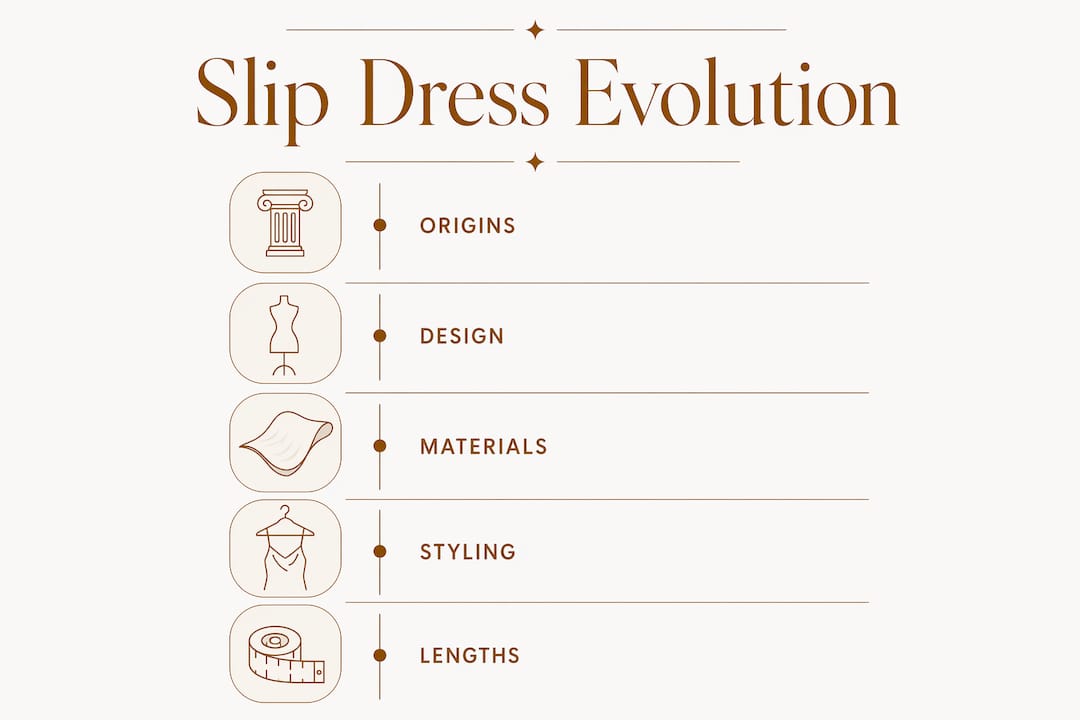
The transformation happened in the 1990s, when the lingerie-as-outerwear trend took hold of fashion culture. Designers began sending slip-style dresses down the runway, and the streets followed. Slip dresses gained mainstream popularity as part of this movement, worn on red carpets and city streets alike, embodying a raw, minimalist aesthetic that felt both rebellious and effortless.
The style icons who cemented the slip dress in fashion history include:
- Kate Moss, whose off-duty slip dress looks in the mid-1990s defined the grunge-meets-glamour era
- Carolyn Bessette-Kennedy, whose minimalist Narciso Rodriguez bias-cut gown at her 1996 wedding became one of the most referenced slip dress moments in history
- Gwyneth Paltrow, who wore a pink Ralph Lauren slip-style gown to the 1999 Oscars and sparked a decade of conversation about minimalist dressing
- Winona Ryder and Courtney Love, who wore slip dresses as part of the 1990s alternative fashion scene
The slip dress faded slightly in the early 2000s as maximalism took over, but it returned with force in the 2010s and has not left since. Its timelessness and year-round wearability make it a genuine wardrobe investment rather than a trend piece.
What are the design elements and fabrics of a quality slip dress?
The slip dress’s defining technical feature is the bias cut. Cut at a 45-degree angle to the fabric’s grain, the bias cut allows the material to move with the body rather than against it, creating the signature liquid silhouette that distinguishes a true slip dress from a simple tank dress. This is what separates authentic slip dresses from similar-looking garments at a glance.
Fabric choice determines everything about how a slip dress looks and where you can wear it. Here is how the most common fabrics compare:
- Silk produces the most luxurious drape and the highest formality. It catches light beautifully and feels cool against the skin, making it the gold standard for evening slip dresses.
- Satin (often polyester-based) mimics silk’s sheen at a lower price point. Satin and silk blends are inherently elevated and suit evening or smart-casual occasions.
- Crepe offers a matte finish with excellent drape. It is more forgiving than satin and works well for daytime or office-adjacent settings.
- Viscose is breathable, lightweight, and affordable. It drapes well but wrinkles more easily than silk or crepe.
- Cotton knit or ribbed cotton produces the most casual result. These fabrics give the slip silhouette a relaxed, everyday feel suited to weekend outfits.
Self-lined slip dresses are worth the extra cost. An unlined satin or silk slip dress can be unforgiving and may require shapewear underneath, while a self-lined version adds structure, opacity, and a cleaner drape.
Adjustable spaghetti straps are not a minor detail. With bias-cut fabric, even a centimetre of strap length affects how the neckline sits and how the dress drapes across the torso. Always check that straps are adjustable before purchasing.
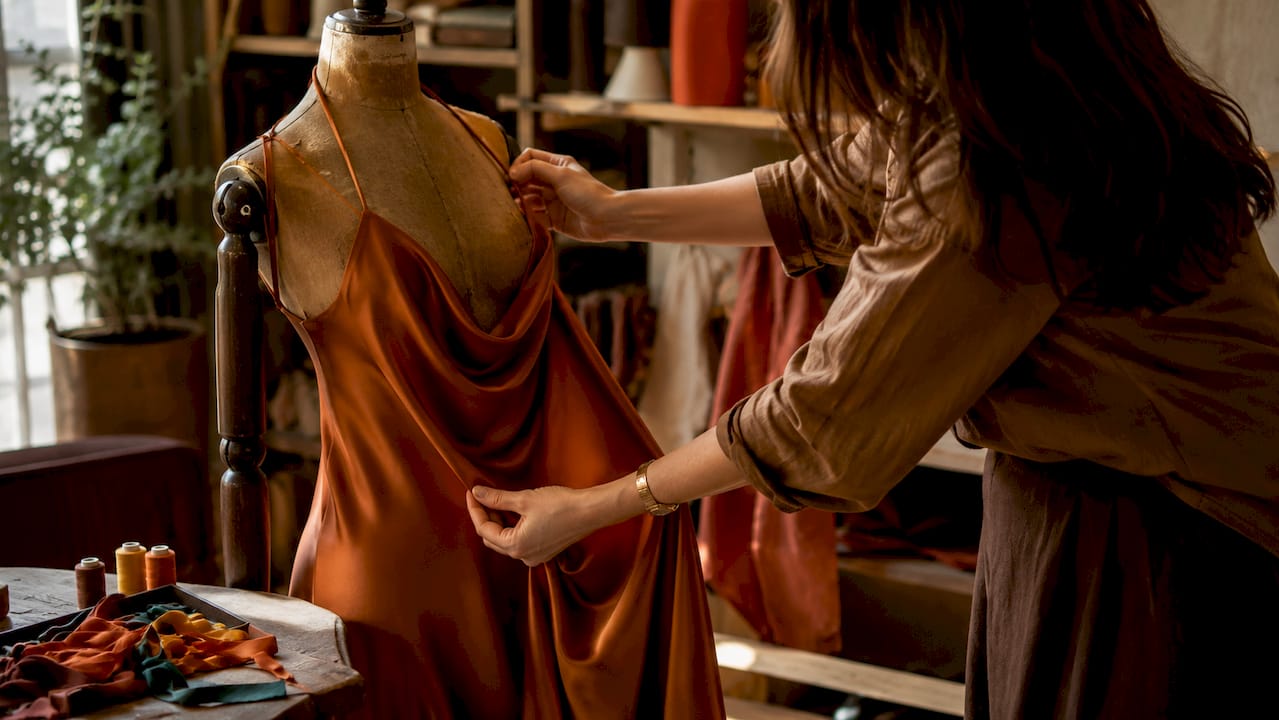
Pro Tip: When shopping for a silk or satin slip dress, hold it up to the light. A quality self-lined dress will show no transparency. If you can see your hand through it, plan for a slip or seamless underlayer.
How to style a slip dress across occasions and seasons
The slip dress’s greatest strength is its adaptability. The same silhouette that reads as lingerie in isolation becomes polished or casual depending entirely on what surrounds it. Pairing a slip dress with a blazer and trainers creates a casual-chic look that works for brunch, gallery visits, or creative office environments.
Here are the core styling formulas by occasion:
- Casual daywear: Slip dress in viscose or cotton knit, worn with a vintage denim jacket, white trainers, and a canvas tote. Keep jewellery minimal: a thin gold chain or small hoops.
- Date night: Satin or silk slip dress in a jewel tone or classic black, paired with strappy heeled sandals and a small clutch. Add a thin gold belt at the waist to define the silhouette.
- Smart casual or office-adjacent: Layer a fitted turtleneck underneath the slip dress, add pointed-toe flats or low block heels, and carry a structured leather bag. This combination works particularly well in autumn.
- Formal events: A floor-length silk slip dress with minimal accessories, a delicate necklace, and heeled mules. Let the fabric do the work.
Layering is the skill that makes slip dresses work year-round. Layering over trousers with a tonal trench coat produces a sophisticated, multi-textured look that extends the dress into cooler months. In winter, a chunky knit worn over or under a midi slip dress creates contrast between structured and fluid. You can find practical guidance on this in 16thavenue’s layering clothes guide.
Footwear shifts the entire register of a slip dress look. Chunky boots push it toward grunge or street style. Strappy heels move it toward evening. White trainers make it approachable and casual. Ballet flats land it somewhere polished but relaxed.
Pro Tip: To avoid the pyjama effect in a satin slip dress, always add one element with structure or texture: a leather jacket, a tailored blazer, or even a wide-brim hat. One contrast piece is all it takes.
Mini, midi, or maxi: which slip dress length suits you?
Slip dresses come in mini, midi, and maxi lengths, and each carries a distinct energy. Choosing the right length is less about body type and more about the occasion and the styling story you want to tell.
| Length | Vibe and occasion | Styling notes |
|---|---|---|
| Mini (above the knee) | Youthful, casual, festival-ready | Pairs well with chunky boots or trainers; suits warm-weather events and casual outings |
| Midi (below knee to mid-calf) | Polished, versatile, seasonless | The most adaptable length; works for office, brunch, and evening with footwear changes |
| Maxi (floor-length) | Elegant, effortless, party-ready | Best in silk or satin; suits formal events, beach cover-ups, and elevated daywear |
The midi is the most universally flattering and practical length. It layers well under coats, works with both flats and heels, and reads as polished without requiring a formal occasion. If you are buying your first slip dress, a midi in a neutral satin or crepe is the most versatile starting point. For more guidance on choosing between trendy dress styles, 16thavenue’s blog covers the full spectrum.
Common slip dress mistakes and how to avoid them
The most frequent error is wearing a thin, lace-trimmed slip dress with nothing else. Adding one structured element such as a blazer or leather jacket transitions the look from bedroom to street immediately. Without that anchor, even the most expensive silk slip reads as unfinished.
Here are the most common pitfalls and their fixes:
- The pyjama effect: Caused by wearing a satin slip dress with no layering or structured accessory. Fix it with a blazer, a wide belt, or a leather jacket.
- Visible underwear lines: Bias-cut fabric is unforgiving. Seamless, nude-toned underwear is non-negotiable under satin or silk.
- Poor strap fit: Straps that are too long cause the neckline to gape and the dress to lose its shape. Always adjust before wearing and look for dresses with metal slider adjusters rather than fixed straps.
- Wrong fabric for the occasion: Wearing a cotton knit slip to a formal dinner or a silk slip to a muddy festival both miss the mark. Match fabric formality to the event.
- Over-accessorising: A slip dress is a minimalist garment. Stacking multiple necklaces, bracelets, and statement earrings simultaneously overwhelms the silhouette. Choose one focal point.
Pro Tip: For accessorising slip dresses effectively, apply the rule of one: one statement piece, whether that is a belt, a necklace, or a jacket. Everything else stays quiet.
Key takeaways
A slip dress is defined by its bias cut, spaghetti straps, and fluid silhouette, and its versatility depends entirely on fabric choice, length, and the structured pieces layered with it.
| Point | Details |
|---|---|
| Bias cut is the defining feature | It creates the fluid drape that separates a true slip dress from a tank dress. |
| Fabric determines formality | Silk and satin suit evening; viscose and cotton knit work for casual daywear. |
| Layering prevents the pyjama effect | One structured piece such as a blazer or leather jacket anchors the look. |
| Midi length is the most versatile | It works across occasions and seasons with minimal styling adjustments. |
| Adjustable straps matter | They control neckline fit and drape, which is critical with bias-cut fabric. |
Why the slip dress is the one piece worth getting right
I have written about fashion for a long time, and the slip dress is the garment I see misunderstood most consistently. People either dismiss it as too casual or over-style it into something unrecognisable. The truth is that the slip dress rewards restraint.
What makes it genuinely special is the bias cut. Most people cannot articulate why a good slip dress feels different from a cheap one, but the answer is almost always in the cut. A properly bias-cut dress in even a mid-range fabric moves in a way that flatters every body shape without trying to. It does not cling or pull. It follows.
The lingerie-as-outerwear stigma that once surrounded the slip dress has completely dissolved. Slip dresses are now viewed as seasonless wardrobe investments, and rightly so. I have seen the same midi slip dress worn under a wool coat in November and with sandals in July. That range is rare in a single garment.
My honest advice: buy one well-made slip dress in a neutral colour, preferably a midi in crepe or satin. Learn to layer it. Experiment with footwear. The dress will not limit you. Your imagination is the only constraint.
— Glenville
Style your slip dress with pieces from 16thavenue
A slip dress only reaches its full potential when paired with the right outerwear and footwear. At 16thavenue, you will find pieces built specifically for that purpose. The Women’s Trendy Autumn and Winter Woolen Coat layers beautifully over a midi slip dress, adding structure and warmth without overwhelming the silhouette. For casual daywear, the Women’s Casual Low Wedge Sport Sneakers pair effortlessly with a cotton or viscose slip for a relaxed, put-together look. When winter arrives, the Women’s Air-cushion Sole Fashion Snow Boots keep the slip dress wearable through the coldest months in style. Browse the full collection at 16thavenue.ca.
FAQ
What is a slip dress exactly?
A slip dress is a lightweight, minimalist dress modelled after the undergarment slip, defined by spaghetti straps, a bias cut, and a body-skimming silhouette. It typically comes in silk, satin, crepe, or viscose fabrics and ranges from mini to maxi length.
Is a slip dress considered formal?
A slip dress can be formal or casual depending on the fabric and styling. Silk and satin slip dresses in floor-length or midi cuts suit formal occasions, while cotton knit or viscose versions are better suited to casual daywear.
How do I avoid looking like I am wearing pyjamas in a slip dress?
Wearing a slip dress without a structured layer is the most common cause of the pyjama effect. Adding a blazer, leather jacket, or tailored coat immediately grounds the look and shifts it from bedroom to street.
What shoes work best with a slip dress?
Footwear changes the entire tone of a slip dress outfit. Strappy heels suit evening looks, chunky boots create a street-style contrast, and white trainers or ballet flats work for casual daywear.
What is the best fabric for a slip dress?
Silk offers the finest drape and highest formality, making it the best choice for evening wear. For everyday use, crepe and viscose provide good drape with more practicality, while cotton knit suits the most casual settings.