


Tips for layering clothes: your practical style guide
TL;DR:
- Layering clothes involves combining garments in a deliberate system to balance temperature, style, and weather conditions. The three-layer system includes a moisture-wicking base, an insulating mid, and a weather-resistant outer layer, with fit and fabric choices crucial for effectiveness. Limiting visible layers to three, focusing on fabric quality, and using texture, color, and proportion enhance both comfort and style across all seasons.
Layering clothes is the practice of combining multiple garments in a deliberate sequence to manage body temperature, express personal style, and adapt to shifting weather conditions. The standard industry term is the layering system, and it divides clothing into three functional zones: a base layer for moisture management, a mid layer for insulation, and an outer layer for weather protection. These tips for layering clothes apply whether you are dressing for a brisk Canadian autumn commute or a smart-casual dinner. The key is choosing the right fabrics and fits at each level so you stay comfortable without sacrificing how you look.
1. Understand the three-layer system first
The three-layer system is the foundation of every successful layered outfit. Base, mid, and outer layers each serve a distinct purpose, and understanding that purpose tells you exactly what to buy and how to wear it. Skipping this step is why most layered outfits fail before they leave the house.
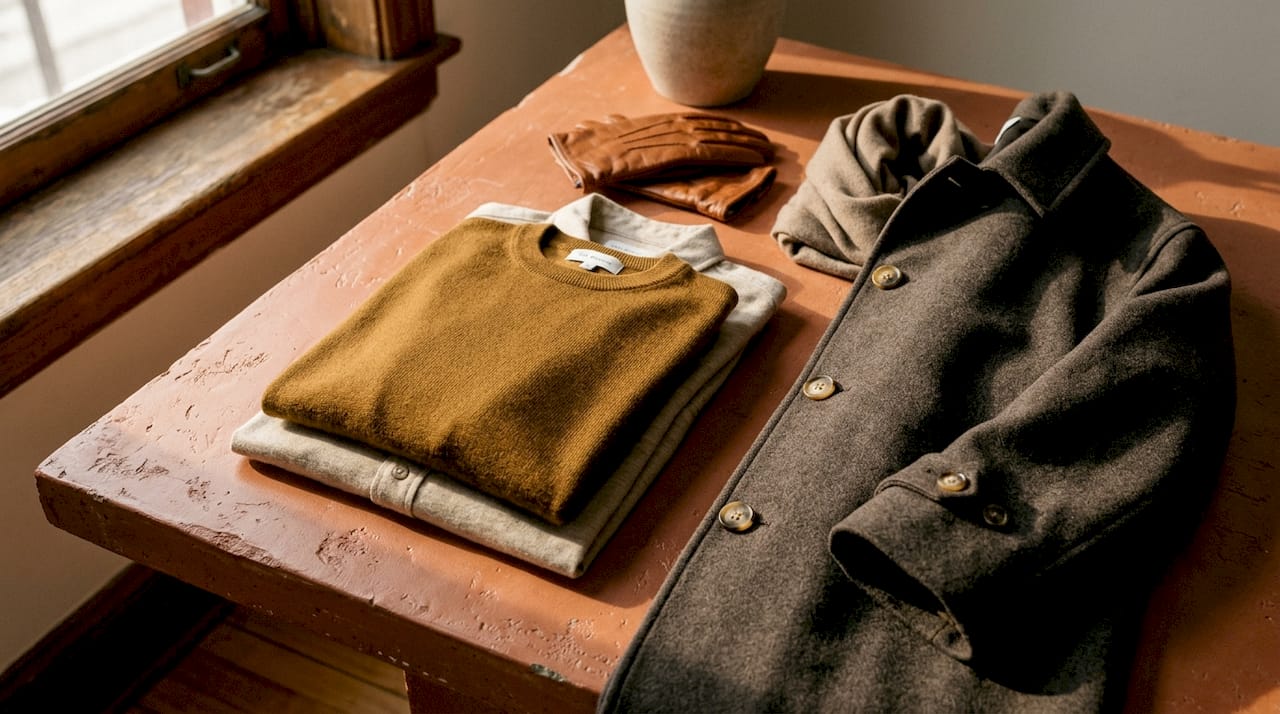
The base layer sits directly against your skin. Its job is moisture management, pulling sweat away so you stay dry and warm. The mid layer traps warm air close to your body. The outer layer shields you from wind, rain, and cold. Layering combines functional outdoor apparel science with everyday fashion aesthetics, which is why the system works as well on a city street as it does on a hiking trail.
2. Choose the right fabrics for each layer
Fabric choice determines whether your layered outfit feels polished or puffy. The wrong material at any level creates bulk, traps heat unevenly, or collapses the silhouette you are trying to build.
Base layers work best in thin, breathable, moisture-wicking materials:
- Merino wool: naturally temperature-regulating and odour-resistant
- Technical polyester blends: lightweight and fast-drying
- Bamboo jersey: soft against skin and breathable for everyday wear
Mid layers need insulation without rigidity. Good choices include:
- Lightweight fleece or microfleece
- Fine-gauge jersey knits
- Lightweight wool or cashmere blends
Outer layers call for structure and weather resistance. A waterproof shell, a wool coat, or a waxed cotton jacket all work well. The best outer layer is waterproof, windproof, and breathable enough to prevent clamminess under sustained activity.
Pro Tip: Before buying a mid layer, roll it tightly in your hands. If it springs back stiff and rigid, it will stand away from your body and create visual bulk. A mid layer that collapses softly and drapes naturally is the one worth buying.
3. Follow the thin-to-thick, fitted-to-relaxed rule
Fit progression is the single most overlooked principle in layering. The thin-to-thick rule means your lightest, most fitted garment goes closest to your skin, and each subsequent layer gets slightly looser and heavier. This preserves the insulating air between layers and prevents bunching.
Outer pieces should have slightly more room than inner layers. A coat that fits perfectly over a thin shirt will strain across the shoulders the moment you add a knit underneath. Size up in outerwear by one size if you plan to layer consistently through autumn and winter.
Pro Tip: Try your outer layer on over your intended mid layer before purchasing. If the shoulders pull or the front gaps, the fit progression is wrong and no amount of styling will fix it.
4. Limit visible layers to three
Limiting visible layers to three is the clearest way to avoid a cluttered, costumey look. Three visible layers create a clean silhouette. Hidden base layers do not count toward this total, so a thermal undershirt beneath a fitted turtleneck beneath a blazer reads as two visible layers, not three.
This rule also simplifies getting dressed. When you know the ceiling is three, you stop adding pieces and start editing. The result is a more intentional outfit every time.
5. Layering outfit ideas for every season
Seasonal layering is less about adding more clothes and more about adapting fabric weight and removability to fluctuating temperatures. Here are practical combinations for each season:
- Winter: A merino thermal base, a chunky but compressible knit sweater, and a structured wool coat. Pair with relaxed trousers to ease movement and avoid a stiff silhouette. Finish with snow boots for warmth underfoot.
- Autumn: A fitted long-sleeve tee, an open-weave knit or flannel overshirt, and a chore jacket or bomber. This combination handles the temperature swings common in Canadian fall weather. For more autumn-specific ideas, the fall layering guide at 16thavenue covers this season in detail.
- Spring: Lighter fabrics like linen or cotton jersey as a base, a lightweight cardigan or denim jacket as a mid layer, and a trench coat you can tie around your waist when the afternoon warms up.
- Smart-casual occasions: A fine-gauge merino crewneck worn under a tailored blazer, with slim trousers. This reads as polished without feeling overdressed.
- Casual weekends: A fitted tee, a flannel shirt left open, and a quilted vest or bomber jacket. Accessories like a knit beanie or a scarf add a subtle pop of colour without adding visual weight.
6. Use texture, colour, and proportion to your advantage
Texture mixing is what separates a thoughtful layered outfit from a random pile of clothes. Pairing a smooth cotton shirt with a nubby wool cardigan and a suede or leather outer layer creates visual interest at every level. Each fabric catches light differently, which adds depth without adding bulk.
Colour strategy matters just as much as fabric. Use neutrals at the base and introduce colour or pattern in the mid layer or accessories. Tonal dressing, where you stay within one colour family across all three layers, is the most reliable way to look put-together quickly. Longline coats, open blazers, and tonal dressing create vertical lines that elongate the figure. This is especially useful when layering adds horizontal visual weight across the torso.
Proportion is the third variable. Stagger hem lengths so each layer peeks out slightly below the one above it. A shirt hem visible below a sweater, which sits below a coat, creates a layered effect that looks deliberate rather than accidental.
Pro Tip: An open-front cardigan or longline coat worn over a monochrome outfit is the fastest way to add visual length. The unbroken vertical line from shoulder to hem makes the whole outfit read as taller and leaner.
| Technique | Effect |
|---|---|
| Tonal colour scheme | Creates visual harmony and elongates the silhouette |
| Mixed textures | Adds depth and interest without adding bulk |
| Staggered hem lengths | Builds deliberate layered depth and avoids a boxy shape |
| Vertical lines via longline pieces | Elongates the frame and balances top-heavy layering |
7. Avoid these common layering mistakes
Most layering problems come down to a short list of repeatable errors. Recognising them is faster than learning the right approach from scratch.
- Ignoring fabric weight: Pairing two heavy fabrics at adjacent layers creates bulk and compresses the insulating air between them. Bulky mid layers compress warmth rather than trap it.
- Ill-fitting outerwear: A coat that fits the shoulders but strains across the back when you add a mid layer is the wrong size for layering. Always size for the fullest combination you plan to wear.
- Over-matching colours and textures: Wearing the same fabric in the same colour across all three layers reads as flat. Introduce at least one contrasting texture or a slightly different tone.
- Exceeding three visible layers: More than three visible layers leads to a cluttered look and poor comfort. Edit ruthlessly.
- Skipping accessories: A scarf, hat, or quality boots complete a layered look. Without them, even a well-constructed outfit can feel unfinished.
Key takeaways
Effective layering relies on fabric choice, fit progression, and a three-layer structure to balance warmth, comfort, and style across every season.
| Point | Details |
|---|---|
| Use the three-layer system | Base, mid, and outer layers each serve a distinct function. Build from there. |
| Follow thin-to-thick fit progression | Each layer should be slightly looser than the one beneath it to prevent bunching. |
| Limit visible layers to three | More than three visible layers creates clutter. Hidden base layers do not count. |
| Mix textures and use tonal colour | Contrasting textures add depth; tonal schemes create elongation and visual harmony. |
| Accessories complete the look | Scarves, hats, and quality footwear refine and finish any layered outfit. |
What I have learned from years of layering
The advice that changed how I dress is this: layering is an editing process, not an adding process. Most people put on more. The better move is to put on three pieces and then ask which one you can remove.
Fabric is where I spend the most time. A merino base layer under a fine-gauge knit under a structured coat is genuinely warmer and slimmer than a cotton tee under a thick hoodie under a puffer. The science is real. Thinner, better-quality fabrics trap air more efficiently than thick, stiff ones. Effective layering preserves insulating air through balanced fit and fabric choices rather than simply piling on more fabric.
My favourite combination for a Canadian autumn morning is a fitted ribbed turtleneck, an open-front longline cardigan, and a wool coat. It handles a 10-degree temperature swing without requiring a wardrobe change. The turtleneck does the work of a scarf, the cardigan adds warmth without bulk, and the coat handles wind. Three layers, one decision, all day.
The one thing most style guides skip is the lower body. If your top half is heavily layered, keep the bottom streamlined. Slim trousers or straight-leg jeans balance the visual weight. Wide-leg trousers work too, but only if the outer layer is long enough to create a continuous vertical line. For more on building versatile layered outfits across seasons, 16thavenue has a useful breakdown worth reading.
Experiment. The first time you try a new combination it will feel wrong. By the third time, it will feel like your own.
— Glenville
Build your layering wardrobe with 16thavenue
The outer layer carries the most visual weight in any layered outfit, so it is worth investing in one that drapes well and works across multiple combinations.

16thavenue’s women’s woolen coat is cut with enough room to layer a mid-weight knit underneath without pulling at the shoulders. It is the kind of outer layer that works over a fine-gauge sweater on a cold day and over a fitted tee on a mild one. Pair it with the sport sneakers for a casual layered look, or with snow boots for full winter coverage. Browse the full autumn and winter collection at 16thavenue.ca to find the pieces that anchor your layering wardrobe this season.
FAQ
What is layering clothes?
Layering clothes is the practice of wearing multiple garments in a deliberate sequence, typically a base layer, mid layer, and outer layer, to manage body temperature and create stylish, adaptable outfits.
How many layers should you wear at once?
Limit visible layers to three for a clean, polished silhouette. Hidden base layers do not count toward this total, so a thermal undershirt beneath a knit and a coat reads as two visible layers.
What are the best fabrics for layering?
Merino wool and technical polyester blends work best as base layers. Lightweight fleece or fine-gauge knits suit mid layers. Structured wool coats or waterproof shells perform best as outer layers.
How do you layer clothes without looking bulky?
Follow the thin-to-thick rule: wear your lightest, most fitted garment closest to your skin and increase looseness and weight with each layer. Avoid stiff mid layers that stand away from the body and compress insulating air.
How do you layer dresses stylishly?
Wear a fitted turtleneck or long-sleeve top underneath a dress as a base, add a belted cardigan or open blazer as a mid layer, and finish with a longline coat. Stagger the hem lengths so each piece is visible, and keep the colour palette tonal for a cohesive look.