


Master layering in fall fashion for stylish autumn looks
Layering in fall fashion often gets dismissed as bulky and unflattering, but this couldn’t be further from the truth. When done right, layering allows mixing different clothing items for warmth and style, transforming your autumn wardrobe into a versatile collection of chic outfits. This guide breaks down exactly what layering means in fall fashion, which pieces work best, and how to combine them for maximum style impact. You’ll discover practical techniques to create stunning looks that keep you comfortable through temperature changes while expressing your personal fashion sense. Whether you’re new to layering or looking to refine your approach, these insights will help you build confident, fashionable autumn outfits.
Table of Contents
- Key takeaways
- Understanding layering in fall fashion
- Essential layering pieces for a fall wardrobe
- Techniques for stylish layering and outfit combinations
- Benefits of mastering fall layering in your wardrobe
- Explore 16th Avenue’s fall layering essentials
- Frequently asked questions
Key Takeaways
| Point | Details |
|---|---|
| Layer for warmth and style | Layer to stay warm while keeping a polished look as temperatures change throughout the day. |
| Choose the right pieces | Select a fitted base layer, a flowing mid layer, and a structured outer layer that work together without bulk. |
| Balance fitted and relaxed | Alternate close fitting pieces with relaxed ones to maintain proportion and movement. |
| Essential fall layering pieces | Base layer basics in neutral colours such as white, black, grey and navy provide a smooth foundation. |
Understanding layering in fall fashion
Layering in fall fashion means strategically wearing multiple clothing pieces together to create outfits that deliver both warmth and style. Rather than simply piling on clothes, effective layering builds dimension and visual interest while letting you adjust to autumn’s unpredictable temperatures. The technique serves three core purposes: regulating your comfort as weather shifts throughout the day, adding depth to your overall look, and providing endless opportunities to express your personal style through creative combinations.
Successful fall layering relies on selecting the right pieces that work together harmoniously. Popular layering staples include lightweight sweaters that fit close to the body, open cardigans that add length and flow, structured jackets that define your silhouette, and accessories like scarves that introduce colour and texture. Each piece should complement the others in weight, fit, and aesthetic, creating a cohesive outfit rather than a disjointed collection of garments.
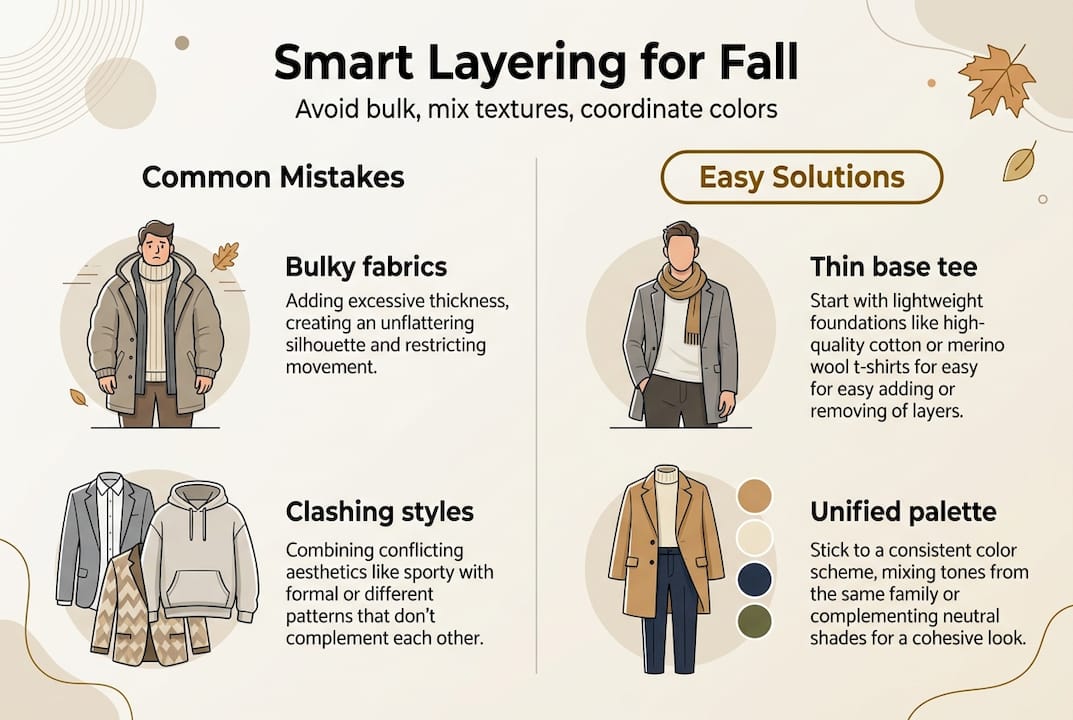
Many women avoid layering because they worry about looking bulky or overwhelmed by fabric. This happens when you choose pieces that are too thick, too loose, or clash in colour and style. The secret lies in understanding how different fabrics, cuts, and proportions interact. A fitted base layer provides a smooth foundation, while a flowing mid-layer adds movement without bulk. Your outer layer should have enough structure to pull everything together without constricting the layers beneath.
Fall’s transitional weather makes layering particularly valuable. Morning chill gives way to midday warmth, then drops again by evening. Instead of committing to one outfit temperature, layering lets you remove or add pieces as needed. This flexibility means you stay comfortable and stylish from your morning coffee through evening plans, all while maintaining a polished appearance that reflects current affordable fall fashion trends 2026.
Common layering mistakes include choosing pieces in competing styles, using fabrics that bunch or cling awkwardly, and neglecting proper fit at each layer. Avoid pairing multiple oversized pieces, which create shapelessness, or stacking too many tight layers, which restrict movement and create unflattering lines. Instead, alternate fitted and relaxed pieces to maintain balance and flow throughout your outfit.
Essential layering pieces for a fall wardrobe
Building a versatile layering wardrobe starts with selecting foundational pieces that work across multiple outfits and occasions. Woolen coats, pullovers, cardigans, and hoodies form the backbone of stylish layering, each serving distinct purposes in your autumn rotation. These staples provide the structure and warmth you need while offering enough variety to keep your looks fresh and interesting throughout the season.
Your base layer collection should include basic tees and long-sleeve tops in neutral colours like white, black, grey, and navy. These pieces sit closest to your skin and create a smooth foundation for everything else. Look for breathable fabrics with a bit of stretch that won’t bunch under sweaters or create visible lines. Cotton blends work well for everyday wear, while modal or bamboo fabrics offer extra softness and temperature regulation.
Mid-layer pieces add warmth and personality to your outfits. A quality fall pullover sweater in a classic knit becomes incredibly versatile when styled different ways. Choose sweaters in various weights, from lightweight knits for mild days to chunkier options for colder weather. Cardigans deserve special attention because they layer beautifully over almost anything while remaining easy to remove. A fall winter cardigan jacket bridges the gap between sweater and coat, perfect for those in-between temperature days.
Outerwear completes your layering system and makes the strongest visual impact. A structured women’s trendy autumn and winter woolen coat elevates any outfit instantly, while a casual fall winter casual thick hoodie keeps things relaxed and comfortable. Your outer layers should accommodate the bulk of inner layers without looking oversized when worn alone. Check that sleeves are long enough to cover layered pieces and that shoulders fit properly without pulling or gaping.
Pro Tip: Choose layering pieces in a cohesive colour palette so everything works together effortlessly. Build around three neutral base colours, then add two or three accent colours that complement your skin tone and personal style. This strategy means you can mix pieces freely without worrying whether they’ll clash, making morning outfit selection quick and stress-free while maximising the number of combinations possible from fewer items.
Texture mixing elevates layered outfits from basic to brilliant. Pair smooth cotton tees with chunky knit sweaters, or combine sleek leather jackets with soft wool scarves. These contrasts create visual interest and dimension that catches the eye. Just ensure textures complement rather than compete, keeping your overall look balanced and intentional rather than chaotic.
Techniques for stylish layering and outfit combinations
Mastering layering techniques transforms individual clothing pieces into cohesive, fashionable outfits. Combining textures, colours, and garment lengths can elevate layered outfits from simple to stunning. The key lies in following a systematic approach that builds your look from the inside out while maintaining proper proportions and visual balance.
Follow these steps for foolproof layering:
- Start with your base layer, choosing a fitted top that smooths against your body without clinging uncomfortably.
- Add your mid-layer, selecting a sweater or cardigan that complements your base in colour and provides the warmth level you need.
- Include your outer layer, picking a coat or jacket that accommodates the bulk underneath while maintaining a flattering silhouette.
- Finish with accessories like scarves, hats, or jewellery that tie your colour palette together and add personality.
- Check your proportions in a mirror, ensuring no single layer overwhelms the others and your overall shape remains defined.
Colour coordination makes or breaks layered outfits. Monochromatic schemes using different shades of one colour create elongating, sophisticated looks. Complementary colour pairings like navy and camel or burgundy and forest green add richness without chaos. When mixing patterns, keep one piece bold and others subtle, or choose patterns in the same colour family to maintain cohesion. Avoid combining more than two patterns unless they share a common colour or scale.
| Occasion | Base layer | Mid-layer | Outer layer | Accessories |
|---|---|---|---|---|
| Casual weekend | White tee | Grey cardigan | Denim jacket | Patterned scarf |
| Work office | Black turtleneck | Camel sweater | Structured blazer | Simple jewellery |
| Evening out | Silk camisole | Fitted cardigan | Leather jacket | Statement necklace |
| Outdoor activities | Long-sleeve thermal | Fleece pullover | Waterproof coat | Beanie and gloves |
Pro Tip: Balance proportions by pairing fitted pieces with looser ones. If you’re wearing a chunky sweater, choose slim-fitting trousers or a pencil skirt. When your bottoms have volume like wide-leg trousers, keep your top layers more streamlined. This creates visual harmony and prevents your outfit from looking bulky or shapeless, regardless of how many layers you’re wearing.
Accessories complete layered looks and provide opportunities for creative expression. A lightweight scarf adds colour and texture without bulk, while also serving the practical purpose of extra neck warmth. Hats introduce vertical lines that balance horizontal layering. Belts worn over cardigans or long sweaters define your waist and create shape. Even jewellery plays a role, with longer necklaces complementing V-neck layers and statement earrings drawing attention upward when you’re wearing multiple top layers.
Garment length variation adds visual interest and sophistication. Layer a longer cardigan over a shorter sweater, or let a longer base layer peek out beneath a cropped jacket. These length differences create lines that guide the eye and add dimension to your silhouette. Just ensure each visible layer is intentional and finished looking, not accidentally showing because something rode up or shifted.
Benefits of mastering fall layering in your wardrobe
Developing strong layering skills delivers practical advantages that extend far beyond simply staying warm. Layering enhances comfort, style adaptability, and optimises wardrobe investment, making it one of the smartest approaches to autumn dressing. When you understand how to layer effectively, you unlock the full potential of every piece you own while building a more sustainable, versatile wardrobe.
Temperature adaptability stands as layering’s most obvious benefit. Fall weather shifts dramatically throughout the day and varies considerably from early September through late November. Layered outfits let you add or remove pieces as conditions change, maintaining comfort without sacrificing style. You avoid the common problem of being too hot indoors and too cold outside, or starting your day perfectly comfortable only to freeze by evening. This flexibility means you dress confidently for any activity, knowing you can adjust as needed.
Creative self-expression flourishes through layering because the combinations are virtually endless. The same base pieces create completely different looks depending on how you style them. A simple white tee transforms from casual to polished to edgy based on what you layer over, under, and around it. This variety keeps your style fresh and interesting without requiring constant shopping. You’ll rediscover pieces you already own and find new ways to wear favourites, keeping your wardrobe feeling current season after season.
Maximising wardrobe value makes layering financially smart. Instead of buying separate outfits for different temperatures and occasions, you invest in quality layering pieces that work multiple ways. A good cardigan might layer over dresses, tees, and button-downs, appearing in dozens of outfits. This approach reduces the total number of items you need while increasing the combinations available. You spend less overall while actually having more outfit options, a win for both your budget and your closet space.
Layering represents the intersection of function and fashion, where practical temperature control meets creative style expression. Mastering this skill transforms your relationship with your wardrobe, turning getting dressed from a daily chore into an enjoyable creative process that leaves you feeling confident and comfortable whatever the day brings.
Sustainability benefits emerge naturally from layering’s emphasis on versatility. When you can wear pieces across multiple seasons and style them countless ways, you buy less frequently and choose more thoughtfully. This reduces fashion waste and encourages investment in quality over quantity. Your wardrobe becomes more intentional, filled with pieces you genuinely love and wear regularly rather than impulse purchases that sit unused. This mindful approach aligns with growing awareness about fashion’s environmental impact while still letting you enjoy style and trends.
Explore 16th Avenue’s fall layering essentials
Ready to build your perfect layering wardrobe? 16th Avenue offers carefully curated pieces designed specifically for stylish autumn layering. Our collection combines trendy designs with the quality and versatility you need to create countless outfit combinations throughout the season.
Discover layering staples that work as hard as you do:
- Women’s autumn and winter woolen coat in classic cuts that elevate any outfit
- Casual round-neck pullover sweater perfect for everyday layering
- Loose lapel winter cardigan jacket that transitions seamlessly from day to evening
Each piece features thoughtful details like breathable fabrics, flattering fits, and versatile colours that mix effortlessly. Shop our fall collection to find layering essentials that reflect your personal style while keeping you comfortable through autumn’s changing temperatures.
Frequently asked questions
What is layering in fall fashion?
Layering in fall fashion means wearing multiple complementary clothing pieces together to create outfits that provide warmth, style, and adaptability. This technique combines base layers, mid-layers, and outer layers strategically, allowing you to adjust to temperature changes while maintaining a polished, fashionable appearance. Effective layering balances different fabrics, textures, and fits to create dimension without bulk.
How can I layer clothes without looking bulky?
Avoid bulkiness by choosing thin, breathable base layers and varying textures throughout your outfit. Opt for fitted pieces closest to your body, then add slightly looser mid-layers and structured outer layers. Keep your colour palette cohesive to create visual continuity that appears sleek rather than cluttered. Balance proportions by pairing fitted bottoms with looser tops or vice versa.
What are the key pieces to start layering this fall?
Begin with basic tees and long-sleeve tops in neutral colours as your foundation layers. Add knit sweaters and open cardigans as versatile mid-layers that provide warmth and style. Include light to medium-weight coats or structured jackets as your outer layers. These essentials work together in countless combinations, giving you maximum outfit variety from minimal pieces.
Can layering help me transition my summer wardrobe into fall?
Absolutely. Layering extends the life of lightweight summer pieces by adapting them to cooler temperatures. Add sweaters or jackets over summer tops and dresses for instant warmth and seasonal appropriateness. Incorporate scarves, tights, and boots to further transition warm-weather favourites. This approach maximises your existing wardrobe while gradually introducing autumn pieces.