


Why shop seasonal dresses: style and practicality
TL;DR:
- Seasonal dresses are versatile garments designed to adapt across different seasons and weather conditions. They simplify wardrobe choices by serving as complete, layerable outfits that reduce decision fatigue and overconsumption. Choosing the right fabric and silhouette enhances their longevity, making them a sustainable and economical fashion investment.
Seasonal dresses are defined as garments designed around the fabric, silhouette, and styling demands of a specific time of year, and they are the single most versatile investment a fashion-conscious woman can make. The fashion industry uses the term “seasonal dressing” to describe building a wardrobe around pieces that serve you through shifting weather, not just a single temperature. When you shop seasonal dresses with intention, you gain a wardrobe that adapts, simplifies, and lasts. Brands like J. Crew, Madewell, and 16thavenue have built entire collections around this principle because it works. A well-chosen seasonal dress does not just look good. It solves a daily problem.
Why shop seasonal dresses for layering and transitional weather
The most practical reason to shop seasonal dresses is their function as layering canvases during spring and autumn, when temperatures can swing by ten degrees between morning and afternoon. A dress worn alone at noon becomes a completely different outfit with a denim jacket at 8 a.m. That flexibility is something separates simply cannot match without careful coordination.
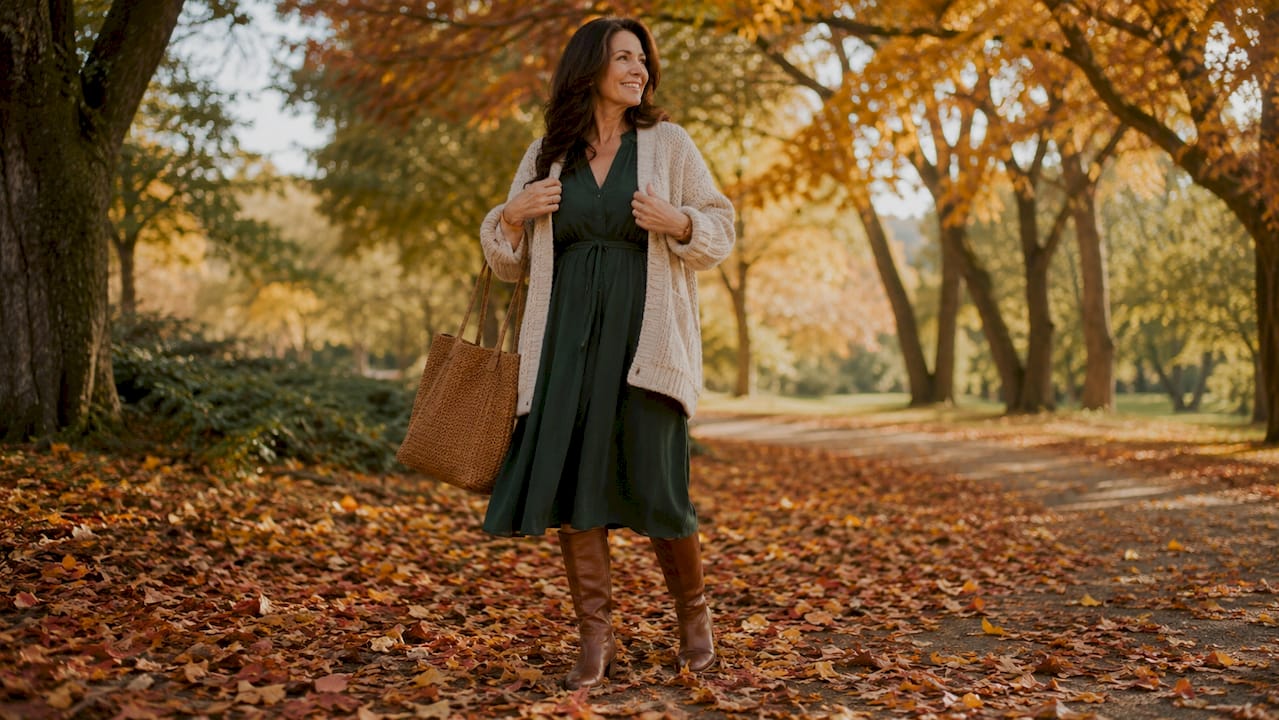
Dresses adapt by layering a light jacket or cardigan on cool mornings and shedding layers as the day warms. This means one dress effectively gives you two looks without any extra thought. The key is choosing styles that tolerate outerwear without restricting movement. A-line cuts, wrap styles, and shift dresses all sit cleanly under a jacket without bunching or pulling.
Fabric matters here as much as silhouette. Warm-weather fabrics like linen and cotton voile reduce heat retention and tactile stress, which means you stay comfortable even when the temperature climbs unexpectedly. For autumn, ponte knit and brushed jersey hold warmth without adding bulk under a coat.
Here is what to look for when choosing a dress specifically for layering:
- Sleeveless or short-sleeved styles give you room to add a long-sleeved layer underneath without overheating
- Midi and maxi lengths pair naturally with ankle boots and tights as the season cools
- Wrap and shirt-dress silhouettes sit flat under outerwear and do not add volume at the shoulders
- Neutral and tonal colours work with more outerwear options, extending the dress across more outfits
Pro Tip: When shopping for spring or autumn dresses, hold the fabric up to light. If it is completely opaque and has a slight drape, it will layer well without clinging to tights or base layers underneath.
Do seasonal dresses really reduce decision fatigue?
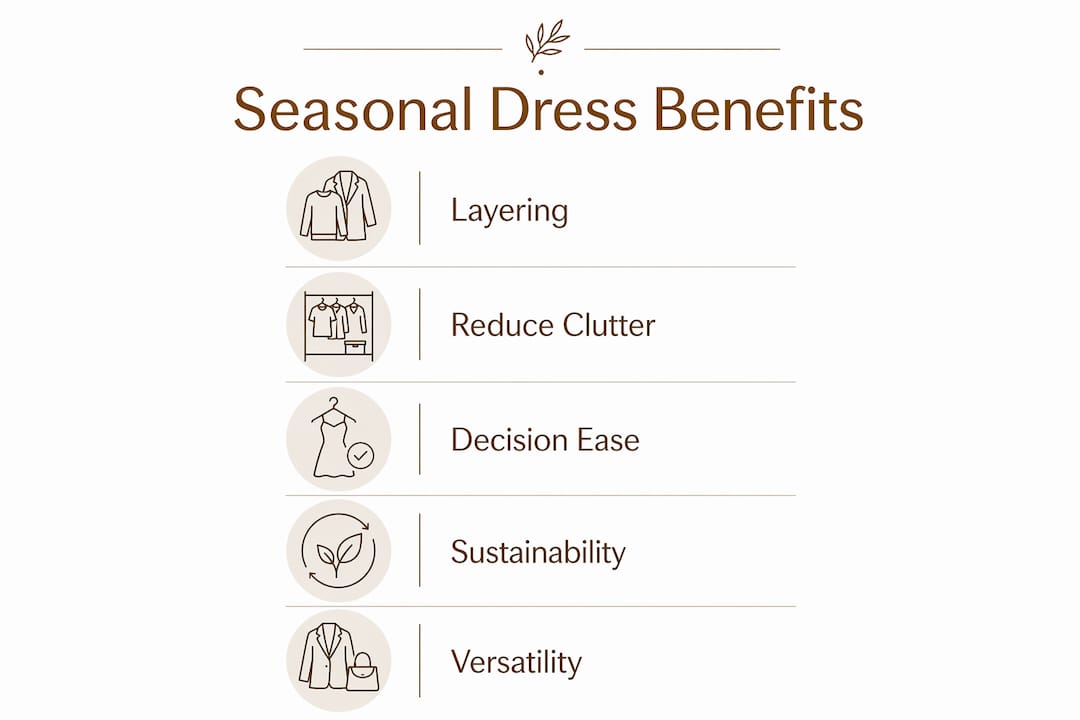
Decision fatigue is a documented psychological phenomenon where the quality of decisions deteriorates after a long session of choosing. Applied to your wardrobe, it means that the more pieces you have to coordinate each morning, the more mental energy you spend before your day has even started. Dresses solve this at the root.
A dress is a single-thought garment that looks polished and intentional with minimal effort. You are not matching a top to trousers, checking that colours align, or wondering if proportions work. You put it on and you are dressed. That simplicity is not laziness. It is efficiency.
The capsule wardrobe formula removes wardrobe stress and reduces decision fatigue by limiting daily choices to a curated set of pieces that all work together. Dresses are the backbone of this approach because each one functions as a complete outfit. The psychological benefit is real. Fewer decisions in the morning means more mental clarity for the rest of the day.
“Eight or ten good dresses can cover the year from summer cotton through colder knits and silks.” This insight from wardrobe strategists at Finn and Emma captures exactly why dresses outperform separates for simplicity. Ten dresses replace what might otherwise be twenty or thirty individual pieces.
Consider what a dress-centred wardrobe actually removes from your morning:
- The need to match tops and bottoms by colour, pattern, and proportion
- The question of whether a blouse is tucked or untucked
- The hunt for a belt that works with both the top and the trousers
- The second-guessing that comes from too many options
Learning how to build a capsule wardrobe around seasonal dresses is the fastest route to a wardrobe that feels both curated and effortless.
When is the best time to shop seasonal dresses?
Shopping timing is a strategy, not an afterthought. Buying summer dresses in winter accesses retailers’ stock clearance, which means better quality pieces at lower prices. The same logic applies in reverse: shopping autumn knit dresses in late spring gives you access to end-of-season inventory before it sells out entirely.
The discipline here is intentionality. Out-of-season shopping only works when you buy pieces that fit your existing wardrobe system. A clearance dress that does not match anything you own is not a deal. It is clutter. Before you buy, ask whether the dress works with at least three other items already in your wardrobe.
Here is a practical seasonal shopping calendar to guide your timing:
- January and February: Shop summer linen and cotton dresses at clearance prices. Retailers are clearing spring and summer inventory to make room for autumn arrivals.
- March and April: Full-price spring dresses arrive. Buy one or two key transitional pieces at full price if they fill a genuine gap.
- July and August: End-of-season sales begin. This is the best window for quality autumn knit and midi dresses at reduced prices.
- October and November: Winter dress styles arrive at full price. Wait for late November sales if you are not replacing something specific.
Pro Tip: Before any out-of-season purchase, photograph your current wardrobe and check the dress against it on your phone in the store or at checkout. If it does not pair with at least three existing pieces, leave it.
End-of-season sales encourage investing in quality pieces over fast trends, which means your wardrobe grows more slowly but wears far better over time.
Which fabrics and styles make seasonal dresses most versatile?
Fabric is the single biggest factor in how many seasons a dress can serve you. The right fabric extends a dress from one season into two or three. The wrong fabric locks it into a single month of use.
| Fabric | Best season | Layering potential | Longevity |
|---|---|---|---|
| Linen | Spring and summer | Moderate (pairs with light layers) | High with proper care |
| Cotton voile | Summer | Low (sheer, needs slip) | Moderate |
| Ponte knit | Autumn and winter | High (holds shape under coats) | Very high |
| Brushed jersey | Autumn and winter | High (soft and warm) | High |
| Silk or satin | Year-round (occasion) | Low to moderate | High |
Most clothes do not need to work year-round. Three out of four seasons is the practical sweet spot for any dress you invest in. This reframes how you evaluate a purchase. You are not asking “can I wear this in July and December?” You are asking “can this carry me through spring, summer, and autumn?” That is a much more achievable standard.
Style choices amplify fabric versatility. Look for these features when choosing the best seasonal dresses for women who want maximum wearability:
- Midi length transitions from sandals in summer to boots in autumn without any styling adjustment
- V-necklines work under a scarf or with a necklace, giving you two distinct looks from one dress
- Relaxed or wrap silhouettes accommodate layering underneath without pulling at the seams
- Solid colours or classic prints avoid trend lock-in, keeping the dress relevant across multiple years
How seasonal dresses support more sustainable fashion choices
Sustainable fashion is not about buying less for the sake of it. It is about buying better and wearing more. Seasonal dresses support this directly because fewer impulse buys lead to fewer clothes and more frequent wear of each item, which reduces waste across your wardrobe.
When you invest in a ponte knit dress that carries you from September through February, you are not buying three separate pieces to cover that same period. That is a concrete reduction in consumption without any sacrifice in style. The advantages of seasonal fashion are most visible when you track cost-per-wear. A $120 dress worn forty times costs $3 per wear. A $40 trend piece worn four times costs $10 per wear.
Mindful shopping also means resisting the pull of micro-trends. The fashion industry now operates on more than four seasons per year, with new drops arriving almost monthly. Choosing seasonal dresses that align with the 3SS (three-season suitable) principle described by wardrobe strategists gives you a clear filter. If a dress cannot serve you for at least three seasons, it does not earn a place in a considered wardrobe.
Key takeaways
Seasonal dresses reduce wardrobe complexity, decision fatigue, and overconsumption because they function as complete, layerable outfits across multiple seasons when chosen by fabric and silhouette rather than trend.
| Point | Details |
|---|---|
| Layering is the core function | Choose A-line, wrap, or shift styles that sit cleanly under outerwear without restricting movement. |
| Dresses reduce decision fatigue | A single dress replaces a top-and-bottom coordination decision, saving mental energy every morning. |
| Timing your shopping saves money | Buying out of season during clearance sales accesses better quality at lower prices. |
| Fabric determines versatility | Ponte knit and brushed jersey extend a dress into three or four seasons; cotton voile does not. |
| Fewer dresses worn more often | The 3SS principle means each dress earns its place by serving you across spring, summer, and autumn. |
Why I think the “one dress, one season” rule is holding you back
By Glenville
After years of writing about fashion and watching how women actually dress, the most common wardrobe mistake I see is not buying too much. It is buying without a layering plan. Women purchase a beautiful linen dress in July, wear it three times, and then pack it away in September because they never considered how it would work with a cardigan or ankle boots.
The dresses that earn their keep are the ones you style in your head before you buy them. I have a navy ponte midi that I have worn to meetings, dinners, and weekend markets from October through April. It cost more than I wanted to spend at the time. It has been worth every cent because I knew exactly how it would layer before it left the store.
My honest advice: stop thinking about seasonal dresses as seasonal. Think of them as layering foundations. The season changes around the dress, not the other way around. Add a cosy autumn layer to your lifestyle and your wardrobe at the same time, and the whole system starts to feel intentional rather than accidental.
The women I know who dress with the most confidence are not the ones with the most clothes. They are the ones who have figured out that ten well-chosen dresses, worn with different layers and shoes, create more variety than a wardrobe stuffed with separates that never quite coordinate.
— Glenville
Explore seasonal dresses at 16thavenue

16thavenue carries a curated selection of seasonal dresses designed for exactly the kind of versatile, layered dressing this article describes. From lightweight spring styles to structured autumn knits, the collection is built around pieces that work across multiple seasons rather than locking you into a single month of wear. Pair any dress with the women’s woolen coat from the autumn and winter collection for a complete transitional outfit that takes you from cool mornings to warm afternoons without a second thought. Free shipping to most destinations makes it easy to shop with intention rather than impulse. Browse the full trendy dresses collection and build your seasonal wardrobe around pieces that genuinely earn their place.
FAQ
What makes a dress “seasonal”?
A seasonal dress is designed around the fabric weight, silhouette, and styling demands of a specific time of year. Linen and cotton voile serve spring and summer; ponte knit and brushed jersey carry you through autumn and winter.
How many seasonal dresses do you actually need?
Wardrobe strategists suggest that eight to ten well-chosen dresses can cover the full year when selected by fabric and layering potential. That is significantly fewer pieces than a comparable wardrobe built from separates.
Is it worth buying dresses out of season?
Buying out of season accesses clearance inventory at better prices, but only works when the dress fits your existing wardrobe system. A clearance dress that pairs with nothing you own is not a saving.
How do you wear seasonal dresses in transitional weather?
Layer a light cardigan, denim jacket, or structured blazer over the dress in the morning and remove it as the day warms. Midi lengths with ankle boots and tights extend the same dress into cooler months without restyling.
Do seasonal dresses support sustainable fashion?
Seasonal dresses worn frequently across multiple seasons have a much lower cost-per-wear than trend pieces bought and discarded quickly. Fewer, better-chosen dresses reduce overconsumption and wardrobe waste over time.