


How to Choose Trendy Dresses for Stunning Seasonal Looks
Sorting through endless dress options online can feel exhausting when your goal is to look stylish for every occasion. Dressing well matters because it boosts confidence and ensures your wardrobe truly supports your lifestyle. By focusing on wardrobe evaluation and recognising patterns, you set yourself up for smarter shopping. This guide shows you how to identify what actually works for you, spot current season trends, select flattering fabrics, and build a collection that feels both fresh and versatile.
Table of Contents
- Step 1: Assess Your Wardrobe Needs And Style Preferences
- Step 2: Explore Current Dress Trends For The Season
- Step 3: Select Suitable Fabrics And Colours For Your Occasion
- Step 4: Evaluate Fit And Sizing For Flattering Comfort
- Step 5: Verify Versatility And Styling Options
Quick Summary
| Key Insight | Explanation |
|---|---|
| 1. Assess wardrobe needs first | Understand your current clothing and lifestyle to avoid impulse buying and ensure new purchases serve real needs. |
| 2. Explore current dress trends | Identify trends that resonate with your personal style to enhance your confidence while dressing intentionally. |
| 3. Choose suitable fabrics and colours | Match fabrics and colours to the occasion and your complexion for a polished and comfortable look. |
| 4. Prioritize fit and sizing | Ensure dresses fit well by trying multiple sizes and moving naturally to boost confidence and comfort. |
| 5. Verify versatility of dresses | Select dresses that can transition across various occasions and styles to maximize wearability and outfit options. |
Step 1: Assess your wardrobe needs and style preferences
Before you start scrolling through endless dress options, take a moment to understand what you actually need and what makes you feel confident. This step saves you money, reduces decision paralysis, and ensures every piece you bring into your closet genuinely works for your life. You’ll spend some time with your current wardrobe and thinking about your lifestyle, but the clarity you gain makes everything that follows infinitely easier.
Start by opening your wardrobe and looking at what you already own. Pull out dresses you reach for repeatedly and ask yourself why. Is it the way they fit your body? The colour that makes your skin glow? The fabric that feels amazing against your skin? Then look at pieces gathering dust and be honest about the reason. Maybe the cut doesn’t flatter you, the style doesn’t match your vibe, or it just doesn’t suit your daily life. Through this process of analysing your current clothing, you’ll start recognising patterns about what actually works for you rather than what looks good on Instagram. Consider your body type too. Different dress styles flatter different shapes, so knowing whether you prefer A-line silhouettes, fitted cuts, or flowing fabrics will help you make smarter choices moving forward.
Next, think about your lifestyle. Are you working in a professional environment where you need polished, office-appropriate dresses? Do you spend weekends hiking, brunch with friends, or attending social events? Are you juggling a hectic schedule that demands practical, low-maintenance outfits? Your daily life should be the foundation for every purchase decision. A woman who works from home rarely needs the same dress as someone attending client meetings weekly. Once you understand your lifestyle demands, identify the specific gaps in your wardrobe. Maybe you have plenty of casual weekend dresses but nothing appropriate for work events, or you’re missing versatile pieces that transition between seasons. Writing these gaps down gives you a clear shopping list, which means you’re less likely to impulse-buy items that don’t serve your real needs. This targeted approach transforms shopping from overwhelming to purposeful.
Pro tip: Create a simple photo catalogue of your current dresses and note beside each one when you wear it, how often, and what you’d change about it. Review this before shopping to ensure new pieces fill genuine gaps rather than duplicating what you already have.
Step 2: Explore current dress trends for the season
Knowing what’s trending helps you feel current and confident in your choices, but trends aren’t just about following what everyone else is wearing. They’re inspiration points that show you what’s actually being worn and celebrated right now, helping you identify styles that align with both the season and your personal aesthetic. Exploring trends gives you permission to experiment while staying grounded in what actually works for your body and lifestyle.
Start by looking at what’s dominating the current fashion conversation. Key dress trends emphasise flowing silhouettes paired with rich fabrics, from elegant goddess drapery to classic knit dresses in dark neutrals that work beautifully with boots. These styles offer sophistication without requiring you to completely overhaul your wardrobe. You’ll also notice that nostalgic influences blend with modern creativity, bringing back elements like 90s denim alongside contemporary takes on office wear that feel edgy and stylish. The beauty of current trends is their diversity. There’s something for everyone, whether you prefer the timeless elegance of a well-fitted knit dress, the drama of flowing fabrics, or something more experimental. Pay attention to colours that keep appearing across different trend reports. Neutrals like black, grey, and cream show up consistently because they’re versatile and seasonally appropriate. Look at how trending pieces are styled too. A seemingly simple dress transforms completely depending on the accessories, footwear, and layering choices.

Don’t feel pressured to adopt every trend you see. Instead, ask yourself which trends genuinely excite you and feel authentic to your style. A trend only matters if you’ll actually wear it and feel amazing in it. Spend time scrolling through fashion platforms, saving images of outfits that catch your eye, and noting the common threads. Maybe you’re drawn to the polished simplicity of neutral dresses, or perhaps the bold drama of statement fabrics appeals to you. These preferences guide which seasonal trends deserve a spot in your shopping cart and which ones you can safely skip.
Pro tip: Save at least five outfit inspiration images that feature trending dresses you love, then examine what they have in common (colour palette, silhouette, occasion) so you’re shopping intentionally rather than just chasing trends.
Step 3: Select suitable fabrics and colours for your occasion
The fabric and colour you choose can completely transform how a dress makes you feel and how appropriate it is for your event. Getting these details right means you’ll feel comfortable, look polished, and actually enjoy wearing what you’ve selected. This step is where you move from general ideas to specific choices that work for both your body and your plans.
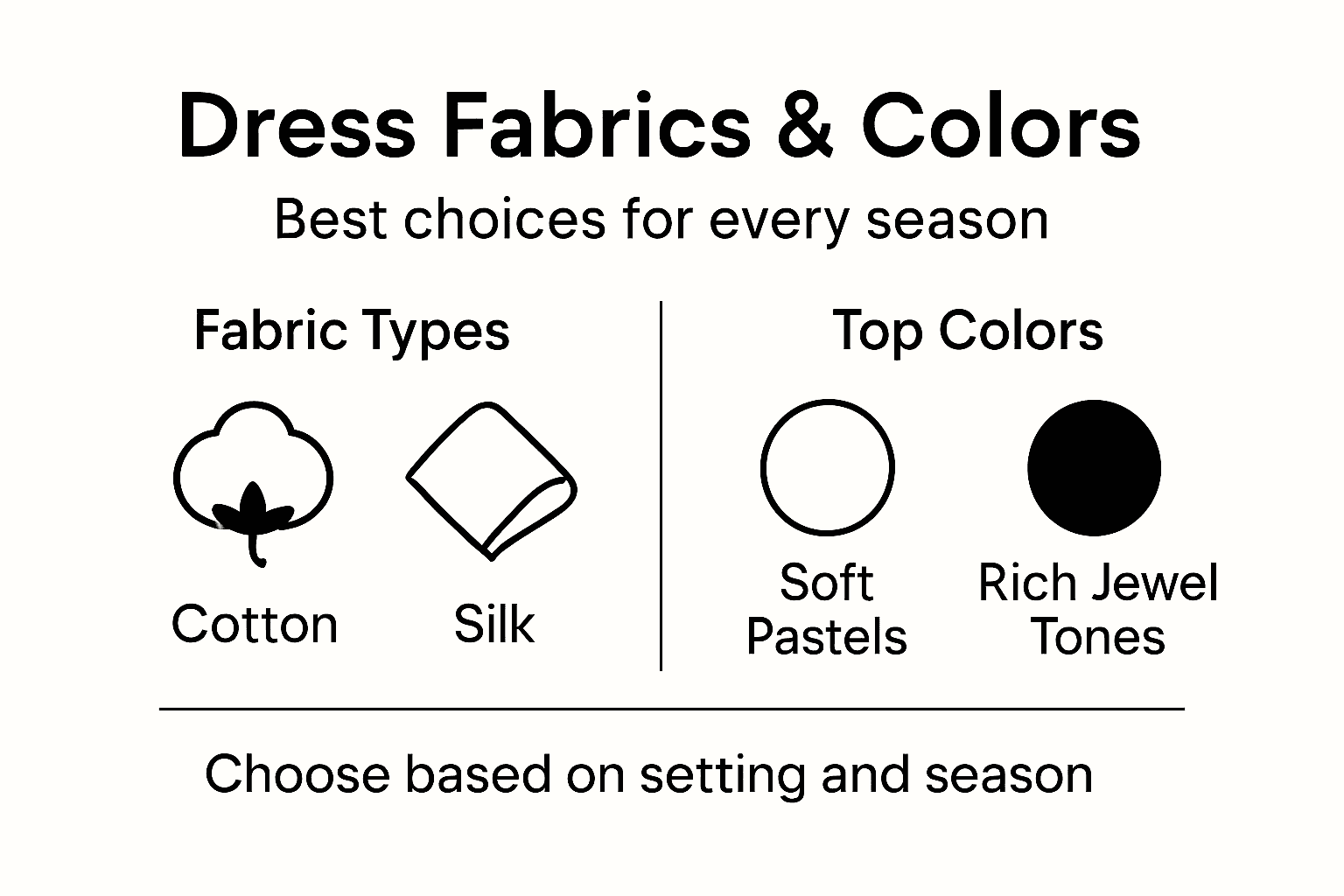
Start by thinking about your occasion and what the setting demands. A casual brunch calls for something entirely different from a formal evening event or a professional work gathering. Luxurious fabrics like silk, satin, and velvet work beautifully for formal occasions, offering elegance and a refined look that photographs well and feels special against your skin. For everyday wear or casual events, consider more practical fabrics that breathe well and move with you. Cotton blends, linen, and lighter knits give you comfort without sacrificing style. The weight of the fabric matters too. Heavier fabrics like velvet and satin drape beautifully and feel luxurious but can be overwhelming in warm weather, whereas lighter fabrics like chiffon and cotton feel airy and seasonally appropriate. Think about the occasion’s formality level and the climate you’ll be in. A summer garden party needs something completely different from a winter formal dinner, even if both are special occasions.
Colour selection should balance what flatters your complexion with what suits the occasion and season. Neutral tones like black, navy, cream, and grey work for nearly any situation and pair easily with accessories. Jewel tones such as emerald, sapphire, and burgundy feel luxurious and seasonal, particularly in autumn and winter. Pastels and brighter colours work wonderfully for spring and summer events or casual daytime occasions. Consider how colours photograph if you’ll be taking pictures, and think about whether the colour makes you feel confident. When you look down at yourself wearing a particular colour, does it make you smile? Fabrics that combine aesthetic appeal with functional qualities like excellent drape and breathability will serve you best across different occasions. Don’t overlook how a dress moves and feels when you wear it. A stunning colour on the hanger means nothing if the fabric makes you uncomfortable or the dress restricts your movement.
Pro tip: When trying on dresses, pay attention to how the fabric feels against your skin in the first thirty seconds, as initial comfort often predicts whether you’ll actually wear the piece. If you’re itching or adjusting constantly in the dressing room, you’ll likely abandon the dress in your wardrobe at home.
Here’s a summary of how different dress fabrics suit various occasions in Canadian climates:
| Occasion Type | Best Fabric Choices | Climate Suitability | Comfort Level |
|---|---|---|---|
| Casual Day Event | Cotton, linen, light knits | Spring/Summer, temperate | Breathable and easy |
| Formal Evening | Silk, satin, velvet | Fall/Winter, cooler months | Luxurious and refined |
| Professional Work | Medium-weight knits, crepe | Any season, indoor | Structured, comfortable |
| Outdoor Gathering | Chiffon, cotton blends | Summer, variable weather | Light, allows movement |
Step 4: Evaluate fit and sizing for flattering comfort
Fit is where the magic happens. A dress in the perfect colour and fabric means nothing if it doesn’t fit your body well, and that’s where most women struggle. Getting fit right transforms how you feel wearing a dress, boosting your confidence and ensuring you’ll actually reach for it repeatedly. This step is about understanding your body, knowing what sizing works for you, and learning to evaluate fit critically.
Start by acknowledging that sizing varies wildly across brands and that no single size defines you. One brand’s medium might feel completely different from another’s, so always try on multiple sizes in different brands rather than assuming your usual size will work everywhere. When you try on a dress, move around. Walk, sit, reach your arms up, bend over, and observe how the dress moves with you. Does it pull across your chest or hips? Does it ride up when you move? Can you breathe comfortably? The dress should feel like a second skin that enhances your shape rather than fighting against it. Pay attention to how fit directly influences body confidence and how clothes can help conceal areas you’re self-conscious about whilst highlighting what you love. A well-fitting dress should skim your body without clinging or sagging, and the length should be appropriate for the occasion and flattering to your proportions. If you’re between sizes, consider your body type and the dress style. Fitted styles typically need the more snug size, whilst loose silhouettes can handle the larger size for additional comfort.
Trust your instincts about comfort during that first try-on moment. Feedback on garment comfort through movement reveals whether a dress truly works for your lifestyle. If you find yourself tugging, adjusting, or feeling restricted when you move naturally, the fit isn’t right, no matter how stunning the dress looks in the mirror. Take your time in the fitting room. Look at yourself from different angles, including your profile and back view, since you’ll see yourself from every direction when you’re out. If the dress passes the movement test, makes you feel confident, and actually feels comfortable against your skin, you’ve found a winner. Remember that alterations can fix length, but they can’t significantly change a dress that’s the wrong size overall.
Pro tip: When shopping online, check the return policy and customer reviews that mention fit before purchasing, paying special attention to comments from people with similar body types to yours, since fit feedback from your body doppelgänger is far more reliable than generic sizing charts.
Step 5: Verify versatility and styling options
A dress that works for only one occasion is a dress that will spend most of its time unworn in your wardrobe. The smartest purchases are pieces that transition across multiple settings and can be styled in different ways depending on accessories, layering, and footwear. Before you commit to a dress, think critically about how many times you’ll actually wear it and in how many different contexts.
Consider how a single dress can serve you across different scenarios. A simple black midi dress, for example, can work as casual weekend wear with trainers and a denim jacket, as office appropriate with blazer and pumps, or as dinner-ready with heels and jewellery. Versatile fashion pieces like black midi dresses enable building a wardrobe that serves different occasions and maximises wearability. Ask yourself specific questions about each dress you’re considering. Can you dress it up with different accessories? Could you layer something over it for cooler months? Would it work for at least three different situations in your life? If a dress requires a very specific look to work, it’s probably not worth the investment. Look for styles that have enough visual simplicity to pair with multiple accessories but enough personality that they feel fresh and current. A dress in a neutral colour offers more flexibility than a highly patterned piece, though patterned dresses can work beautifully if the pattern is timeless rather than trend-dependent. Think about neckline, sleeve length, and silhouette. Certain styles are inherently more versatile. A wrap dress transitions easily from casual to polished. A shirt dress works over a tee for weekends and alone for work. A simple A-line dress accepts nearly any styling direction.
Make a mental list of styling options before purchasing. How would you wear this with trainers? With heels? Layered under a sweater? With a belt? With a statement necklace? Over a slip? If you can envision at least three distinct ways to style the dress, it’s likely a good investment. This approach transforms your wardrobe from a collection of standalone pieces into an interconnected system where items work together to create numerous outfit combinations. You’ll naturally reach for versatile pieces more often, getting better value from each purchase and building outfits with greater ease.
Compare the versatility of classic dress styles for everyday Canadian wardrobes:
| Dress Style | Suitable Occasions | Easy to Accessorise | Season Flexibility |
|---|---|---|---|
| Black Midi | Work, evenings, casual | Highly versatile | All seasons |
| Shirt Dress | Office, weekends, travel | Works with layers | Spring/Fall focus |
| Wrap Dress | Casual to formal events | Mixes with belts | Year-round |
| Patterned Shift | Social events, parties | Statement jewellery | Best in spring/summer |
Pro tip: Before buying, photograph how you would style that dress three different ways using pieces you already own, then review those images to confirm the dress genuinely fits into your existing wardrobe rather than requiring new accessories to work.
Elevate Your Seasonal Style with Confidence and Ease
Choosing trendy dresses that fit your lifestyle, body, and personal preferences can feel overwhelming. This article highlights key challenges like finding the right fabric, ensuring a flattering fit, and selecting versatile pieces that transition smoothly between occasions. If you want to avoid impulse buys and build a purposeful wardrobe that truly reflects your style, understanding these elements is essential.
Discover a curated collection of fashionable dresses and complementary beauty products designed to solve these exact problems at 16th Avenue. Whether you are searching for elegant fabrics, flattering silhouettes, or versatile styles that suit Canadian seasons, our handpicked selections make dressing well effortless. Shop confidently with free shipping and exclusive discounts today.
Explore the full range of trendy dresses and accessories now at 16th Avenue to transform your seasonal looks. Start building your perfect wardrobe by visiting our homepage and experience fashion that keeps pace with your life and style goals.
Frequently Asked Questions
How do I assess my wardrobe needs before choosing trendy dresses?
Evaluate your current wardrobe by identifying the dresses you wear frequently and those that gather dust. Reflect on your lifestyle and the occasions you need dresses for. Create a list of any gaps that will help you focus your shopping efforts.
What current dress trends should I consider for a seasonal look?
Look for trends that align with your personal style while keeping the season in mind. Pay attention to flowing silhouettes, rich fabrics, and returned styles from the past. Save outfit inspiration images that feature these trends to guide your choices.
Which fabrics are best suited for different occasions when choosing dresses?
Select fabrics based on the occasion and climate. For formal events, consider luxurious options like silk or satin, while casual outings may require breathable materials like cotton or linen. Always ask yourself how the fabric will feel in the specific setting you plan to wear the dress.
How can I evaluate the fit of a dress before purchasing?
Test the fit by trying on multiple sizes and moving around in the dress. Ensure it skims your body without clinging or sagging and feels comfortable when you sit or walk. Focus on how the dress moves with you, as a good fit should make you feel confident.
What are some versatile styling options for a single dress?
Consider how to style the same dress for different occasions by mixing accessories, layering, and changing footwear. A simple dress can transition from casual to formal with the right pieces. Visualize at least three distinct ways to wear the dress before committing to a purchase.
How can I ensure my new dress matches my existing wardrobe?
Before making a purchase, take stock of your current accessories and items to check for compatibility. Photograph potential outfits to see how the dress could work with what you already own. Aim for a dress that can integrate seamlessly into your closet for maximum wear.
Recommended
- Women’s Vest Dress | Sleeveless Vest Dress | 16th Avenue
- Cardigan Embroidered Dress | Women’s Cardigan Dress | 16th Avenue
- Women Mini Dress Temperament Big Swing Loose Hem Flower Print – 16th Avenue
- Blog | 16th Avenue
Glenville Carr