


Match footwear with any outfit: your complete guide
TL;DR:
- Matching shoes involves considering occasion silhouette season and material harmony.
- Building a capsule collection of versatile, neutral shoes simplifies styling and outfit coordination.
- Modern shoe matching emphasizes undertone and texture harmony over exact colour matching.
You’ve spent twenty minutes getting dressed, the outfit is perfect, and then you glance down at your shoes and something feels completely off. It’s a familiar frustration. The wrong footwear can unravel even the most carefully put-together look, and yet most of us were never actually taught how to match shoes with intention. The good news is that confident footwear matching isn’t a talent you’re born with. It’s a skill built on a handful of clear principles, and once you understand them, you’ll never second-guess your shoe choices again.
Table of Contents
- Start with the essentials: what you need to match footwear successfully
- Step-by-step: how to match footwear with different outfits and occasions
- Mistakes to avoid: common pitfalls and modern rules for matching shoes
- Building your capsule: curating a versatile footwear collection
- Why personal style should guide your footwear choices
- Step up your style with 16th Avenue
- Frequently asked questions
Key Takeaways
| Point | Details |
|---|---|
| Consider occasion first | Your event type is the top factor in choosing footwear that works. |
| Check outfit proportions | Balance shoe silhouette and outfit shape to elongate or ground your look. |
| Capsule collection works | A 5–7 pair footwear capsule covers almost all outfit matching needs. |
| Modern rules allow flexibility | Mix and match shoes with different outfits using undertone and texture for harmony. |
Start with the essentials: what you need to match footwear successfully
Before you open your wardrobe and start experimenting, it helps to understand the four pillars that drive every smart footwear decision: occasion, silhouette, season, and material. These aren’t rigid rules so much as lenses that help you see your outfit more clearly.
Occasion is your starting point. A formal event calls for pumps or heeled sandals, a casual brunch suits sneakers or flats, and a summer garden party practically begs for strappy sandals. Getting the formality level right is half the battle. Understanding the role of footwear in your overall look makes this instinctive over time.
Silhouette is the factor most women overlook. The shape of your dress or trousers changes everything. An A-line dress is wonderfully versatile and works with both flats and heels, while wide-leg trousers need slim or pointed shoes to avoid looking overwhelmed. As a general framework, matching shoes with dresses prioritises occasion, silhouette, season, and material harmony, pairing leather with wool and suede with casual fabrics.
Season matters more than people realise. Light, breathable materials like canvas and woven leather suit warmer months, while darker, heavier textures such as suede and leather boots anchor autumn and winter outfits beautifully.
Material harmony ties it all together. Mixing textures intentionally creates interest, but clashing them carelessly looks unfinished. Suede shoes feel relaxed and casual; patent leather reads as polished and formal.
Here’s a quick reference to keep nearby:
| Occasion | Recommended shoe style | Material to consider |
|---|---|---|
| Formal event | Pumps, heeled sandals | Patent leather, satin |
| Business casual | Loafers, block heels | Smooth leather, suede |
| Casual day out | Sneakers, flats, mules | Canvas, woven leather |
| Summer outdoor | Strappy sandals, espadrilles | Raffia, light leather |
| Winter/autumn | Ankle boots, knee-highs | Suede, full-grain leather |
Before you start pairing, set yourself up for success with a few basics:
- A full-length mirror in natural light (artificial light distorts colour)
- Clean, polished shoes (scuffed shoes undermine any outfit)
- A basic shoe care kit: brush, conditioner, and waterproof spray
- Awareness of your outfit’s dominant colour and undertone
Exploring the full range of essential women’s footwear types gives you a solid vocabulary for building these combinations confidently.
Pro Tip: Always check your shoes in daylight before leaving the house. Colours that appear to match under warm indoor lighting can clash noticeably in natural light.
Step-by-step: how to match footwear with different outfits and occasions
With the essentials sorted, here’s a practical process you can apply every single time you’re putting an outfit together.
- Identify the occasion first. Is this formal, business, or casual? This narrows your shoe category immediately.
- Look at your outfit’s silhouette. Note the hemline, pant width, and overall volume. A full skirt needs a grounded shoe; a sleek column dress can handle a delicate heel.
- Check your outfit’s dominant colour and undertone. Warm undertones (camel, rust, cream) pair with warm-toned shoes; cool undertones (navy, grey, white) suit cooler shoe shades.
- Consider the season and setting. Outdoor summer wedding? Think strappy heeled sandals. Autumn city commute? Ankle boots in cognac leather are your friend.
- Test proportions visually. Step back and look at the full picture. Silhouette balance is key: pointed toes and heels elongate your frame, while chunky flats or boots ground a voluminous look.
- Make a final check for texture harmony. Does the shoe’s material feel like it belongs in the same world as your outfit?
Here’s a quick outfit-to-shoe guide for common scenarios:
| Outfit type | Best shoe match | Why it works |
|---|---|---|
| Midi floral dress | Block heel sandals or mules | Feminine balance, elongates leg |
| Wide-leg trousers | Pointed flats or heeled loafers | Slim silhouette under volume |
| Tailored blazer and trousers | Pointed-toe pumps or loafers | Polished, proportional |
| Casual jeans | White sneakers or ankle boots | Relaxed, effortless |
| Slip dress | Strappy heels or minimalist flats | Lets the dress lead |
For seasonal footwear selections, the same logic applies with an added layer of practicality. Summer calls for open, breathable styles, and you’ll find great inspiration in summer fashion essentials that translate directly to footwear choices.
Pro Tip: When in doubt between two shoe options, choose the one that creates the most visual length. Elongating your silhouette almost always reads as more polished.
Mistakes to avoid: common pitfalls and modern rules for matching shoes
Once you know the process, the next step is unlearning a few things. Some of the most common matching mistakes come from following outdated advice too strictly.
Outdated rules worth questioning:
- Your shoes must exactly match your bag. This was once gospel. Today, coordinating undertones is far more sophisticated than an exact match.
- No white shoes after Labour Day. This rule has no real foundation in modern dressing and limits your wardrobe unnecessarily.
- Sneakers are always too casual. Styled correctly, sneakers with tailored trousers or a blazer read as intentionally chic.
- Metallic shoes only work for evening. A gold loafer or silver flat can elevate a daytime outfit beautifully.
- Your shoes must always be darker than your outfit. Tonal dressing, where shoes are lighter or the same shade as your clothing, is a strong modern look.
Modern flexibility in footwear matching comes down to one principle: undertone and texture alignment matters far more than exact colour matching, and mixing textures or shades works beautifully when undertones align. This is the shift that separates effortless dressers from those who feel perpetually stuck.
The most common mistake that actually does derail an outfit? Ignoring proportion. A heavy, chunky boot under a delicate, floaty dress can look jarring unless you’re deliberately playing with contrast. The same goes for a barely-there sandal under a structured, weighty coat.
“The biggest shift in modern shoe matching is moving away from colour-matching toward harmony. When your textures and undertones align, you can wear almost any combination confidently.”
Learning to pick trendy shoes without sacrificing wearability is a skill, and understanding which seasonal collections to invest in helps you stay current without overcomplicating your wardrobe.
Building your capsule: curating a versatile footwear collection
Having mastered matching and sidestepped common pitfalls, the smartest move is to simplify your options. A capsule shoe collection of five to seven pairs removes the daily decision fatigue and ensures you’re always prepared.
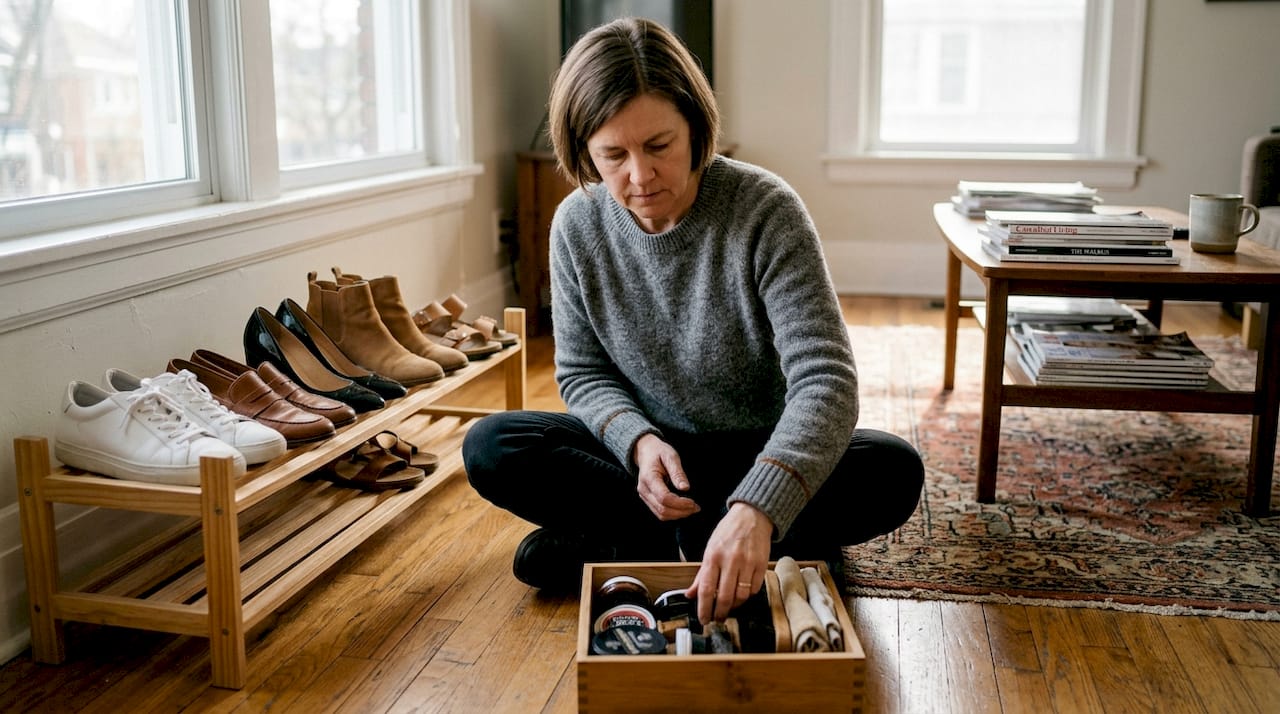
A well-built capsule for women includes neutral sneakers, loafers, pumps, ankle boots, and sandals, covering everything from casual to formal occasions. Here’s how to build yours intentionally:
The core five to seven pairs:
- Neutral sneakers (white or beige): your most-reached-for casual shoe
- Classic loafers (tan or black leather): bridges casual and business effortlessly
- Pointed-toe pumps (nude or black): the formal workhorse of any wardrobe
- Ankle boots (cognac or black): autumn and winter’s most versatile option
- Strappy sandals (metallic or nude): summer events, evening wear, and everything between
- Flat mules or slides (neutral tone): easy, polished, and endlessly wearable
- One statement pair (bold colour, interesting texture, or eye-catching detail): for when you want your shoes to lead
When shopping for your capsule, prioritise neutral tones first. They do the heavy lifting in your wardrobe. Add one or two seasonal or statement pieces once your neutrals are covered. For guidance on coordinating shoes with accessories, the principles of shoes and handbags harmony apply the same undertone logic.
Choosing seasonal outfits savings smartly means investing in quality for your core pairs and being more playful with trend-driven pieces. Exploring curated collections takes the guesswork out of finding pieces that already work together.
Pro Tip: Before buying a new pair, ask yourself: does this work with at least three outfits I already own? If the answer is no, it’s a statement piece, not a capsule piece. Both have value, but know which you’re buying.
Why personal style should guide your footwear choices
Here’s something most style guides won’t tell you: the rules are a starting point, not a destination. We’ve seen women follow every matching principle perfectly and still produce outfits that feel lifeless. And we’ve seen women break every convention and look absolutely magnetic. The difference is confidence rooted in personal expression.
Strict matching rules can quietly stifle creativity. When you’re so focused on whether your shoes are the right shade of camel, you stop asking whether they actually reflect who you are. The most memorable looks come from intentional experimentation, pairing a bold statement shoe against a clean, neutral base, or mixing an unexpected texture that somehow just works.
Use undertone and texture harmony as your safety net, not as your ceiling. Once those two elements align, you have enormous freedom. Personal style thrives on contrast and statement choices, as long as harmony anchors the look. Understanding the footwear impact on your overall aesthetic helps you make bolder choices with real intention.
Fashion is not about fitting a single mould. It’s about expressing who you are on any given day. Let the rules inform you, then trust yourself.
Step up your style with 16th Avenue
Ready to build or refresh your capsule collection? 16th Avenue makes it genuinely easy to find footwear that works hard across seasons and occasions.
Whether you’re after something relaxed and everyday or a boot that carries you through the colder months in style, the range has you covered. The casual wedge sneakers are a brilliant neutral capsule addition, offering comfort and versatility in equal measure. For winter, the fashion snow boots bring warmth and polish together seamlessly. Shop 16th Avenue to explore the full footwear collection and find the pairs that will anchor your wardrobe this season and beyond.
Frequently asked questions
What are the top shoes every woman should own for versatility?
A versatile wardrobe includes neutral sneakers, loafers, pumps, ankle boots, and sandals, covering casual to formal needs across all seasons.
How do I match shoe colour without being too rigid?
Match by undertone and texture rather than exact hue. Modern flexibility allows creative contrast as long as overall harmony is maintained through aligned undertones.
What’s the best shoe style for wide-leg pants?
Slim or pointed shoes elongate your silhouette under wide-leg pants, preventing the look from feeling bottom-heavy or overwhelming.
How do I choose the right shoes for each season?
Opt for light, breathable materials in summer and darker, heavier textures like suede and full-grain leather in autumn and winter for both comfort and style.
Recommended
- Step by step fashion styling guide for trendy looks in 2026 – 16th Avenue
- Role of Footwear in Outfits – Elevating Everyday Style – 16th Avenue
- 7 Essential Types of Women’s Footwear for Every Wardrobe – 16th Avenue
- Complete Guide to Accessorizing Dresses for Any Occasion – 16th Avenue
- Streetwear Outfit Assembling: Step-by-Step Success Guide – MEXESS