


How discounts shape fashion shopping smartly in 2026
Fashion prices in the US surged over 17% in 2026 due to tariffs, making every shopping decision count. Discounts are no longer just nice bonuses but essential tools for maintaining your style without breaking the bank. This article cuts through the complexity of modern discount strategies, helping you understand how they work, what they mean for quality, and how to shop smarter in today’s challenging market.
Table of Contents
- Understanding The Role Of Discounts In Fashion
- How Discounts Shape Consumer Behaviour In 2026
- Common Misconceptions About Fashion Discounts
- Value-Based Pricing Vs. Traditional Discounts
- Leveraging Discounts For Smart Shopping
- The Future Of Discounts In Fashion Retail
- Discover Trendy Fashion And Beauty Deals At 16th Avenue
Key takeaways
| Point | Details |
|---|---|
| Discounts balance affordability and brand value | Rising costs in 2026 make strategic discounting vital for both retailers and shoppers seeking quality fashion. |
| Consumer priorities shifted to value | Shoppers now expect discounts but focus on overall cost effectiveness rather than lowest price alone. |
| Quality misconceptions persist | Frequent markdowns don’t automatically indicate inferior products; many reputable brands discount strategically. |
| Value-based pricing emerges | Brands increasingly replace traditional discounting with pricing models that reflect customer perceived worth. |
| Smart tools maximise benefits | AI-driven promotions and strategic timing help fashion-conscious shoppers identify genuine deals effectively. |
Understanding the role of discounts in fashion
Discounts have always served a practical purpose in fashion retail: clearing inventory, stimulating demand during slow periods, and introducing new customers to brands. But 2026 has complicated this traditional model dramatically. Economic pressures from tariffs drove a 17.5% price increase in US fashion markets, forcing retailers to rethink how they balance affordability with profitability.
New sustainability regulations in 2026 now influence how brands dispose of excess inventory, pushing discount strategies toward more conscious practices. Retailers can no longer simply dump unwanted stock at rock-bottom prices without considering environmental impact. This creates a delicate balancing act between moving merchandise and maintaining responsible business practices.
The strategic role of discounting extends beyond simple stock management:
- Attracting price-sensitive shoppers whilst maintaining brand perception
- Testing market response to new styles without full commitment
- Building customer loyalty through exclusive member sales and early access
- Responding to competitor pricing whilst protecting margins
- Managing seasonal transitions and trend cycles efficiently
Consumer behaviour shifts also reshape discount application. Shoppers now research extensively before purchasing, comparing prices across platforms and waiting for optimal deals. This informed approach forces brands to offer genuine value rather than superficial markdowns. Understanding women’s fashion trends 2026 helps you recognise when discounts align with your style needs versus marketing tactics designed to clear unwanted inventory.
How discounts shape consumer behaviour in 2026
Your relationship with discounts has fundamentally changed. Rather than jumping at any sale, 66% of shoppers prioritise value for money over pure trendiness in 2026. This shift reflects economic realities but also growing sophistication about what constitutes a worthwhile purchase.
Discount availability directly influences brand loyalty when aligned with perceived value. Research shows that discounts combined with free shipping increase shopper return frequency by 20%. This isn’t just about saving money but feeling smart about purchase decisions. When you find a brand that consistently offers fair pricing and genuine quality, you return.
| Shopping Behaviour | Impact of Discounts |
|---|---|
| Purchase frequency | 20% increase when combined with free shipping |
| Value prioritisation | 66% weigh overall worth over trendiness |
| Brand loyalty | Strengthens when discounts feel authentic |
| Research time | Shoppers compare 3-5 sites before buying |
Online shopping convenience integrated with discounts creates powerful shopping habits. You can browse multiple retailers simultaneously, apply discount codes instantly, and track price histories effortlessly. This transparency forces brands to compete on genuine value rather than temporary price drops. Understanding online fashion shopping benefits helps you leverage these tools effectively.
You now weigh discounts against quality, brand reputation, and trend relevance simultaneously. A 50% markdown on an item you’ll wear once holds less appeal than a 20% discount on a versatile piece that fits your lifestyle. This calculation happens almost unconsciously as you’ve become more discerning.
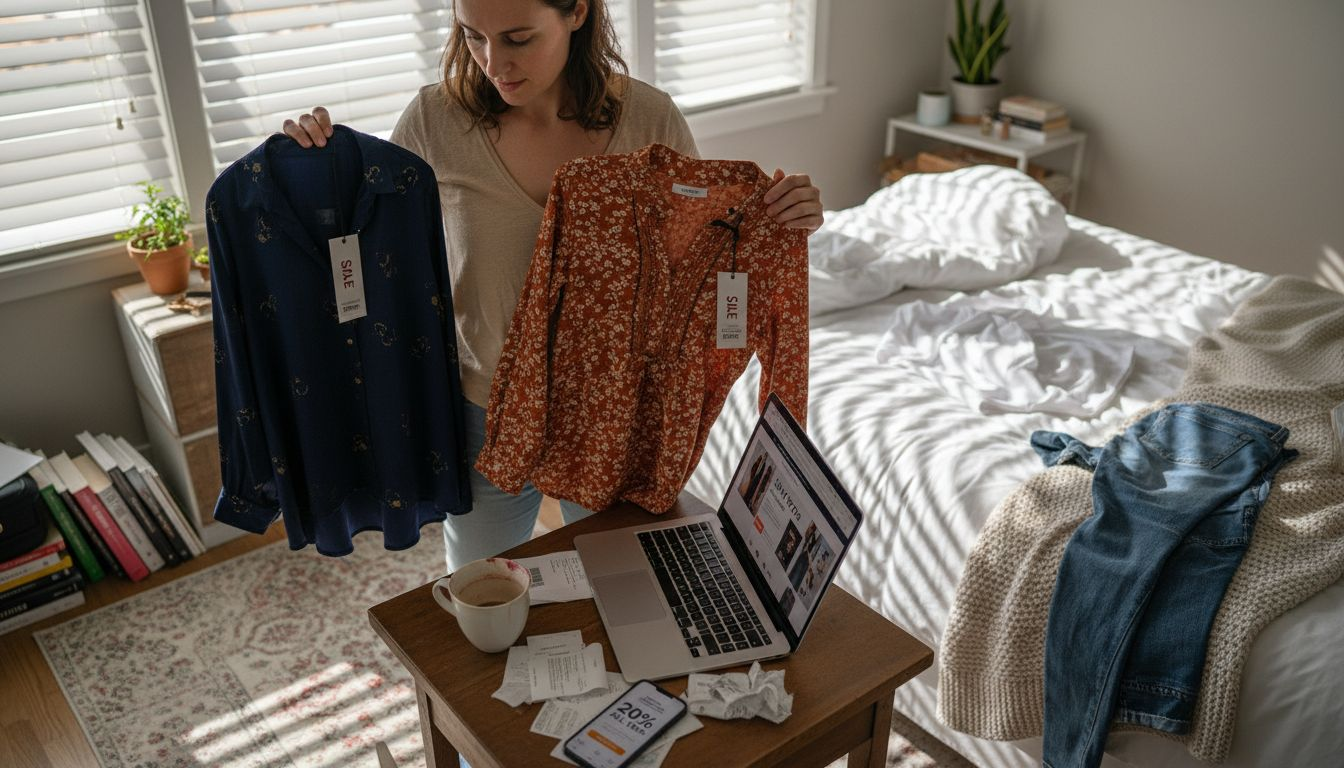
Pro Tip: Set price alerts on items you genuinely want rather than browsing sales sections randomly. This prevents impulse purchases on discounted items you don’t actually need whilst ensuring you catch real deals on pieces you’ve already decided fit your wardrobe.
Common misconceptions about fashion discounts
The biggest myth surrounding fashion discounts claims that frequent markdowns automatically indicate poor quality. This oversimplification ignores how modern retail actually works. Many premium brands strategically discount 40% of their products without any quality compromise, using sales to manage inventory cycles and seasonal transitions.
Luxury brands discount more than most shoppers realise. Up to 40% of luxury goods sold at discounts in 2025, though often through outlet stores or exclusive member sales rather than public markdowns. This protects brand image whilst still moving merchandise. The quality remains identical whether you pay full price in February or 40% off in July.
Sustainability concerns complicate discount culture in unexpected ways. Some shoppers assume discounting encourages overproduction and waste, whilst others believe it helps prevent perfectly good items from ending in landfills. The truth sits somewhere between. New sustainability regulations promote conscious discount strategies that balance sales with responsible production planning.
Consumers often mistakenly conflate discounting with poor ethical practices:
- Deep discounts don’t necessarily mean exploited labour; many ethical brands use sales strategically
- Constant markdowns sometimes indicate poor planning rather than questionable sourcing
- Luxury pricing doesn’t guarantee better working conditions than mid-tier discounted brands
- Transparency about supply chains matters more than discount frequency for ethical evaluation
Understanding impact of fast fashion helps separate legitimate concerns from unfounded assumptions. The relationship between discounting and sustainability depends on overall business practices, not just pricing strategies.
“The smartest shoppers recognise that discount timing and depth reveal more about inventory management than product quality. A well-made coat at 30% off in March is still a well-made coat.”
Value-based pricing vs. traditional discounts
Traditional discounting follows a predictable pattern: set high initial prices, run seasonal sales, mark down aging inventory progressively until it sells. This model dominated fashion retail for decades but created problems. Shoppers learned to wait for sales, margins compressed, and brand value eroded as constant discounting became expected.
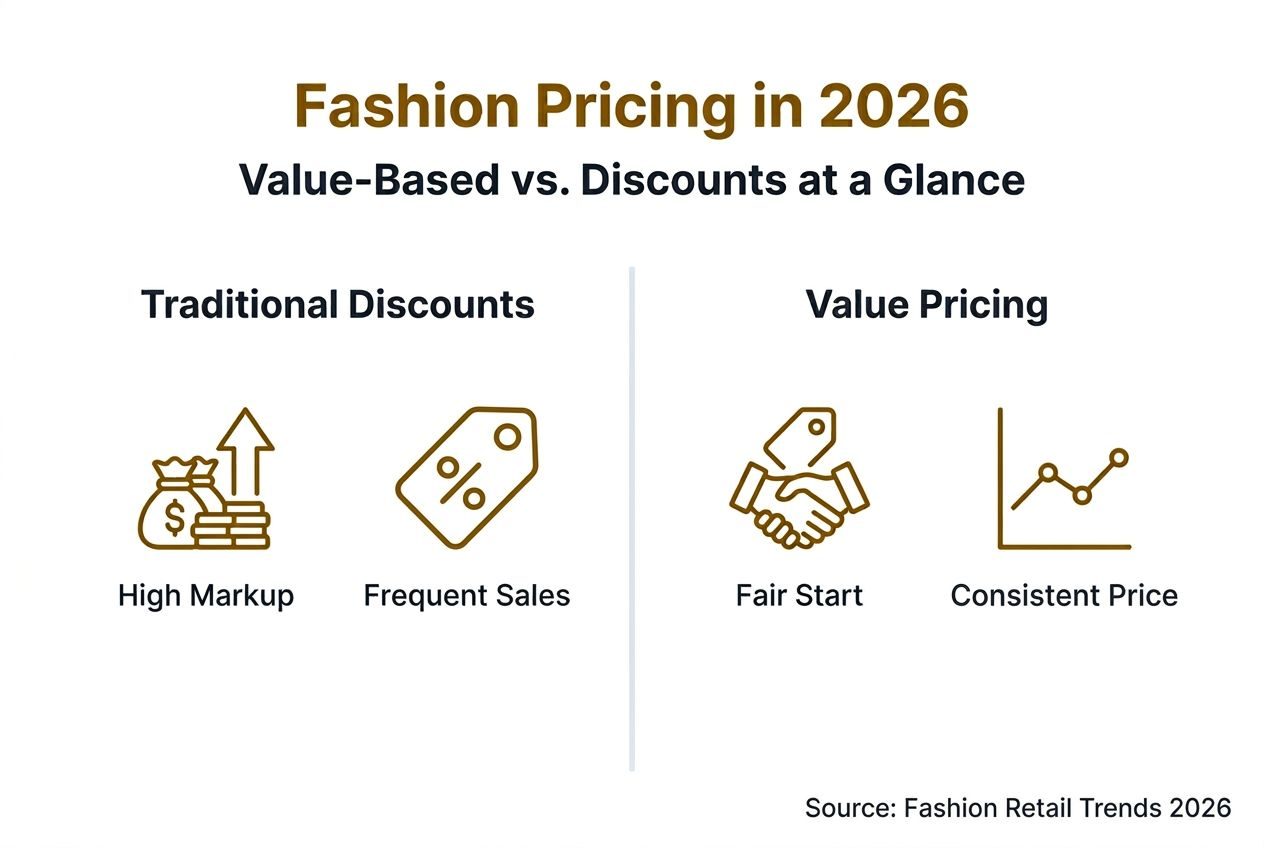
Value-based pricing takes a fundamentally different approach. Brands set prices based on customer perceived value rather than arbitrary markups followed by strategic discounts. This value-based pricing model reduces artificial price inflation and builds trust through consistent, fair pricing.
| Pricing Approach | Initial Price | Discount Frequency | Customer Perception | Brand Impact |
|---|---|---|---|---|
| Traditional discounting | High markup | Frequent sales | Wait for deals | Eroded value |
| Value-based pricing | Fair from start | Rare, targeted | Trustworthy | Sustained equity |
| Hybrid model | Moderate markup | Seasonal only | Balanced | Mixed results |
This approach reduces brand dilution significantly. When customers know they’re getting fair pricing consistently, they trust the brand more and feel less need to hunt for discounts. Loyalty deepens because the relationship feels honest rather than game-like. Understanding women’s fashion pricing trends 2026 shows how this shift affects your shopping options.
Brands face real trade-offs balancing discount depth and sustainable profitability. Deep discounts drive short-term volume but train customers to wait for sales and compress margins dangerously. Modest, strategic discounts maintain healthier economics but may lose price-sensitive shoppers to competitors. The optimal balance depends on brand positioning and target customer values.
Pro Tip: Look for brands that maintain consistent pricing with occasional targeted sales rather than constant markdowns. This often indicates they’ve priced fairly from the start and discount genuinely to clear specific inventory rather than as standard practice.
Leveraging discounts for smart shopping
Distinguishing genuine discounts from marketing ploys requires attention to detail. Compare the “original” price against typical market rates for similar items. Retailers sometimes inflate reference prices to make discounts appear larger. Check price history tools or competitor pricing to verify actual value.
AI-driven tools transform how you access and evaluate discount offers. Many retailers now use AI and data analytics to deliver personalised promotions based on your browsing history, purchase patterns, and style preferences. These targeted offers often provide better value than generic sales because they match your actual needs.
Timing purchases strategically with seasonal cycles maximises savings:
- Shop winter items in late February and March as retailers clear inventory for spring
- Look for summer pieces in August and September during back-to-school transitions
- Browse new collections in early weeks for full selection at regular prices
- Wait 6-8 weeks after launch for initial markdowns on slower-moving styles
- Check end-of-season clearances but verify pieces fit your actual wardrobe needs
Balance affordability with quality and trend relevance carefully. A deeply discounted item that doesn’t suit your lifestyle wastes money regardless of savings. Focus on versatile pieces that integrate with existing wardrobe items. Understanding efficient fashion shopping 2026 helps streamline this evaluation process.
Stay informed about brands’ discount policies and sustainability efforts:
- Subscribe to newsletters from favourite brands for early sale access
- Follow social media for flash sales and exclusive codes
- Research brands’ environmental commitments before assuming discounts indicate waste
- Join loyalty programmes that offer birthday discounts and member-only sales
- Use browser extensions that automatically apply available coupon codes
Consider the complete purchase value beyond percentage off. Free shipping, easy returns, and quality customer service often outweigh slightly deeper discounts from less reliable retailers. When choosing items like shoes, picking trendy shoes 2026 with both style and comfort ensures discount purchases deliver long-term value.
Pro Tip: Create a wishlist of specific items you need, then set alerts rather than browsing sales randomly. This prevents impulse purchases on discounted items you don’t actually want whilst ensuring you catch genuine deals on pieces you’ve already decided fit your style and needs.
The future of discounts in fashion retail
Technology will fundamentally reshape how you encounter and evaluate discount offers moving forward. AI and machine learning already personalise promotions, but capabilities will expand dramatically. By 2030, AI could automate 30% of tasks in fashion retail, including dynamic pricing that adjusts offers based on inventory levels, demand patterns, and individual customer behaviour.
Regulations will continue pushing brands towards responsible discounting that reflects sustainability goals. Governments increasingly require transparency about overproduction and waste, making the old model of manufacturing excess inventory for planned markdowns economically and legally risky. This shifts incentives toward more accurate demand forecasting and sustainable production levels.
Constant discount-driven models face mounting challenges:
- Environmental regulations penalise overproduction and waste
- Consumers grow skeptical of perpetual sales and inflated reference prices
- Margin compression threatens retailer viability and employee wages
- Brand equity erodes when discounting becomes the expected norm
- Competition intensifies as transparent pricing tools empower shoppers
You’ll increasingly expect transparency and alignment with ethical considerations when evaluating discount offers. Knowing whether a sale reflects genuine inventory management or deliberate overproduction matters. Brands that communicate openly about their pricing strategies and sustainability efforts will earn loyalty whilst opaque discounters face growing skepticism.
Technology and policy changes will reshape the relationship between discounts, brand strategy, and consumer demand in fascinating ways. Virtual try-on technology may reduce returns and enable more confident full-price purchases. Blockchain could verify supply chain ethics, helping you evaluate whether discounts come from responsible practices. Understanding sustainability in fashion 2026 prepares you for these evolving dynamics.
The discount landscape you navigate tomorrow will look quite different from today’s, but the core principles remain: seek genuine value, prioritise quality and fit over pure price, and stay informed about the strategies shaping the offers you encounter.
Discover trendy fashion and beauty deals at 16th Avenue
Navigating discount complexity becomes easier when you shop with retailers committed to transparent value. 16th Avenue curates fashionable clothing and beauty products that balance style, quality, and smart pricing for women who refuse to compromise on any dimension.
Explore versatile pieces like women’s woollen coats that transition seamlessly through seasons, delivering value long after purchase. Enhance your beauty routine with professional cosmetics brush sets that combine quality with affordability. Complete your wardrobe with women’s breathable sport trainers designed for both comfort and style. These selections demonstrate how thoughtful curation lets you build a fashionable wardrobe without overspending, combining the convenience of online shopping with genuinely attractive pricing.
Frequently asked questions
What impact do tariffs have on fashion pricing and discounts?
Tariffs raised fashion prices by approximately 17% in 2026, making discounts more critical for affordability but also more complex as brands balance rising costs with consumer demand. Shoppers should watch for targeted sales strategically timed to manage these cost pressures whilst maintaining quality standards.
Are frequent discounts a sign of poor quality fashion products?
Many reputable brands use discounts strategically without compromising quality whatsoever. Research shows up to 40% of mid-to-high-end products were sold discounted in 2025 with no quality loss, reflecting inventory management rather than inferior manufacturing.
How can shoppers identify genuine discounts from marketing ploys?
Check brand reputation and product reviews alongside discount offers to verify actual value rather than inflated reference prices. Use AI-powered shopping tools, compare competitor pricing, and time purchases strategically during genuine seasonal transitions to spot true deals and avoid common marketing tactics.
What role does AI play in fashion discounts today?
AI helps brands deliver targeted, personalised discount offers that increase both operational efficiency and consumer satisfaction by matching promotions to individual preferences. By 2030, AI could automate up to 30% of fashion retail tasks including dynamic pricing and inventory-based promotions.