

Understand trend forecasting to upgrade your fashion choices
TL;DR:
- Trend forecasting analyzes cultural, market, and aesthetic shifts to predict upcoming consumer preferences.
- Combining AI with human insight provides the most accurate trend predictions for shopping decisions.
- Focusing on macro-trends offers lasting wardrobe investments, while micro-trends suit low-cost experimentation.
Trend forecasting shapes every item you see on the rack, yet most shoppers assume trends appear out of thin air. They don’t. Trend forecasting is the process of analysing cultural, behavioural, market, and aesthetic shifts to predict future consumer demand, and it’s just as useful for your personal wardrobe as it is for global fashion houses. When you understand how trends are predicted, you stop impulse buying and start shopping with intention. This article breaks down how trend forecasting works across clothing, accessories, and beauty, and gives you practical tools to apply those insights the next time you shop.
Table of Contents
- What is trend forecasting in fashion?
- Core methods: How trends are predicted
- Micro vs macro-trends: Short-term and long-term style shifts
- From forecast to your closet: Practical ways to use trend insights
- Limitations and nuances: What forecasters (and consumers) should know
- Our take: The real advantage of using trend forecasting for your style
- Discover the latest trends and essentials at 16th Avenue
- Frequently asked questions
Key Takeaways
| Point | Details |
|---|---|
| Trend forecasting defined | It’s the science and art of predicting what styles will be popular in fashion and beauty. |
| Blending methods | Modern trend forecasting combines intuition, observation, and AI for best results. |
| Micro vs macro-trends | Short-lived micro-trends and long-term macro-trends require different shopping strategies. |
| Practical application | You can use runway reports, apps, and social media to shop smarter and express your own style. |
| Limitations to consider | No method is perfect—balancing trend data with personal taste is key. |
What is trend forecasting in fashion?
Trend forecasting is far more structured than most people realise. It’s not a designer’s gut feeling or a lucky guess. Fashion forecasting predicts upcoming preferences for clothing, accessories, and beauty by combining data analysis, cultural observation, and consumer behaviour research. Think of it as a map that shows where style is heading before the rest of the world catches on.
Forecasting applies across every category you shop:
- Clothing silhouettes: Whether oversized blazers or fitted bodysuits are about to peak
- Accessories: Which bag shapes, jewellery metals, or belt styles are gaining momentum
- Beauty trends: Colour palettes for lips, nails, and eyeshadow that will dominate the season
- Footwear: Heel heights, toe shapes, and material choices that are rising or fading
Understanding the role of trends in fashion reveals that these shifts aren’t arbitrary. They mirror what’s happening in culture, politics, technology, and even the economy. When people feel uncertain, comfort-driven fashion tends to rise. When optimism returns, bold colour and statement silhouettes follow.
For you as a shopper, this matters in two very practical ways. First, it helps you invest in pieces that will stay relevant longer. Second, it helps you avoid spending money on items that are already on their way out by the time they hit mass retail. Fast fashion brands often sell trends at the tail end of their cycle, which means you’re paying for something that will feel dated within months.
“Trend forecasting gives consumers the same advantage that brands have always had: the ability to see what’s coming before it arrives.”
When you understand the mechanics behind trend forecasting, shopping becomes a more deliberate and satisfying experience. You’re no longer reacting to what’s in front of you. You’re choosing with context.
Core methods: How trends are predicted
To properly forecast trends, it’s essential to understand the methods behind the predictions. Forecasters use a blend of traditional observation and cutting-edge technology, and knowing both helps you evaluate which trend signals are worth trusting.
Traditional methods have been the backbone of forecasting for decades:
- Runway analysis: Studying collections from major fashion weeks in New York, Paris, Milan, and London
- Street style observation: Tracking what early adopters and cultural influencers are actually wearing day to day
- Retail sales data: Identifying which categories are selling out fastest and which are sitting on shelves
- Cultural scanning: Monitoring film, music, art, and social movements for emerging aesthetic signals
Modern methods have dramatically accelerated the process. AI and computer vision now scan millions of social media images and runway photos to detect pattern repetition. Social listening tools track which styles are being discussed, saved, and shared across platforms. Predictive analytics models then assign probability scores to emerging trends.
The accuracy gap between these approaches is significant. AI image analysis reaches up to 95% accuracy, while traditional methods typically achieve 60 to 70%. That’s not a small difference when you’re deciding where to invest your wardrobe budget.
| Method | Accuracy | Speed | Best for |
|---|---|---|---|
| Runway analysis | 60-70% | Slow | Seasonal silhouettes |
| Street style scouting | 65-70% | Moderate | Emerging subcultures |
| AI and computer vision | Up to 95% | Very fast | Volume trend detection |
| Social listening | 70-80% | Fast | Real-time micro-trends |
Neither method works perfectly alone. AI misses cultural nuance. Human observers miss scale. The best forecasters blend both, and you can do the same. Use data-driven tools to spot what’s rising, then apply your own taste and lifestyle to filter what actually fits you. You can find a strong starting point in this fashion trends guide 2026 or explore how colour trends and beauty connect across categories. For a deeper look at how trend forecasting in fashion works as a discipline, it’s worth exploring beyond the surface.
Pro Tip: Follow a mix of high-fashion accounts and streetwear style trends pages on social media. When you see the same shape or colour appearing across both worlds, that’s a strong signal a trend is about to go mainstream.
Micro vs macro-trends: Short-term and long-term style shifts
With trend forecasting methods in mind, let’s map out the different types of trends you’ll encounter. Not all trends are created equal, and confusing a micro-trend for a macro-trend is one of the most common and costly shopping mistakes.
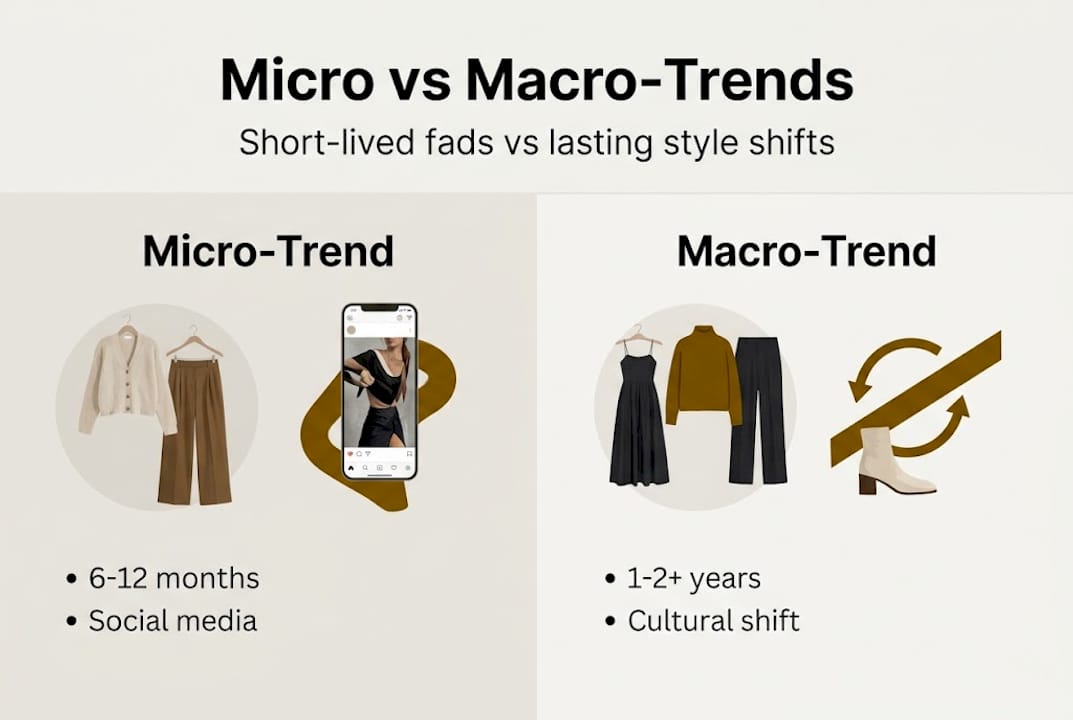
Micro-trends last 6 to 12 months, while macro-trends shape fashion for one to two years or more. Here’s how they differ in practice:
| Trend type | Duration | Driver | Example |
|---|---|---|---|
| Micro-trend | 6 to 12 months | Social media, fast fashion | A specific viral lip colour |
| Macro-trend | 1 to 2+ years | Cultural or societal shift | Sustainable fabrics, quiet luxury |
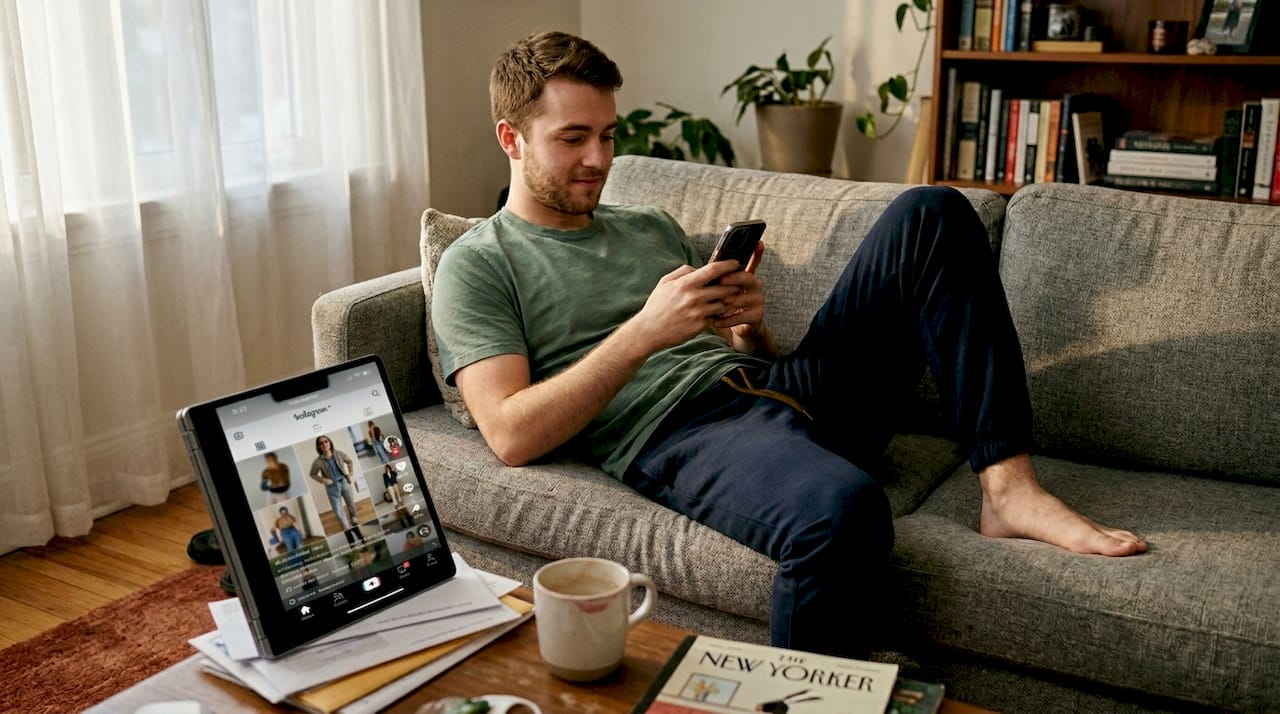
Micro-trends move fast. They’re often born on TikTok or Instagram, amplified by influencers, and then quickly saturated by fast fashion brands. By the time you see a micro-trend in every high street store, it’s already beginning to fade. Examples include a very specific shade of green that dominates one season, or a particular bag silhouette that goes viral and then disappears.
Macro-trends, on the other hand, reflect genuine shifts in how people live and what they value. The rise of sustainable fabrics, the move toward minimalist wardrobes, and the growing preference for comfort-forward clothing are all macro-trends. They don’t vanish in a season. They evolve.
As a shopper, here’s how to approach each:
- Macro-trends: Invest here. Buy quality pieces in classic silhouettes that align with these longer shifts. A well-made coat or structured bag in a neutral palette fits this category.
- Micro-trends: Try them at low cost. A trendy nail colour, a bold lip oil, or a statement earring lets you participate without overcommitting.
For practical guidance on applying this thinking seasonally, the seasonal trend decoding guide is a great resource. You can also explore why updating your beauty style with micro-trends is one of the lowest-risk ways to stay current.
Pro Tip: Reserve your clothing budget for macro-trend pieces and experiment with micro-trends through accessories and beauty. You’ll stay stylish without filling your wardrobe with items that feel dated by next season.
From forecast to your closet: Practical ways to use trend insights
Recognising various trends is only half the solution. Applying them is how you see real benefits. The good news is that trend forecasting tools are no longer exclusive to industry insiders. AI tools democratise access, meaning women can now use free apps and social listening for personal forecasting.
Here’s a practical framework for building trend awareness into your shopping routine:
- Follow early signals: Check runway recap accounts, fashion week coverage, and trend forecasting blogs at the start of each season
- Use Pinterest and Instagram strategically: Save looks that appeal to you, then look for repeated elements across your saved posts. Those repeating details are your personal trend signals.
- Download a trend app: Tools like Trendalytics or WGSN Insider offer consumer-facing trend reports
- Read retail sell-out data: When a specific item sells out repeatedly across multiple brands, that’s a strong trend confirmation
For clothing, look for silhouette shifts and fabric stories early in the season. For accessories, watch what stylists are pairing with looks on editorial shoots. For beauty, pay attention to what shades appear on runway models’ lips and nails before those colours hit retail shelves.
Shopping tips to keep in mind:
- Buy trend-forward pieces at the beginning of a season for the best selection
- Mix one statement trend piece with your existing wardrobe staples
- Avoid buying multiple items in the same micro-trend at once
The step-by-step fashion styling guide shows you how to build outfits around trend pieces you already own. For seasonal shopping, affordable fall outfit ideas and the ultimate 2026 fashion trends guide offer curated direction. Don’t overlook footwear either. Trendy shoes for 2026 can anchor an entire outfit around a current trend without requiring a full wardrobe overhaul.
Pro Tip: Track a trend for at least four to six weeks before buying into it. If it’s still growing after that window, it has staying power worth investing in.
Limitations and nuances: What forecasters (and consumers) should know
Applying trend forecasting comes with fine print and caveats. Knowing these helps you avoid missteps and shop with realistic expectations.
No forecasting method is perfect. Trends have complex lifecycles that can be accelerated, disrupted, or reversed by unexpected cultural events. A global shift, a viral moment, or a celebrity’s unexpected choice can collapse a trend overnight or send a forgotten style back into relevance.
Here are the key limitations to keep in mind:
-
AI misses irony and intent: AI can miss the intent or irony behind a style, and human experts are needed for cultural context. A style worn as a joke or commentary can be misread as a genuine trend signal.
- Regional variation: A trend thriving in Tokyo or Lagos may not translate to North American markets at all
- Slow-adoption categories: Jewellery and fine accessories tend to have slower trend cycles than clothing or beauty
- Saturation risk: When a micro-trend gets picked up by every fast fashion brand simultaneously, it can feel exhausted within weeks rather than months
- Personal fit: Even a well-forecast trend may not suit your lifestyle, body, or existing wardrobe
“The most dangerous trend is the one you buy into just because everyone else is, not because it actually fits your life.”
The best approach combines the precision of AI-driven data with the judgement of experienced human observers, and then filters everything through your own self-knowledge. Understanding the role of trends in fashion more broadly helps you see trends as context rather than commands. You’re not obligated to follow every forecast. You’re empowered to use the ones that serve you.
Our take: The real advantage of using trend forecasting for your style
Most people assume trend forecasting is about chasing whatever’s popular. It isn’t. The real advantage is the opposite: it gives you the information to decide which trends to ignore.
When you understand how a trend is formed, where it sits in its lifecycle, and whether it aligns with a deeper cultural shift or just a fleeting social media moment, you stop reacting and start choosing. That’s a fundamentally different relationship with fashion. It’s calmer, more intentional, and honestly more satisfying.
The women who dress best aren’t the ones wearing every trend at once. They’re the ones who have identified two or three macro-trends that genuinely fit their life and built their wardrobe around those. They try micro-trends in low-stakes ways, through a new lip colour or a bold earring, and they let the rest pass without guilt.
Trend forecasting, used well, is a tool for self-expression rather than conformity. Pair the data with your own taste, and you’ll find that understanding how trends shape retail actually makes your style more distinctly yours, not less.
Discover the latest trends and essentials at 16th Avenue
Ready to turn trend insights into standout style? At 16th Avenue, we curate pieces that reflect where fashion is genuinely headed, so you can shop with confidence rather than guesswork.
For a macro-trend investment that will carry you through multiple seasons, the woolen coat for autumn and winter is a strong starting point. If you’re ready to experiment with beauty micro-trends, the professional makeup brush set gives you the tools to try new looks without the commitment. Browse the full collection at 16th Avenue to find trend-forward pieces across clothing, accessories, and beauty, all with free shipping to most destinations.
Frequently asked questions
What is the difference between micro-trends and macro-trends?
Micro-trends last less than a year and are typically driven by social media virality, while macro-trends last 1 to 2+ years and reflect deeper cultural or societal shifts. Micro-trends are best explored through low-cost accessories or beauty, while macro-trends are worth investing in with quality wardrobe pieces.
How can I apply trend forecasting to my shopping?
Use runway recaps, Pinterest saves, and trend apps to identify what’s emerging, then filter those signals through your personal style and lifestyle needs. AI tools democratise access to forecasting data, making it easier than ever to spot trends before they hit mass retail.
Can trend forecasting help increase the value of my wardrobe?
Yes. By focusing your spending on macro-trend pieces and key seasonal investments, you build a wardrobe of versatile items that remain stylish and wearable for multiple seasons rather than just one.
Are AI trend forecasts always accurate?
AI forecasting reaches impressive accuracy levels but can miss cultural context or the intent behind a style choice. Human expertise remains essential for interpreting nuanced or regionally specific trends alongside the data.
Recommended
- Fashion Trends Guide 2026: Upgrade Your Wardrobe Easily – 16th Avenue
- Role of Trends in Fashion – Shaping Style and Retail – 16th Avenue
- Trends in Women’s Fashion 2026 – Impact on Everyday Style – 16th Avenue
- How colour trends shape fashion and beauty style – 16th Avenue
- Role of Trends in Designer Bags – Impact on Investment Value - BVPRIVE
- Sneaker trends explained: style, comfort and tech in 2026 – YDA UK