

How to care for handbags and keep them looking new
TL;DR:
- Proper handbag care involves identifying materials, using suitable cleaning techniques, and storing correctly.
- Regular maintenance, including cleaning, conditioning, and proper storage, extends handbag lifespan.
- Good handbag care supports personal style, sustainability, and overall wardrobe presentation.
You reach for your favourite handbag every morning without thinking twice, but over time those daily moments add up. Scuffs appear on the corners, the leather starts to dry out, and the lining picks up stains you cannot explain. The good news is that with the right knowledge and a few simple tools, you can protect every bag in your collection and keep each one looking polished for years. This guide walks you through everything, from identifying what your bag is made of, to cleaning, conditioning, storing, and fixing common problems before they become permanent.
Table of Contents
- Understand your handbag: materials and construction
- Gather your handbag care essentials
- Step-by-step: Handbag cleaning and routine maintenance
- Store handbags for lasting beauty
- Troubleshooting: Common handbag mistakes and expert fixes
- What most guides miss: The connection between handbag care and lasting style
- Discover fashion solutions to complement your well-cared-for handbags
- Frequently asked questions
Key Takeaways
| Point | Details |
|---|---|
| Match care to material | Each handbag type requires a different cleaning and maintenance approach for best results. |
| Choose storage wisely | Store bags in breathable materials at 45-55% humidity to avoid mould and damage. |
| Maintain a regular routine | Regular quick cleans between deep maintenance keep handbags looking new for longer. |
| Address problems promptly | Immediate action on stains or mould can save the appearance and structure of your bag. |
Understand your handbag: materials and construction
To make sure your care routine fits, first examine what your favourite handbags are made of. Not all bags respond to cleaning the same way, and using the wrong product on the wrong material can cause irreversible damage. Think of it like skincare: what works beautifully on one skin type can irritate another.
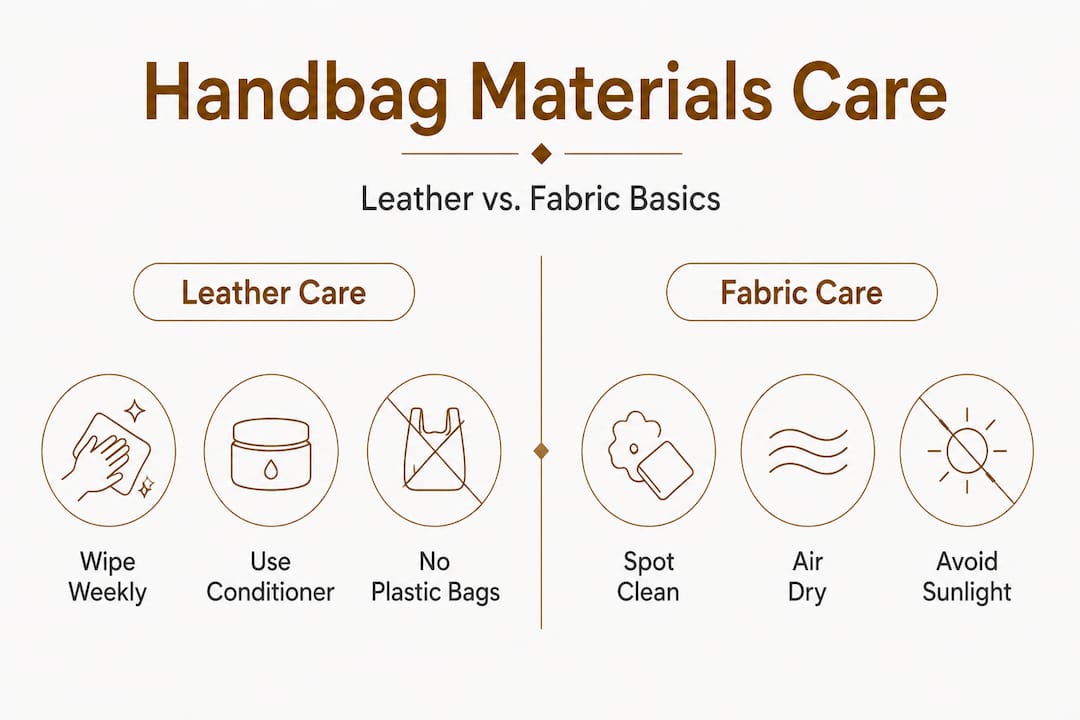
Common handbag materials
Familiarise yourself with the handbag types overview before you begin any care routine. Here is a breakdown of the most common materials and what makes each one unique:
- Full-grain and top-grain leather: Durable and develops a rich patina over time. Responds well to leather conditioners and pH-neutral cleaners.
- Vachetta leather: The untreated, natural leather used on Louis Vuitton bags. Highly sensitive to moisture. Avoid water to prevent dark spots; clean dry or with minimal distilled water only.
- Faux leather (PU or vegan leather): Easier to wipe clean but can peel over time. Avoid harsh solvents or alcohol-based cleaners.
- Suede and nubuck: Require a specialised suede brush and protector spray. Water can permanently warp the nap.
- Canvas and fabric: Often coated for durability but still prone to colour transfer and watermarks.
- Exotic and specialty finishes: Patent leather, embossed textures, metallics, and python-print materials each have their own quirks.
Why material identification matters
The construction of your bag also plays a role. Hardware, stitching, and lining materials all deserve attention. Nickel-plated hardware can tarnish if exposed to perfume or hairspray. Stitching can fray if you use too much moisture during cleaning. Knowing what you are working with prevents costly mistakes.
| Material | Water sensitivity | Best cleaning method | Special concern |
|---|---|---|---|
| Full-grain leather | Moderate | Damp cloth, conditioner | Avoid soaking |
| Vachetta leather | Very high | Dry cloth only | Dark spots form fast |
| Faux leather | Low | Damp cloth, mild soap | Peeling with age |
| Suede/nubuck | Very high | Suede brush, dry eraser | No water at all |
| Canvas (coated) | Low to moderate | Damp cloth | Colour transfer risk |
| Patent leather | Low | Soft dry cloth | Scratch-prone surface |
Gather your handbag care essentials
With a clear understanding of what your bag is made of, it is time to assemble the right cleaning and maintenance supplies. Having the correct tools on hand before you start means you will not reach for something damaging in a pinch.
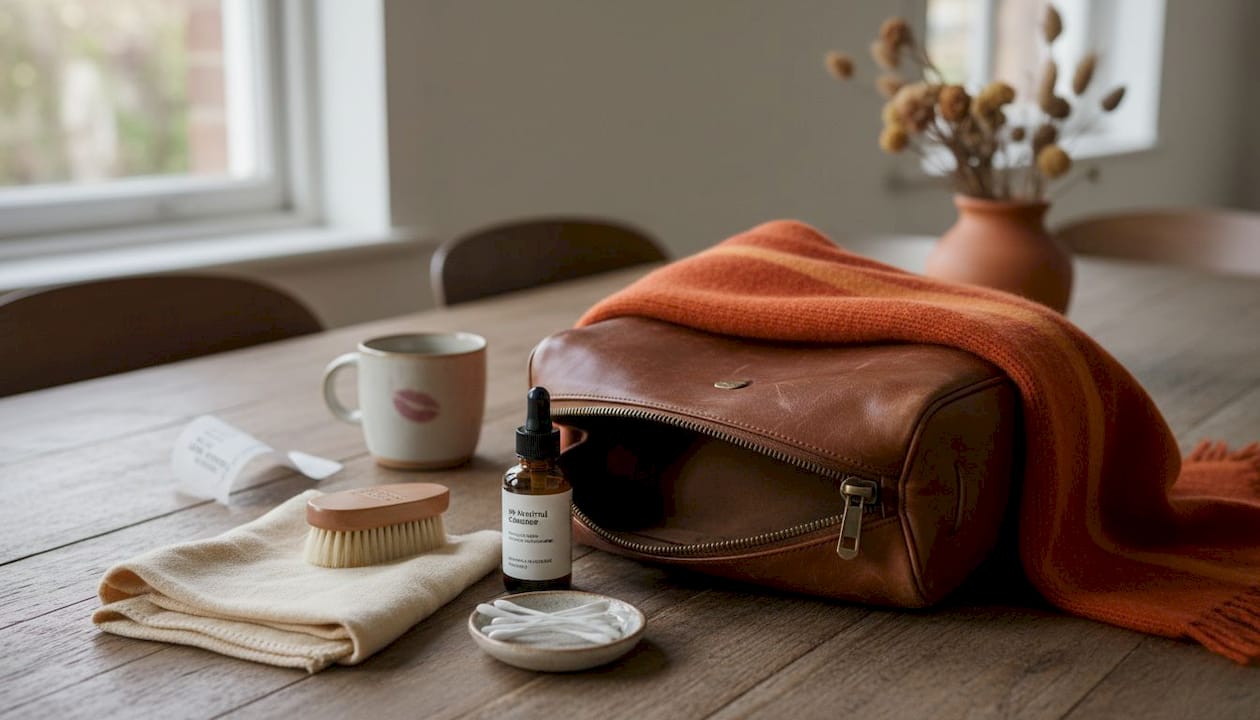
Core supplies every bag owner needs
Investing in a small kit pays dividends over years of use. For leather handbag care, the essentials include:
- Soft microfibre cloths: For applying cleaners, buffing, and removing surface dust without scratching.
- pH-neutral leather cleaner: Aggressive cleaners strip the natural oils from leather, causing it to crack.
- Leather conditioner: Keeps leather supple and prevents drying, especially important after cleaning.
- Suede brush and eraser block: The safest way to remove marks from suede without introducing moisture.
- Handbag shapers or acid-free tissue paper: Maintain the bag’s original silhouette during storage.
- Breathable dust bags: Protect your bags from dust and light without trapping moisture.
- Silica gel packs: Absorb excess humidity inside storage areas, especially important in damp climates.
- Brass or metal polish cloth: For keeping hardware gleaming without using harsh chemicals.
Comparing cleaner types
| Product type | Best for | Avoid using on |
|---|---|---|
| pH-neutral leather cleaner | Smooth leather, faux leather | Suede, fabric |
| Suede eraser and brush | Suede, nubuck | Patent leather |
| Mild dish soap (diluted) | Canvas, fabric linings | Delicate leathers |
| Distilled water only | Vachetta leather | Suede, raw edges |
| Specialist patent cleaner | Patent leather finishes | Matte textures |
Pro Tip: Never store your handbags in plastic bags or sealed boxes. Plastic traps humidity and creates the perfect environment for mould to form on both the exterior leather and the fabric lining inside. Always opt for breathable cotton dust bags.
Step-by-step: Handbag cleaning and routine maintenance
Now that you are prepared, let us walk through practical care steps that work for a variety of handbags. Consistency matters more than perfection here. Even a quick weekly wipe-down can prevent the build-up that leads to permanent marks.
Weekly surface clean (all materials)
- Empty your bag completely and shake out any debris from the lining.
- Use a dry microfibre cloth to wipe all exterior surfaces, paying close attention to corners, where grime collects fastest.
- Check the hardware for fingerprints and buff lightly with a clean dry cloth.
- Inspect the handles and base corners for early signs of wear.
- Air the bag briefly before returning its contents, especially if it has been sealed all week.
Monthly deep clean by material
- Smooth leather: Apply a small amount of pH-neutral cleaner to a damp cloth and work it into the leather using small circular motions. Follow immediately with a leather conditioner.
- Vachetta leather: Use a dry or barely damp cloth with distilled water. Because Vachetta develops dark spots from moisture, less is absolutely more.
- Faux leather: Wipe down with a cloth dampened with cool water and a drop of mild soap. Dry thoroughly so the surface does not peel.
- Suede: Work a suede brush in one direction to lift dirt. For stubborn marks, use a suede eraser and brush again to restore the nap.
- Canvas: Use a diluted mild soap solution and a toothbrush for seams. Wipe dry with a clean cloth.
“For Vachetta leather, the safest rule is to treat it like fine paper: keep it dry, handle it with clean hands, and never leave it in direct sunlight or near moisture sources.” Leather care specialists consistently recommend minimal intervention over aggressive cleaning.
Exploring styling and maintenance tips alongside your care routine helps you understand which bags in your wardrobe need the most attention based on how often you carry them. For those building a collection, reading up on quality handbag insights can help you prioritise which pieces are worth a premium care routine.
Pro Tip: Clean the metal feet on the base of your bag with a dry cotton bud every month. Dirt and grit that collects around the feet can scratch nearby surfaces when the bag is set down.
Store handbags for lasting beauty
Cleaning is only part of the equation. How you store your handbags can affect their condition for years. Poor storage is responsible for most long-term bag damage, including misshapen silhouettes, cracked leather, hardware tarnish, and mould growth.
The ideal storage environment
Humidity between 45 and 55% is ideal for storing handbags. Below that range, leather dries and cracks. Above it, mould spores thrive. In Canada, where humidity swings significantly by season, monitoring your wardrobe environment is especially important.
| Storage condition | Ideal level | What goes wrong outside this range |
|---|---|---|
| Humidity | 45–55% | Below: cracking leather; above: mould growth |
| Temperature | 15–22°C | Heat dries and cracks; cold can stiffen leather |
| Light exposure | Minimal direct light | Fading, colour shifting, drying of leather |
| Air circulation | Breathable, not sealed | Sealed storage traps moisture |
Best practices for storing your collection
- Always stuff your bags with acid-free tissue paper or a handbag shaper to maintain the original form. A collapsed bag develops permanent creases.
- Use breathable dust bags for each piece. If you do not have one, a clean cotton pillowcase works well.
- Place silica gel packs inside each dust bag, and replace them every three to six months or whenever they feel saturated.
- Stand structured bags upright on a shelf rather than stacking them, which can crush the base and warp the handles.
- Avoid hanging bags by their straps for extended periods. This stretches the leather and weakens stitching at the attachment points.
Looking for wardrobe organisation ideas to help show off your collection properly? Wardrobe storage inspiration can help you see how curated display not only protects your bags but also makes getting dressed more enjoyable each morning.
Pro Tip: Rotate which bags you store in dust bags versus display openly on shelves every season. This prevents uneven light exposure and gives you a chance to inspect each one for early signs of damage.
Troubleshooting: Common handbag mistakes and expert fixes
Even with good habits, mistakes can happen. Here is how to fix them while keeping your bags stylish and functional.
Most common handbag care mistakes
- Storing bags in plastic bins or vacuum-sealed bags
- Using baby wipes or alcohol-based products on leather
- Overloading bags, which warps the base and strains stitching
- Leaving bags in cars exposed to temperature extremes
- Ignoring early signs of colour transfer or edge peeling
How to fix the most frequent problems
- Water stains on smooth leather: Lightly dampen the entire panel (not just the stain) with distilled water and allow it to dry evenly. This prevents a visible watermark ring.
- Mould on leather: Wipe the affected area with a dry cloth first, then use a specialist leather cleaner. Move the bag to a well-ventilated, dry space and add fresh silica packs. Do not place it back in storage until you are confident it is completely dry.
- Colour transfer from dark clothing: Use a leather-safe eraser or specialist transfer remover. Prevention is better here: keep light bags in dust bags when wearing denim.
- Worn handles: A leather colourant in a matching shade can restore handle finish temporarily. For deep wear, a professional leather restorer will produce a more seamless result.
- Tarnished hardware: Polish gently with a dry brass cloth. Avoid metal polish liquids near leather as they can stain.
In humid climates, proper storage strategies are especially critical because mould can develop within days if silica packs are not refreshed regularly. If you live near the coast or in a basement suite, consider a small dehumidifier in your wardrobe.
Understanding the fashion impact of care mistakes is also worthwhile. A scuffed or misshapen bag can undercut an otherwise polished look, no matter how carefully you have dressed.
Pro Tip: Keep a small zip pouch in your everyday bag with a dry microfibre cloth and a travel-sized leather wipe. Catching a scuff or spill immediately prevents it from setting.
What most guides miss: The connection between handbag care and lasting style
Most handbag care articles focus entirely on the practical mechanics: which cleaner to use, what humidity level to maintain, and how often to condition your leather. All of that matters. But the reason those habits are worth building goes far deeper than protecting a purchase.
A well-maintained handbag is one of the most visible signals of personal style. When you carry a bag that looks fresh, structured, and cared for, it shifts how you carry yourself. You reach for it confidently, you set it down intentionally, and you notice how it completes an outfit rather than competing with it. There is a genuine emotional difference between grabbing a bag you adore and one you have been meaning to replace.
We believe that proper care is also one of the most sustainable choices you can make as a fashion-conscious consumer. Buying fewer, better things and then maintaining them thoughtfully means you participate in fashion on your own terms rather than feeling pressure to replace worn items constantly.
If you are serious about elevating your style through accessories, treating your handbag collection like an investment rather than a convenience changes everything. The bags you own should feel like an extension of who you are, and that is only possible when they are in their best condition.
Care is not a chore. It is the practice that keeps beautiful things beautiful.
Discover fashion solutions to complement your well-cared-for handbags
Caring for your handbags is just one part of cultivating great style. It is time to take your wardrobe further.

When your bags are clean, shaped, and stored properly, they deserve wardrobe companions that match their energy. At 16th Avenue, you will find a curated edit of women’s fashion and beauty that pairs beautifully with your collection. Layer a structured tote with a women’s woolen autumn coat for a polished cold-weather look, or elevate your everyday carry with a professional finish using a 24-piece makeup brush set to complete your morning routine. Free shipping to most destinations makes it easy to refresh your look without the hassle. Browse the full collection and find pieces that feel as good as your favourite, perfectly maintained handbag.
Frequently asked questions
How often should I clean my leather handbag?
Wipe your leather handbag with a dry, soft cloth every week and deep clean it every one to two months depending on use; for delicate materials like Vachetta leather, clean dry or with minimal distilled water only.
What is the ideal storage environment for handbags at home?
Store handbags in a cool, dry place maintaining 45 to 55% humidity and always use breathable dust bags rather than plastic containers to prevent mould.
Can I use water to clean all types of handbags?
No, some materials like Vachetta leather should not be cleaned with water as it can cause permanent dark spots; always check your bag’s care label and choose a method that suits the specific material.
How do I prevent colour transfer on light-coloured bags?
Avoid placing light bags next to dark fabrics or denim in storage, and keep them in dust bags whenever they are not in use to reduce direct fabric contact.
What should I do if my handbag gets mouldy?
Remove the bag from storage immediately, wipe it gently with a dry soft cloth, and allow it to air out fully in a ventilated space; add fresh silica packs and only return it to storage once it is completely dry, following recommended humidity guidelines going forward.
Recommended
- Choose the perfect handbag: style, function & affordability – 16th Avenue
- Role of Handbags in Fashion – Impact on Personal Style – 16th Avenue
- How to style handbags: make every outfit stand out – 16th Avenue
- Why invest in quality handbags for style and value – 16th Avenue
- Designer-Tasche richtig lagern: 40% weniger Schimmelrisiko - BVPRIVE