


Choose the perfect handbag: style, function & affordability
Finding a handbag that genuinely suits your style, fits your daily life, and doesn’t drain your budget feels harder than it should. You walk into a store (or scroll endlessly online), drawn to something beautiful, only to realise it holds nothing, clashes with your wardrobe, or falls apart after three months. We’ve been there. This guide cuts through the noise with a clear, step-by-step approach to choosing a handbag that works for your body, your lifestyle, and your wallet. From understanding your real needs to evaluating silhouette, material, colour, and long-term value, every step here is grounded in practical advice and expert insight.
Table of Contents
- Understand your handbag needs and lifestyle
- Choose the right silhouette, material, and colour
- Evaluate functionality and trend relevance
- Check for fit, proportion, and lasting value
- Why proportion and function matter more than trends
- Complete your look with curated fashion finds
- Frequently asked questions
Key Takeaways
| Point | Details |
|---|---|
| Assess needs first | Knowing your everyday requirements ensures a handbag is practical and suits your lifestyle. |
| Opt for lasting style | Choose classic shapes and neutral colours to maximize versatility and resale value. |
| Balance trend and function | Trendy details can be integrated, but prioritise usability to avoid buyer’s regret. |
| Check fit and comfort | Hands-on testing guarantees your handbag complements your frame and meets practical expectations. |
Understand your handbag needs and lifestyle
Before you fall in love with a shape or a colour, you need to know what you’re actually asking a handbag to do. This is the step most women skip, and it’s the reason so many gorgeous bags end up collecting dust on a shelf.
Start by listing everything you carry on a typical day. Phone, wallet, keys, water bottle, notebook, makeup bag? The volume and weight of your daily essentials will immediately rule out certain sizes and shapes. A clutch is stunning for an evening out but useless if you’re commuting with a laptop. A massive tote might seem practical, but if you’re petite, it can overwhelm your frame and strain your shoulder.
Your lifestyle matters just as much as your carry list. Consider these key questions:
- Work or commute: Do you need a bag that fits a tablet or documents?
- Social outings: Are you going from office to dinner? A convertible style helps.
- Travel: Crossbody or backpack styles offer security and hands-free convenience.
- Weather: Suede looks incredible but suffers in rain. Leather or coated canvas holds up better.
- Safety: Zip closures and inner pockets reduce the risk of theft in busy areas.
- Frequency of use: A daily bag needs durability. A weekend bag can prioritise aesthetics.
Body proportions also shape the ideal handbag. The role of handbags in daily wear goes well beyond storage. A bag that hits at your hip can visually widen your silhouette. A long strap on a short torso creates awkward proportions. Understanding the different types of women’s handbags helps you match shape to frame before you even think about colour.
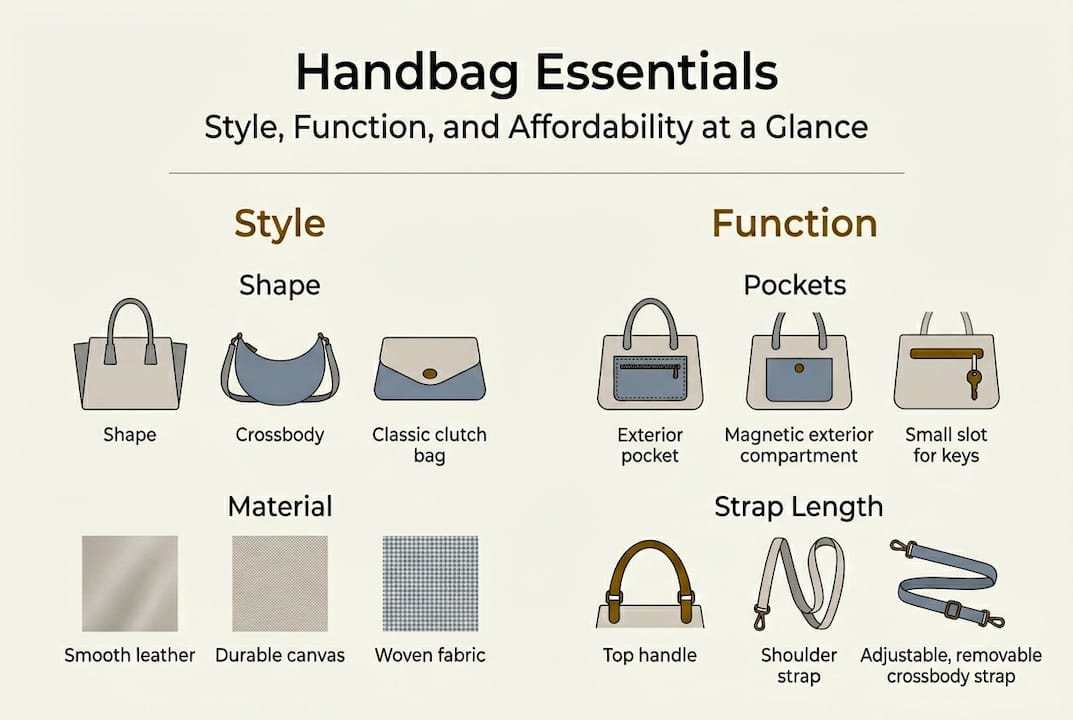
| Lifestyle | Recommended style | Key feature |
|---|---|---|
| Daily commuter | Structured tote | Laptop compartment, zip top |
| Weekend social | Shoulder bag | Medium size, adjustable strap |
| Frequent traveller | Crossbody | Secure zip, lightweight |
| Evening events | Clutch or mini bag | Compact, elegant |
| Active lifestyle | Backpack or belt bag | Hands-free, durable material |
Pro Tip: If you’re petite but carry a lot of essentials, resist the urge to go oversized. Structured medium bags with smart internal organisation give you the capacity you need without swamping your frame.
Choose the right silhouette, material, and colour
Once you know your needs, the fun part begins. Silhouette, material, and colour are the three pillars of a handbag that looks great now and holds its value over time.
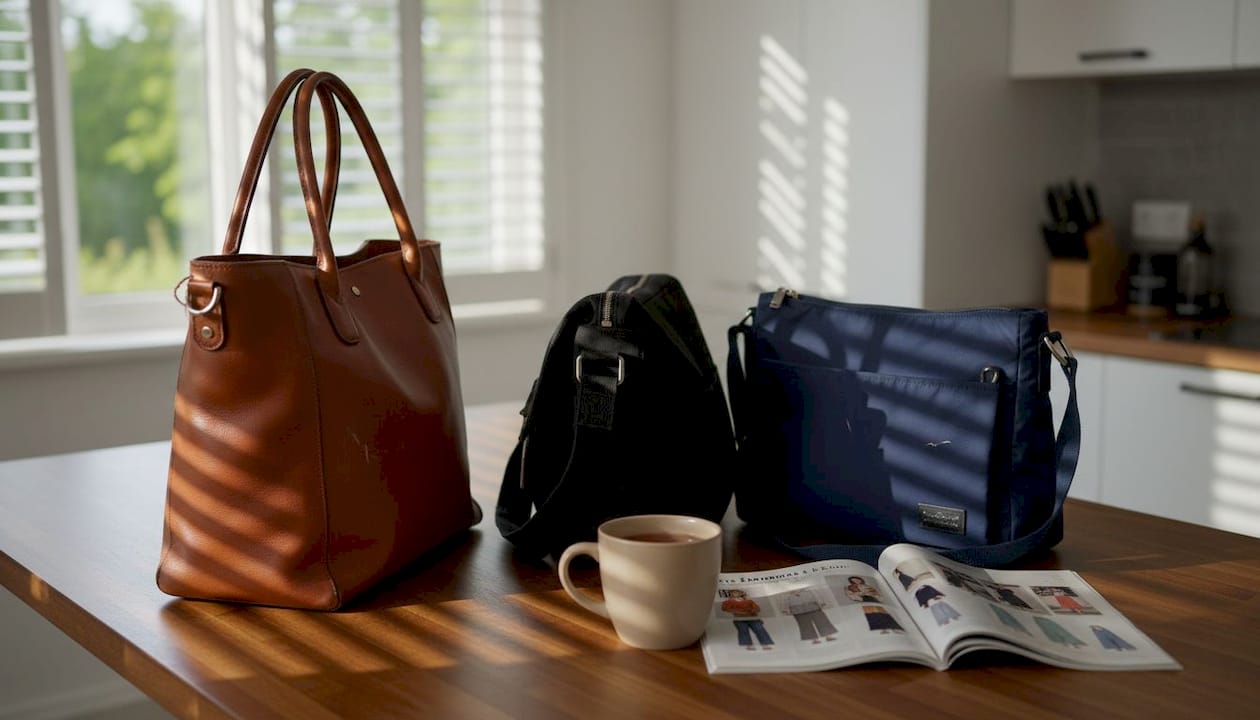
Silhouette is your starting point. Classic shapes have staying power for a reason. Totes work for almost every lifestyle. Shoulder bags offer a relaxed elegance that transitions from day to night. Top-handle bags carry a structured, polished energy that reads as both professional and stylish. These shapes consistently appear across decades because they genuinely work. When browsing stylish handbags in 2026, you’ll notice that the most coveted pieces are rarely radical in shape.
Material is where practicality meets personality. Leather ages beautifully, develops a patina, and resists daily wear far better than suede. Suede is softer and more textural, but it scuffs and stains easily. For a first investment bag or a workhorse piece, leather or a high-quality coated canvas is the smarter choice. Suede works brilliantly as a seasonal accent or for low-use occasions.
Colour is the decision that affects longevity the most. Timeless silhouettes in neutrals like chocolate and caramel from entry-level investment brands such as Coach Tabby ($475), DeMellier New York ($550), and options from Madewell and Cuyana under $500 offer both style and resale potential. Bright colours and seasonal pastels look exciting in the moment but date faster and sell for less on the secondary market.
Here’s a quick comparison to guide your decision:
| Silhouette | Durability | Resale value | Best for |
|---|---|---|---|
| Structured tote | High | Medium | Work, daily use |
| Shoulder bag | High | High | Versatile, everyday |
| Top-handle | Medium | High | Formal, polished looks |
| Crossbody | Medium | Medium | Travel, casual outings |
| Clutch | Low | Low | Evening, special events |
Affordable brands worth considering:
- Coach Tabby: Structured, classic, excellent leather quality
- DeMellier New York: Minimalist, refined, strong resale
- Madewell: Relaxed, everyday, budget-friendly
- Cuyana: Sustainable, simple, timeless
For tips on styling handbags with different outfits, knowing your silhouette first makes the whole process easier. Smaller sizes like the Kelly 20 or 25 are the most collectible but least practical for daily use. Medium sizes in the 25 to 35cm range offer the best balance of versatility and function.
Pro Tip: When in doubt, choose a darker neutral. Chocolate and caramel resist visible wear and attract stronger resale interest than pale or bright alternatives.
Evaluate functionality and trend relevance
With your silhouette and material sorted, it’s time to look at the details. A beautiful bag that doesn’t function well in real life will frustrate you every single day.
Here are the key functional features to evaluate before you buy:
- Compartments: At minimum, look for one main compartment, a zip pocket, and a slip pocket. Multiple sections prevent the dreaded “bag abyss” where everything disappears.
- Closure type: Magnetic snaps are convenient but less secure. Zip closures protect your belongings in crowded spaces. Turn-lock closures add style and moderate security.
- Handle options: A bag with both a top handle and a shoulder strap gives you flexibility across different situations.
- Strap length and adjustability: A non-adjustable strap can make a bag uncomfortable for your height. Always check the drop length before purchasing.
- Weight when empty: A heavy empty bag becomes unbearable when full. Lightweight construction matters more than most buyers realise.
On the trend side, 2026 spring collections are leaning into suede totes and soft shoulder styles, which align nicely with classic shapes. The handbag impact on style is real, but chasing every micro-trend leads to a cluttered wardrobe and an empty wallet.
Stylist Bailey Moon puts it plainly:
“Choose a tote without heavy logos. Functionality comes first. A bag that works for your life will always look better than one that just looks good on a shelf.”
This perspective aligns with resale data. Functionality over trends consistently wins. Timeless, versatile bags in darker colours outperform trendy brights and pale tones on the secondary market. When you’re enhancing your look with handbags, the bags that earn the most compliments are usually the ones that feel effortless rather than forced.
Check for fit, proportion, and lasting value
You’ve narrowed your options. Now apply these final checks before committing.
- Hold it at your side: Does it hit at a flattering point on your body? Ideally, a shoulder bag should sit at or just below your hip.
- Check the strap drop: For shoulder bags, a 10 to 12 inch drop sits comfortably under the arm. For crossbody, 20 to 24 inches works for most heights.
- Mirror check: Step back and look at the full picture. Does the bag complement your proportions or compete with them?
- Weight test: Fill it with your actual daily essentials and carry it for a few minutes. Discomfort now becomes pain later.
- Photo test: Take a photo of yourself holding it. The camera reveals proportion issues your eye misses in the moment.
Resale value is worth factoring in, even if you’re not planning to sell. Timeless colours over trendy brights, according to Vestiaire Collective data, consistently command stronger resale prices. Darker neutrals hold their value across seasons because they never really go out of style.
Size matters for resale too. Medium bags in the 25 to 35cm range represent the sweet spot between practicality and collectibility. They’re big enough to be useful, small enough to feel intentional.
For guidance on elevating your style with handbags, proportion is the single most underrated factor. A well-proportioned bag makes your whole outfit look more considered.
Pro Tip: Before buying online, take a photo of yourself holding a similarly sized object (like a book or folder of the same dimensions). It gives you a realistic preview of how the bag will look on your body.
Why proportion and function matter more than trends
Here’s the perspective that most fashion content won’t tell you: trends are a distraction for most buyers. The handbag industry releases new “must-have” shapes every season, and the marketing is convincing. But the women who consistently look the most put-together are not the ones chasing every new silhouette. They’re the ones who found two or three bags that genuinely work for their life and body, and they wear them confidently.
Resale data backs this up. Trendy bags in bold colours or unusual shapes spike in interest and then plummet. Classic, proportionate bags in neutral tones hold steady. The same logic applies to affordable fall fashion trends. The pieces that feel fresh season after season are the ones built on proportion and function, not novelty. Buy for your actual life, not the life you imagine when you’re shopping.
Complete your look with curated fashion finds
You now have a clear framework for choosing a handbag that suits your style, body, and budget. The next step is building a wardrobe around it.
At 16th Avenue, we’ve curated pieces that pair beautifully with the handbag styles discussed in this guide. A trendy autumn coat in a neutral tone creates an instant, polished look alongside a structured shoulder bag. For casual days, casual wedge sneakers balance a relaxed tote perfectly. Whether you’re building a new wardrobe or refreshing your current one, explore all fashion at 16th Avenue for affordable, trend-aware pieces that make every outfit feel complete.
Frequently asked questions
What is the best handbag size for everyday use?
A medium-sized bag in the 25 to 35cm range offers the best balance of practicality and proportion for most women’s daily needs.
Which handbag colour offers the best resale value?
Darker neutrals like chocolate and caramel outperform bright or pale tones in resale markets because they stay relevant across multiple seasons.
How do I balance trendy styles with practicality?
Choose a timeless silhouette and quality material as your foundation, then let trend details appear in smaller accents like hardware or texture rather than the overall shape.
Are entry-level designer brands worth the investment?
Brands like Coach Tabby and DeMellier New York offer genuine quality, style longevity, and resale potential at price points under $550, making them smart starting points for building a considered handbag collection.