

What is digital fashion? A guide for 2026
TL;DR:
- Digital fashion involves the creation of virtual clothing and accessories experienced through avatars, AR filters, and virtual worlds. It offers sustainable, flexible design workflows and extends fashion into new digital spaces, blending creativity with environmental benefits. Understanding its various categories is essential for meaningful engagement in this rapidly evolving industry.
Digital fashion is virtual clothing and accessories created entirely in digital form, designed with 3D tools and experienced through avatars, augmented reality filters, and virtual worlds. Unlike physical garments, these pieces are never manufactured. They exist as pixels, meshes, and textures rendered on screens. For fashion lovers, tech enthusiasts, and digital artists, understanding what is digital fashion means grasping a concept that is reshaping creativity, sustainability, and identity expression all at once.
What is digital fashion and how is it defined?
Digital fashion is the creation, simulation, and use of clothing primarily in digital form, designed with 3D tools and deployed across e-commerce platforms, video games, and AR experiences. The industry term you will encounter alongside it is “virtual fashion,” though digital fashion has become the broader, more widely used label covering everything from design workflows to NFT wearables.
The definition of digital fashion splits cleanly into two perspectives. For consumers, it means virtual garments worn by avatars in games, social media filters, or metaverse spaces. For designers and brands, it means a digital-first creation pipeline where 3D prototypes replace physical samples entirely. Both perspectives are valid. Confusing them is where most misunderstandings begin.
Brands like Balenciaga and RTFKT have already built significant business models around digital wearables, blending luxury fashion with blockchain technology. The World Economic Forum identifies digital fashion as a space where technology, culture, and creativity collide, signalling that this is not a niche experiment but a structural shift in how fashion operates.
How does digital fashion work?
3D modelling and fabric simulation
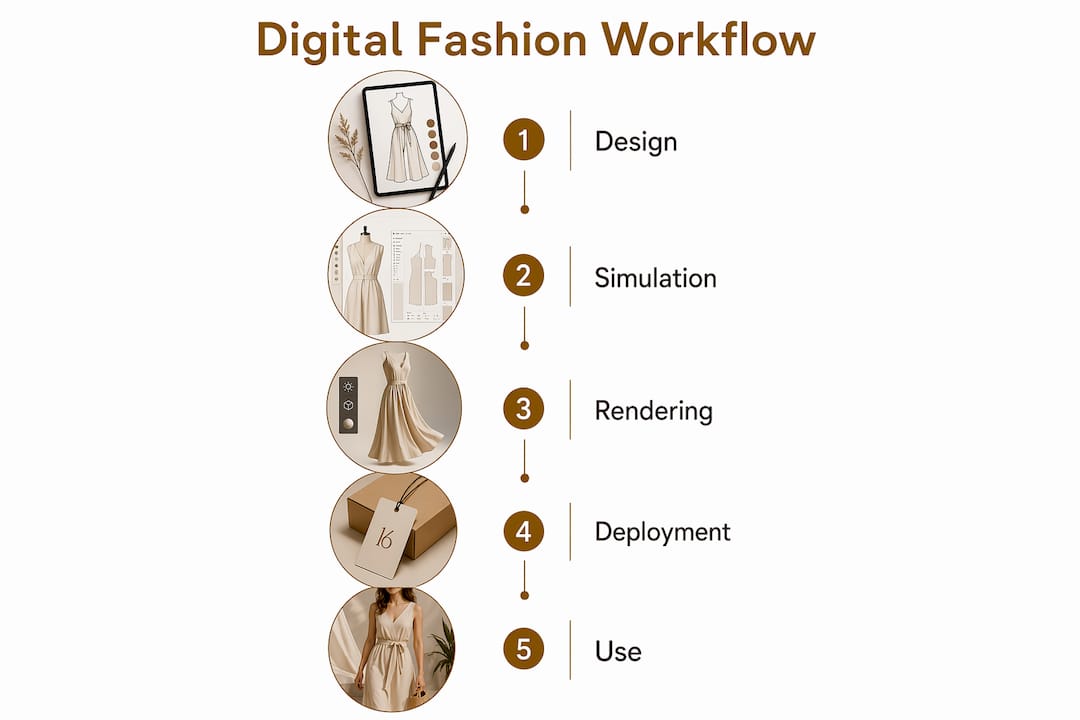
Designers create virtual garments using software like CLO3D, Marvelous Designer, and Blender. These programs simulate fabric physics, drape, weight, and texture with remarkable accuracy. A digital jacket in CLO3D behaves like real wool: it folds, stretches, and responds to a virtual body’s movement. This level of simulation means a garment can be fully evaluated before a single metre of physical fabric is cut.

Once modelled, the garment is rendered onto a digital avatar or a real person’s photograph using AR fitting technology. Platforms like Snapchat and Instagram already use this approach for branded filter campaigns. The output is a photorealistic image or video of a person wearing a garment that does not physically exist.
Digital assets and cross-platform use
The same digital garment assets, including meshes and texture files, can be deployed across social media filters, virtual environments, and e-commerce product visualisations. A single design file created in CLO3D can appear as a Snapchat filter, a Fortnite skin, and a 360-degree product view on a retail website. This asset-centric model gives brands extraordinary flexibility and reach from one design investment.
Artificial intelligence is accelerating this further. AI tools now assist with pattern generation, colour palette prediction, and automated avatar fitting, compressing design cycles that once took weeks into hours. The result is that design cycles shorten significantly when prototyping moves to digital platforms first.
Pro Tip: Save your digital garment assets in interoperable formats like FBX or glTF from the start. These formats work across game engines, AR platforms, and e-commerce visualisation tools, so one asset file can serve multiple deployment contexts without rebuilding from scratch.
- Model the garment in CLO3D or Marvelous Designer using accurate fabric presets.
- Simulate fit and movement on a parametric avatar matched to your target body measurements.
- Export the asset as a mesh and texture set in an interoperable format.
- Deploy across chosen platforms: social filters, virtual worlds, or e-commerce visuals.
- Iterate digitally based on feedback before committing to any physical production.
What are the different types of digital fashion?
Academic research divides digital fashion into four distinct categories: digital design and e-prototyping, digital business and promotion, digital human and metaverse, and phygital apparel and wearable technology. This framework reveals the multidisciplinary nature of the field and explains why the term means different things to different people.
Here is how each category plays out in practice:
- Digital-only garments. These exist purely on screens, worn by avatars in games like Fortnite or Roblox, or overlaid on real people via AR filters. They are never manufactured physically.
- NFTs and digital collectibles. Fashion brands issue limited-edition digital wearables as blockchain-authenticated assets, making them tradable and verifiable. RTFKT’s Nike-backed sneaker drops are a well-known example.
- Phygital fashion. This category merges digital and physical elements. A garment might come with a digital twin NFT, or a physical purchase might unlock an exclusive virtual version for use in a metaverse space.
- Digital marketing and content. Brands use 3D-rendered garments in advertising campaigns and social media content without producing physical samples, cutting both cost and waste.
| Type | Description | Primary use case |
|---|---|---|
| Digital-only garments | Virtual clothing for avatars and AR filters | Gaming, social media, metaverse |
| NFT wearables | Blockchain-authenticated digital collectibles | Ownership, trading, brand loyalty |
| Phygital fashion | Digital and physical products linked together | Retail, luxury brand experiences |
| Digital prototypes | 3D design files replacing physical samples | Design workflows, e-commerce visuals |
| Digital content fashion | Rendered garments used in marketing | Advertising, social media campaigns |
For a deeper look at how virtual try-on technologies are changing the retail shopping experience, 16thavenue has covered the topic in detail.
Why does digital fashion matter culturally and environmentally?
Digital fashion is transforming identity expression. Avatars in platforms like Decentraland or Roblox are styled with the same intentionality people bring to physical wardrobes. The cultural shift reflects a demand for inclusivity and authenticity: digital garments have no size limits, no production constraints, and no geographic barriers. A person in any country can wear a Balenciaga digital piece for the cost of a digital file.
The environmental case is equally strong. Virtual prototypes lower costs and environmental impact significantly by eliminating physical sampling phases. The fashion industry is one of the world’s most resource-intensive sectors, and moving even a portion of its sampling and marketing production to digital workflows reduces water usage, textile waste, and carbon emissions in measurable ways.
“Digital fashion aligns with cultural demands for inclusivity, sustainability, and authenticity, signalling a broader shift in fashion experience and value.” — World Economic Forum, 2025
The phygital business model is where these two forces converge most powerfully. Brands that issue a physical garment alongside a digital twin give consumers both a tangible product and a verifiable digital asset. This model rewards sustainable purchasing behaviour while opening new revenue streams. For readers interested in how sustainability is reshaping the broader fashion industry, 16thavenue’s piece on sustainable fashion benefits offers a grounded perspective on why these shifts matter for everyday shoppers.
Common misconceptions about digital fashion
The most persistent confusion in digital fashion is treating it as a single, unified concept when it is actually four distinct categories with different audiences, tools, and outcomes. A consumer excited about wearing a virtual outfit in a game is having a completely different experience from a fashion designer using CLO3D to eliminate physical sampling from their workflow. Both are digital fashion. Neither is wrong. But mixing these perspectives creates communication breakdowns between brands, designers, and consumers.
A second common misconception is that owning a digital fashion NFT is equivalent to owning a physical garment. Digital ownership through blockchain is real and verifiable, but it is platform-dependent. If the platform hosting your digital wearable shuts down, the asset’s utility may disappear even if the token persists on the blockchain. Platform interoperability remains an unsolved challenge across the industry.
A third misunderstanding involves the relationship between digital fashion and physical fashion. Digital garments do not replace physical ones. They extend the creative and commercial possibilities of fashion into new contexts. The digital fashion ontology is complex: outputs can be visual images, 3D assets, or digitally owned collectibles, each with different implications for ownership, use, and value.
Pro Tip: When reading about digital fashion, always identify which category the author is discussing: consumer wearables, design workflows, NFT collectibles, or phygital products. The advice and tools relevant to each category are completely different, and conflating them leads to poor decisions for both creators and buyers.
For anyone curious about how NFTs function as digital assets in creative industries, ARTIFY’s resource centre provides a clear breakdown of the mechanics behind digital ownership and blockchain authentication.
Key takeaways
Digital fashion is a multidisciplinary field spanning virtual garments, design workflows, NFT collectibles, and phygital products, and understanding which category you are engaging with determines every tool, platform, and decision that follows.
| Point | Details |
|---|---|
| Digital fashion has four categories | Virtual garments, design workflows, NFT collectibles, and phygital products each require different tools and approaches. |
| 3D tools power the design process | Software like CLO3D, Marvelous Designer, and Blender simulate fabric physics before any physical production begins. |
| Environmental benefits are real | Eliminating physical sampling phases reduces water usage, textile waste, and carbon emissions across the supply chain. |
| NFT ownership is platform-dependent | Blockchain authentication verifies ownership, but asset utility depends on the platform remaining operational. |
| Consumer and designer views differ | Consumers experience digital fashion as virtual wearables; designers use it as a digital-first prototyping pipeline. |
Digital fashion is moving faster than most people realise
I have spent years watching fashion and technology circle each other cautiously. What strikes me now is how quickly the conversation has shifted from “is this real?” to “how do we keep up?” The brands that dismissed digital fashion as a gimmick in 2020 are now scrambling to build virtual wardrobes and NFT strategies.
What most articles miss is the creative liberation angle. Physical fashion is constrained by fabric availability, manufacturing costs, and supply chains. Digital fashion has none of those limits. A designer working in Blender can create a garment made of light, water, or fire. That is not a metaphor. These garments exist and people wear them on their avatars. The creative ceiling has been removed entirely.
The sustainability argument also deserves more honesty. Digital fashion does not solve the fashion industry’s environmental problems on its own. Physical clothing still dominates consumer behaviour and always will. But replacing even a fraction of physical sampling and marketing production with digital workflows creates genuine, measurable impact. The brands I find most credible are the ones treating digital fashion as one tool in a broader sustainability strategy, not a silver bullet.
My honest advice: if you are a fashion enthusiast, start by exploring digital fashion through the consumer lens. Try an AR filter, customise an avatar, look at what Balenciaga and RTFKT are doing with digital drops. If you are a designer or artist, invest time in CLO3D or Marvelous Designer. The learning curve is real, but the creative and commercial return is substantial.
— Glenville
Discover fashion that bridges style and substance at 16thavenue
16thavenue curates women’s fashion with the same attention to quality and style that digital fashion is bringing to virtual wardrobes. If the future of fashion is about thoughtful design and conscious choices, the present is about finding pieces worth wearing. The women’s woolen coat collection offers timeless autumn and winter style built to last, while the air-cushion snow boots deliver comfort and edge for the colder months. 16thavenue ships free to most destinations, so discovering your next favourite piece costs nothing extra.
FAQ
What is the simplest definition of digital fashion?
Digital fashion is clothing and accessories that exist only in digital form, created with 3D design software and worn by avatars, used in AR filters, or traded as NFT collectibles. No physical garment is ever manufactured.
How does digital fashion differ from regular fashion design?
Traditional fashion design results in physical garments produced through manufacturing. Digital fashion design produces 3D assets, virtual wearables, or digital prototypes that replace or complement physical production, reducing cost and environmental impact.
Can you actually wear digital fashion in real life?
Through augmented reality, digital garments can be overlaid on real people in photos and videos using apps and social media filters. Phygital fashion also pairs digital assets with physical garments, giving wearers both a real item and a virtual counterpart.
What software is used to create digital fashion?
The most widely used tools are CLO3D, Marvelous Designer, and Blender. These programs simulate fabric physics, drape, and fit on digital avatars, producing assets that can be deployed across games, social platforms, and e-commerce sites.
Is digital fashion sustainable?
Digital fashion supports sustainability by eliminating physical sampling, which reduces water usage, textile waste, and carbon emissions. It does not replace physical fashion entirely, but it meaningfully reduces the environmental footprint of design and marketing processes.